
This article is part of our collaboration with International Policy Review at IE University. Photo Credits: Mina’s List.
Abstract
With the Taliban back in power, the UN’s SDG 5 goal is more than threatened. With women excluded from society and banned from secondary school, women empowerment and gender equality cannot be achieved. The SDG 5 target is set for 2030, but with the lack of cooperation from the Taliban and the failure of the international community to reduce these inequalities, new strategies must be adopted to try to get as close as possible to the goal. The country’s economic crisis is exacerbating gender apartheid, with millions of women being unemployed and barred from working. These economic difficulties and the humanitarian crisis make the task of non-profit organizations difficult because of the extremely rigid political regime and the harsh interpretation of Sharia law. However, many local movements and international organizations are mobilizing to defend women’s rights and try to reduce disparities to achieve the goal of gender equality by 2030.
1. Introduction
Imagine waking up one morning and realizing you won’t see your friends at school, learn history, or sing along in the park. This has been the daily life of millions of Afghan girls and women for over three years. It’s 2025, and Afghanistan is facing one of the most serious gender crises ever. After a first spell in power in the 1990s, the Taliban recaptured the capital of Afghanistan, Kabul, on August 15, 2021. The country, suffering from internal conflicts and divisions, was very fragile, which allowed the fundamentalist Islamic regime, known as the Taliban, to regain power after being ousted in 2001 after the US-led invasion. Mullah Hibatullah Akhundzada is the leader of this highly controversial and internationally unrecognized regime. The overthrow of the legitimate government under Ashraf Ghani Ahmadzai (2014-2021) created real chaos in Afghan society. During his time, he showed efforts to fight corruption and improve governance by negotiating with the Taliban but his ruling was highly controversial due to accusations of corruption, bad governance and the failure to maintain stability. For example, his elections were criticized because of a very weak participation rate and irregularities and studies show that in order to win the elections, he allied with a war chief called Abdul Rashid Dostum, known for participating in war crimes. All these revelations increased the sentiment of scepticism.
Recently, new laws have been approved that further reduce women’s rights, such as banning public speaking or singing. The current crisis is a direct threat to the UN’s SDG 5, ensuring gender parity and the empowerment of women and girls. This ongoing oppression not only violates international law, but also creates great inequalities compared to ‘gender apartheid.’
Nevertheless, Afghan women refuse to feel guilty for being born women and are performing small acts of resistance, which are drawing global attention to the Taliban’s misogyny. Many Afghan women activists are fighting to restore basic rights such as education. Despite threats of execution and punishment, many young girls refuse to be guilty of being born a girl and have opted for clandestine schools, hidden from view, to get an education and one day realize their dreams when the regime collapses.
This article aims to understand the goals of SDG 5 as well as its challenges by analyzing how dismantling gender equality in Afghanistan bears impact on individuals and national as well as international stability.
The condemnation of these policies by the international community has not translated into coordinated actions that would have quickly ended this repression. Swift diplomatic and humanitarian action is needed to prevent the total erasure of women’s rights in the nation.
2. Understanding SDG n°5 and How It Is at Risk with the Rise of the Taliban Regime and the Institutionalisation of ‘Gender Apartheid’
This part considers the revivalism of the Taliban regime that institutionalized a ‘gender apartheid,’ thereby defying the United Nations Sustainable Development Goal 5 concerning gender equality. To this end, we first analyze the systemic roadblocks to achieving this goal in Afghanistan. Then, we will look at the application of Sharia law and its consequences on the rights of women and girls in the spheres of education, liberties and security.
2.1 The background of SDG5 and its challenges
The Sustainable Development Goals, set by the United Nations in 2015, offer a global approach toward ensuring that by the year 2030, poverty should not exist, the earth should be protected, and the global populations have peace and prosperity. SDG 5 of gender equality and empowerment of women and girls is the bedrock of sustainable development. It recognizes that economic growth, social stability, and human progress are predicated on the involvement of women in all areas of society.

Fig.I Progress assessment for the 17 Goals based on assessed targets with trend data, by Goal.
Source: United Nations Department of Economic and Social Affairs, “SDG Progress Report” (2024).
Since the endorsement of SDG 5, as can be seen in Fig. I (please refer to line G5), there have been marginal to moderate levels of progress, especially in many parts of the world. For example, in the 10 years following the targeting of SDGs, girls’ school enrolment rates have significantly increased in many countries, with some regions in the world achieving gender parity in primary education. Only East Asia and the Pacific has reached or is close to reaching gender parity in any level of education. Women’s participation in economic life also improved, but so many inequalities still exist, especially in developing nations. Indeed, those countries-bent toward male-oriented society-have to experience more discrimination and harassment by gender as they are considered “less valued”. However, despite disparities, the representation of women in political and decision-making bodies has increased, with the introduction of gender quotas and legal reforms in favor of access to power, but still far from completing the challenge.
Afghanistan accounts for one of the worst reverses for women’s rights this century. Whereas most countries continue to reaffirm their commitment to SDG 5, there are still conflict areas where women are deprived of their rights, and this damages global progress. Implementing SDG 5 means a concerted international effort involving governments, NGOs, the private sector, and civil society partners. Women’s rights groups coalesce to challenge sexist and misogynistic practices and find constructive solutions. The actualization of SDG 5 on a global level calls for not just local engagement but for all actors to realise the gravity of the situation and take action to enhance political and economic efforts so that no oppressive regime can ever undo the progress made.
2.2 Strict application and harsh interpretation of the Sharia Law
Afghanistan’s political and legal landscape was dramatically affected when the Taliban came to power in August 2021. This radical rise to power seriously threatens the goals of SDG 5 with the lack of inclusive governance and legal protection for all. Indeed, this is not the first time that the Taliban have been in power, they first appeared in the post-Soviet 1990s and seized power in 1996 by oppressively following Sharia law which has the consequence of considerably restricting freedoms as well as punitive justice.
After being expelled in the early 2000s after a very controversial ruling time, the Taliban took advantage of the country’s political instability and corruption to gain popularity and power again, presenting themselves as the “saviors” of the Afghan people. But who supported them? Having lost hope in the government, the rural and conservative population saw them as an opportunity to restore the country’s good image and quality of life after the fall of the Soviet regime. By studying the origins of the Taliban, we discovered that they belong to the Pashtun ethnic group, representing approximately 42% of the Afghan population, most of them being in favor of the Taliban government. Their ideology is based on the rigid and conservative interpretation of Sunni Islam and the “Pashtunwali” traditional code, very widespread on the border with Pakistan. This code of honor is supposed to promote peace, justice, self-respect and forgiveness. However, by the way the Taliban are ruling, it is clear that none of these values are being highlighted. In addition, under the leadership of Hibatullah Akhundzada, the Afghan people quickly saw Afghanistan’s constitutional order dismantled in order to replace legal institutions with an authoritarian religious council following Sharia Law. This radical change in the constitutional order is a direct threat to the achievement of SDG 5.
The Taliban give an arbitrary and politically charged interpretation to Islamic law, relying neither upon any formally codified version nor upon any transparent or due process mechanism. Their selective application of extreme “Hudud” punishments like public execution or amputation scandalizes the traditional practice of Islamic law, increasing the overall uncertainty of the legal landscape and engendering fear-based governance in the society. They believe that by installing such a severe interpretation of Sharia Law, they will promote order, something extremely valuable by the Afghan population, and that they missed with the government of Ashraf Ghani.
This type of authoritarianism rejects international legal standards and even the very basic principles of SDG 5, thus creating crises in governance and economies. Further lack of judicial independence and predictability of laws brings with it international isolation, economic sanctions, and a humanitarian emergency, thereby creating more obstacles for the global fraternity towards gender equality and sustainable development in Afghanistan.
2.3 Implications on Afghan women and girls’ rights
“Decades of progress on gender equality and women’s rights have been wiped out in mere months. We must continue to act together, united in our insistence on guarantees of respect for the full spectrum of women’s rights.” This is the statement by Sima Bahous, Executive Director of UN Women, who raises alarm about the current situation of women in Afghanistan. Since the Taliban’s return to power, women are “neither alive nor dead” (testimony of Kadhija who tried to commit suicide from the pain of forced marriage and domestic violence). Many young girls explain that they regret being born girls because of the suffering and discrimination. Afghanistan is today one of the countries where the situation of women is the most alarming due to its drastic setback on gender equality, with more than 70 decrees put in place aimed at reducing women’s rights. Young girls and women fear for their lives, with increasingly severe punishments for wanting to study, sing, or walk without a male presence. The United Nations describes this situation as ‘gender apartheid’ and ‘gender prosecution’, with enormous contempt for women.
Regarding education, the Taliban banned girls from going to school after the age of 12. This is a direct violation of SDG 5 promoting empowerment of women and education as a pillar in reaching gender equality. There have been a lot of international organisations trying to reverse this ban but they cannot do much considering the rigidity of the government. Secondary schools are not an option anymore for girls. Similarly, the Taliban want to ban women from working in “man dominated fields” as well as working for the UN. A decree from 2022 bans women from working in ngo, threatening the international organisations to revoke their licences for any violation of the decree. This makes women completely dependent on their family or husbands, cutting them from society. UNESCO predicts that if nothing is done about it, 4 million Afghan girls will be affected by 2030 with the impossibility of enrichment. The progress seen these last two decades with literacy rates going from 17% to 30% is threatened by the Taliban’s brutal restrictions.
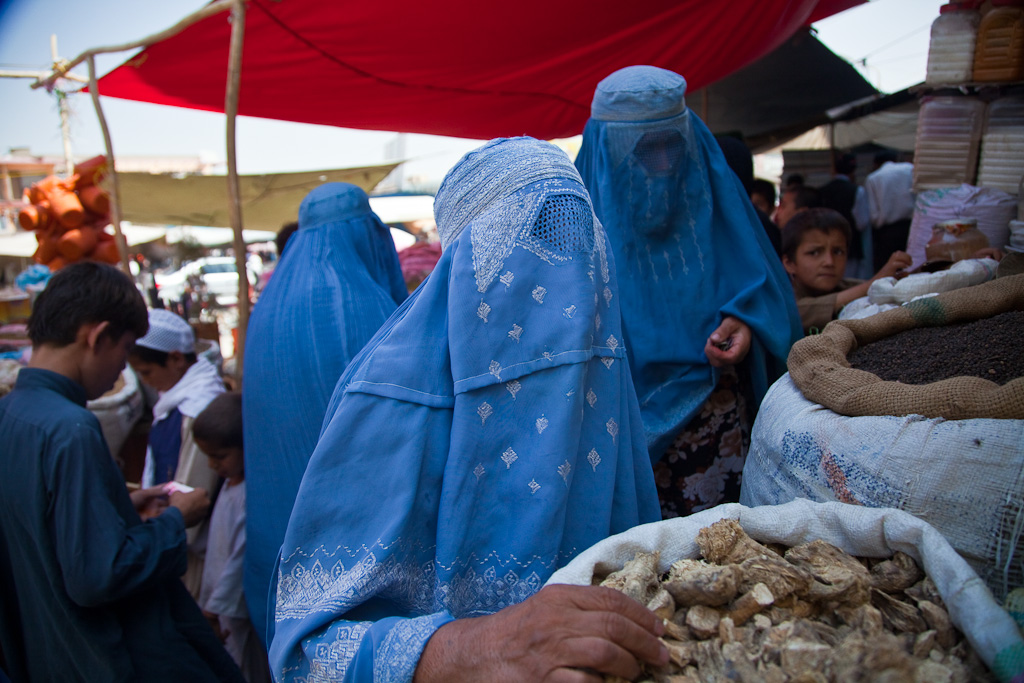
Additionally, the freedom of movement has been drastically reduced with the obligation of being accompanied by “mahram”, signifying men in the family circle in islam. They cannot be seen publicly without the presence of a male (father, sibling, husband, son), and without a strict dress code (head-to-toe clothing including eyes). Any violation of these obligations results in punishment in public squares or stadiums, in full view of all. Punishments include flogging and public executions without the possibility of trial. The BBC also discovered that since 2022, public punishments have been carried out on 346 people (men and women). Punishment can occur if a woman is seen singing, dancing, adultery, speaking to a man and praying in public or in the presence of other women, according to the Taliban government. Very similarly, if women can be executed or tortured that easily, it is because they don’t have access anymore to an impartial judicial system to defend their rights. They are judged without the possibility to defend. This is due to the suppression of constitutional institutions as the Taliban are the ones deciding and giving sentences. In fact, in 2022, they suppressed many institutions like the Afghan Independent Human Rights Commission and created the female moral police department.. This allows them to act in a sexist and misogynistic way without any mechanisms to stop them.
3. Between Strict Policies and Resistance: the Future of Afghan Women
In this second section, we will analyse how this constant oppression to women has given birth to many feminist movements within and outside the country. Women will not let go, they will fight as much as they can. In addition to national grassroots movements, we will determine what are the challenges faced by the international community and its consequences on the implementation of SDG 5.
3.1 A constant fight for freedom
In light of all these bans and restrictions, many Afghan women are rebelling and seeking to fight for their rights. Indeed, numerous local associations have been created, as well as street protests. Unfortunately, being under an authoritarian regime, any women seen participating in activities deemed “rebellious” are punished with torture or death. These protests are clear. It is essential to continue to show courage and resilience. Women are demanding “bread, work, freedom“. Despite the risk of imprisonment, many women are fighting every day to help those who cannot defend themselves. Indeed, most of the women activists are urban and take action in the capital, Kabul, but let’s not forget all the other women, completely isolated in rural areas where the sole role of childbearing is theirs.
Every day, thousands of young girls travel to secret locations like private homes, or “madrasas” (any type of educational institution in Arabic) with teachers to continue their education despite the ban. For example, Parasto Hakim‘s touching story shows that nothing is easy when you’re a girl in Afghanistan. She needed to teach these girls, as she says, “the school is light for me”. However, it was not without any risks. She and dozens of professors constantly risk their lives giving classes. They live in constant fear of being inspected at the school gate. This is the daily life of all those who fight for gender equality and access to education, guaranteeing the autonomy of Afghan women. This activism aligns with the objectives of SDG 5 promoting education for girls in order to be independent and achieve what they want in life.
Moreover, as we are in the internet age, civic participation within the country can be through social media using the famous hashtag on Twitter #StandWithWomenInAfghanistan. This symbolic gesture allows people to show the whole world the situation of women in Afghanistan and to give them courage to counter the interdictions to access certain media. In fact, since 2021, “Despite the Taliban’s promises to allow media that ‘respected Islamic values’ to function, the new rules are suffocating media freedom in the country,” explained Patricia Gossman (officer for Human Rights Watch). They don’t allow any media that could have a negative narration on their laws or ruling. Thus, the purpose of this hashtag is to post photos of women with their faces covered or with slogans on their hands to show their support and condemning the oppression of the Taliban. At a bigger scale, one famous non-profit organisation is Women for Afghan Women with the aim of promoting and protecting women’s rights. The volunteers operate in shelters, provide legal assistance and help women to empower themselves. This community-based organisation aims at helping vulnerable women in “forgotten areas” despite the Taliban restrictions. They guarantee that the fight for justice and freedom will never stop because they see the fight for gender-based violence their top priority. Similarly, many journalists and women’s right activists attempt to show what is going on to the world to raise awareness, and in particular Tamana Zaryab Paryani who stood against the Taliban, no matter what. Even after being arrested for her activism, she continues to fight for the rights of women in Afghanistan, social justice, liberty and democracy.
All these movements and activism don’t necessarily guarantee a win but they are definitely an important step towards freedom.
3.2. The challenges of the international community
With the return of the Taliban, the international community is struggling to respond to the unfolding crisis, especially for women, as the government controls everything and attempts to curtail the activities of organizations. However, even though the task is difficult, many NGOs are fighting for the most vulnerable. Indeed, the well-known non-profit organisation UNICEF has been active in Afghanistan for over 75 years, supporting the neediest families and children. Almost two years ago, the Talibans banned Afghan women from working with the UN, having dramatic consequences for the children during this humanitarian crisis. In fact, even though this article focuses on gender equality, it is important to remember that it is very much linked with poverty, economic downturns and repeated disasters happening for decades. Alongside UNICEF, other international organisations such as International Rescue Committee (3000 out of 8000 staff are women) and Doctors Without Borders are challenged by their limited operations and the gap in their staff, as women represent a large number of staff. Without women, answering the humanitarian crisis without neglecting a big portion of people has not become an option.
On one hand, the Taliban continue to tighten restrictions on women in Afghanistan, despite UN sanctions and frozen assets. The Security Council’s resolution in April 2023 condemned the Taliban for the ban on women’s work in UN agencies, but it was ignored. Western governments have not presented a serious plan to reverse gender apartheid on the ground. Humanitarianism was intended to save Afghans and provide leverage, but it has become ineffective as a policy instrument. Since the Taliban’s takeover, billions have been provided as emergency relief without providing legitimacy to the regime. The UN and NGOs are stuck, as continuing aid gives the Taliban leverage to cement their rule without applying international norms. This highlights the disconnect between international intentions and local realities. The current humanitarian crisis can’t be answered correctly, which undermines the goals of SDG 5.
On the other hand, looking at geopolitical interests, the failure to answer the crisis can be explained by the weak collective response. In fact, Western nations didn’t really focus on the issue because they have been “distracted” with other global crises such as the Russia-Ukraine war. The communication with the Taliban is very delicate and difficult, making the progress very slow. Also, many countries are involved in Afghanistan politics such as Western countries with a firm call for Taliban reverse course on women’s rights while other countries like Russia use a softer approach with “its diplomatic mission remaining open.” These differences of actions emboldened the Taliban, preventing international organizations from actually making a difference and helping to achieve SDG 5 for all women.
3.3. Is SDG 5 feasible for the Afghan feminine condition?
Due to the Taliban’s repression on women and the challenges the international community face, UN SDG 5 remains difficult to reach. The lack of cooperation from the Taliban complicates the work of international organizations, so Afghan girls and women cannot receive sufficient support. Despite this setback, progress is still possible if people mobilize and continue to fight for women’s rights. Whether at the global or local level, actions are possible to try to complete the SDG 5 by 2030. If urgent solutions are not proposed, the fate of Afghan women will be sealed, and they will be completely isolated from the rest of the world.
There are some strategies within the cultural and political constraints that can make a difference. For example, from a judicial perspective, it would be very efficient to create an Islamic Arbitration Council for Women’s right with representatives of other countries functioning under Sharia Law. We could create a form of alliance between Indonesia (87% muslim) or Qatar (65,2%), both under muslim-majority countries to help tailor policies regarding women’s rights. This could guarantee that new policies are implemented, following the Sharia, but still including women in society, emphasizing on education and employment for women. Of course, for this collaboration to work, the Taliban need to be open to the discussion but we believe that if the new policies recommendations follow the tenets of Sharia, this could be both beneficial for Taliban and women. Western countries don’t have the strength to make the Taliban change their ruling, but maybe with the help of Islamic countries, women could return into society little by little by not contradicting the Taliban ideologies that much.
Another policy recommendation could arise from developing digital education and business in Afghanistan. In fact, international organisations could provide some pre-loaded educational tablets or encrypted websites to access education for young girls after 12 years old. This could allow them to continue learning and maybe developing the idea of university diplomas in the future. This is primordial for the empowerment of women leading to gender equality. In some regions of Afghanistan it is already democratised, so why not expand it to the rest of the population. For example, the US Embassy and Arizona State University have launched special online education programs for Afghans, including a program specifically for Afghan girls with computers, in collaboration with Canadian women and two Afghan schools like Herat and Daricheh. Similarly, when women reach the age to work, with our digital world, we could develop a shadow economy with businesses owned by foreign nationals for women, meaning they could open a business online with foreign investment, to gain independence and a salary. Women could offer services such as translating, digital content, or working for foreign companies remotely.
Lastly, since the Taliban’s return to power, mortality for women has increased, due to poverty, the humanitarian crisis and lack of infrastructure. We know that only 14% of births are attended by a skilled professional, leading to the death of thousands of women each year. The international community needs to create mobile maternity units to reach women even in rural areas. This goes along with telemedicine with foreign female doctors via encrypted messaging.
These interventions offer practical solutions in order to get the closer we can to achieving SDG 5 by 2030. However, this is very uncertain because the government of Taliban doesn’t show any signs of collaboration nor willingness to remove the ‘gender apartheid.’
4. Conclusion
Within a situation as presently seen in Afghanistan, it remains evident just how far SDG 5 is from any practical implementation before the eyes of repressive regimes. The systematic manner in which women were barred from education, work, and public life reversed decades of progress, centuries in fact, to the point where international standard responses in terms of sanctions and condemnation are shown to be ineffective. To do nothing is simply not an option.
In one sense, adaptive solutions that would enable advancement must emerge from and operate culturally within Afghan constraints. Strategies like women’s arbitration councils, underground educational networks, women-led shadow economies, and decentralized health options provide alternative paths to sustain gender equality efforts. These mechanisms and the funding stream should be cultivated under a diplomatic partnership framework in Muslim-majority states while encouraging reform under an Islamic legal framework.
Therefore, it is most likely that achieving the expected targets in SDG 5 by 2030 cannot be envisaged for Afghanistan. However, these initiatives aimed at the empowerment of Afghan women will sustain the opportunities for women to access education, economic participation, and services. The international community will need to respond urgently and inventively, with a focus on building sustainable interventions that will mobilize Afghan women in extreme opposition, away from the paradigms of failures that have been punitive.
5. List of Figures
Figure 1: Progress assessment for the 17 Goals based on assessed targets with trend data, by Goal……………………..………………………………………..………….. 3
6. Bibliography
“Afghanistan : Comment Les Talibans Utilisent Les Stades de Football Pour Montrer Les Flagellations et Les Exécutions.” BBC News Afrique.
“Afghanistan : Quatre Choses à Savoir Sur Le Président Ashraf Ghani, Qui a Quitté Le Pays Dimanche.” Franceinfo, August 15, 2021.
“Afghanistan: Taliban Severely Restrict Media.”Human Rights Watch, October 1, 2021.
Ali Nazari, Muhammad. “Internet: An Opportunity for the Afghan Women Deprived of Education.” Hasht-e Subh, March 10, 2024.
Bennoune, Karima. “The International Obligation to Counter Gender Apartheid in Afghanistan.” Columbia Human Rights Review, 2022.
Bohn, Lauren. “Why Afghanistan Is Still the Worst Place to Be a Woman.” Time, December 8, 2018.
Bouvier, G., & Machin, D. (2023). #Stand with women in Afghanistan: Civic participation, symbolism, and morality in political activism on Twitter. Discourse & Communication, 17(6), 721-740.
Centre Français de Recherche sur le Renseignement. “Understanding Taliban Through the Prism of Pashtunwali Code.” Centre Français De Recherche Sur Le Renseignement, August 30, 2017.
“Gender Discrimination in Developing Countries | Encyclopedia of World Problems and Human Potential,” n.d.
“Gender Equality and Women’s Empowerment | Department of Economic and Social Affairs,” n.d.
“Gender Parity in Primary and Secondary Education.” UNESCO Institute of Statistics , September 2010.
Graham-Harrison, Emma. “‘She Asked Me, Will They Kill You if They Discover You?’: Afghan Girls Defy Education Ban at Secret Schools.” The Guardian, October 19, 2022.
Gul, Ayaz. “Taliban Decry US Claims About Frozen Afghan Assets.” Voice of America, February 1, 2025.
“Home – Women for Afghan Women.” Women For Afghan Women – Afghan Women Rising, n.d.
“Human Rights Defender’s Story: Tamana Zaryab Paryani, from Afghanistan.” ISHR, June 13, 2024.
“In Focus: Afghan Women and Girls Push for Their Rights over Three Years of Taliban Rule.” Asia.
“In Focus: Women in Afghanistan One Year after the Taliban Takeover.” UN Women – Headquarters, August 15, 2022.
Mahmood, Zahid, and Salma Abdelaziz. “‘It Gives Me Hope:’ Underground Classrooms Give Afghan Girls a Chance to Learn despite Taliban Rules.” CNN, October 5, 2023.
Mehran, Moqim. “Taliban Pressures: Surging Unemployment and Escalating Financial Strain.” Hasht-e Subh, January 7, 2024.
Minority Rights Group. “Pashtuns in Afghanistan – Minority Rights Group,” April 12, 2024.
Muslim majority countries 2025, n.d. https://worldpopulationreview.com/country-rankings/muslim-majority-countries.
Wikipedia: “Pashtunwali”, December 19, 2024.
Razavi, Shahra. “The 2030 Agenda: Challenges of Implementation to Attain Gender Equality and Women’s Rights.” Gender & Development, 24(1), January 2, 2016.
Rynda, Petr Kozlov & Anna. “Afghan Crisis: Russia Plans for New Era with Taliban Rule.” BBC News, August 20, 2021.
Sanctions, Travel Bans on Taliban Resulting in Afghanistan Being ‘Ruptured from International Community,’ Special Representative Warns Security Council | Meetings Coverage and Press Releases.” United Nations, n.d.
Sethi, Amal. “Rule of Law in Afghanistan: Prospects Under the Taliban Rule.” University of Leicester, October 29, 2024.
Sethi, Amal. “The Rule of Law in Afghanistan: Prospects under the Taliban Rule.” Larcier-Intersentia, February 14, 2025.
Sirat, Ghulam, and Masood Saifullah. “Afghanistan: Taliban Impose New Restrictions on Media – DW – 09/27/2024.” dw.com, September 27, 2024.
Tharwani, Zoaib Habib, Prince Kumar, Sean Kaisser Shaeen, Zarmina Islam, Mohammad Yasir Essar, and Shoaib Ahmad. “Maternal Mortality in Afghanistan: Challenges, Efforts, and Recommendations.” Clinical Epidemiology and Global Health, 15 (May 2022): 101038.
Tracking the Taliban’s (mis)treatment of women | United States Institute of Peace, n.d.
“UNESCO Gives Voice to Afghan Girls and Women and Calls for Their Rights to Be Restored.” UNESCO.org, n.d.
United Nations Department of Economic and Social Affairs. “SDG Progress Report (2024).” United Nations Report. UN Report of the Secretary General, 2024. Accessed March 10, 2025.
“UN Women – Headquarters. “SDG 5: Achieve Gender Equality and Empower All Women and Girls,” n.d.
“What Is the Taliban?” Council on Foreign Relations, n.d.
Wikipedia contributors. Wikipedia: “Ashraf Ghani.” Wikipedia, February 20, 2025. “Women’s Rights Activists under Attack in Afghanistan.” Human Rights Watch, November 30, 2023.
Other posts that may interest you:
Discover more from The Sundial Press
Subscribe to get the latest posts sent to your email.