
The publication of the November 2025 National Security Strategy marks a concrete shift from traditional American foreign and domestic security. It offers some insights into Trump’s approach to international relations, upending the values which have underpinned foreign policy for almost a century.
One aspect that stands out in the Strategy published by the White House is the return to the past. Trump’s direct appeal to the Monroe Doctrine, which marked America’s period of isolationism, is a stark contrast to the post-WWII global world order defined by American involvement in the international sphere, the spread of free trade, and liberal values. Trump instead rejects ideological proselytising, asserting that ‘the affairs of other countries are only [their] concern if their activities directly threaten [American] interests’. All of this in order to restore American power and industry, and combat the ‘hollowing’ out of the American middle class.
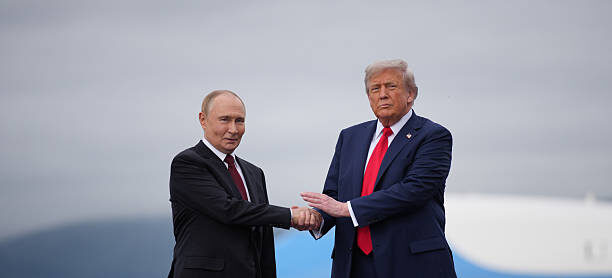
Furthermore, the report announces China as America’s biggest security threat and focuses on balancing trade and economic competition. Russia is notably absent from the report and the war in Ukraine is only timidly mentioned, a stance that prompted Putin to assert that the Strategy ‘aligns with Russia’s vision’. The Middle East is no longer cited as a strategic priority for the US; the report asserts that the ceasefire plan negotiated by Trump has been successful, despite repeated violations of said ceasefire through continued Israeli strikes on Palestinians being reported. The 2025 Strategy also de-emphasises the importance of Iran as a key adversary, as it has been greatly weakened by military action through Israeli attacks and Trump’s Operation Midnight Hammer. Thus, the Strategy dismisses some of the historic adversaries of the United States, the most surprising of which being Russia, and offers a significant break from the past.
On the other hand, the direct criticism of European allies comes as a surprise. Not only does Trump’s administration label European integration as ‘regulatory suffocation’, but points to issues of ‘civilisational erasure’, which supposedly refers to the levels of migration in Europe. One of the goals in Europe is to restore its ‘civilisational self-confidence’, painting European shortcomings as a self-made issue. The Strategy marks a decisive shift from European cooperation, and is a wake up call for European unity in the face of regional issues. The deployment of European troops from various states to defend against the potential annexation of Greenland already marks a significantly more defensive stance compared to the pre-Trump era. Furthermore, the focus of the report on Europe’s cultural value suggests a further retreat of its strategic and economic importance, and a focus placed fully on China in the East.
Some of the principles outlined in the report that will most likely determine future policy is the ‘primacy of nations’ and the American ‘predisposition to non-intervention’, which is argued as already present in the Declaration of Independence. The principles overall advocate for a kind of de-globalisation and de-coupling from the international political order and economy. America’s role in building a values-based world order is to be replaced with realist nationalist interests, with burden sharing and fairness also featuring as a major priority for the new strategy and highlighting yet another shift from power-sharping and pooling. This is especially alarming regarding the rejection of climate policies entirely in favour of realist national interests. The competition for critical minerals, supply chain dominance, and re-industrialisation highlights the prioritisation of American industrial interests and Trump’s attempts to restore economic dominance.
All in all, Trump’s approach leans more towards one of paternalistic non-interventionism, with much of his initiatives being transactional and conditional. The shift away from aid to investment, self-sufficiency, and independence tries to project a much more atomised world order. The report also significantly highlights Trump’s personal achievements in foreign policy, such as his status as the President of Peace and role in ending ‘endless wars’. The decisive shift away from the customs and doctrines that underpinned American foreign policy is characterised by a sense of unpredictability that has undoubtedly left the international order wary of maintaining relations with the United States. Canadian Prime Minister Mark Carney’s speech at the World Economic Forum took a stand against Trump by voicing the ‘rupture’ of American hegemony, highlighting the turning tides of American-aligned states. For instance, the kidnapping of Venezuelan President Maduro and his wife , as well as his support of right-wing, or patriotic, parties in Europe, which have been met with uncertainty and pushback from European powers, are just a few examples of the drastic measures Trump has been taking against other states. Trump’s foreign policy will no doubt leave a lasting effect on the international world order.
Photo credit: AFP, Getty Images
Other posts that may interest you:
Discover more from The Sundial Press
Subscribe to get the latest posts sent to your email.