
Abstract
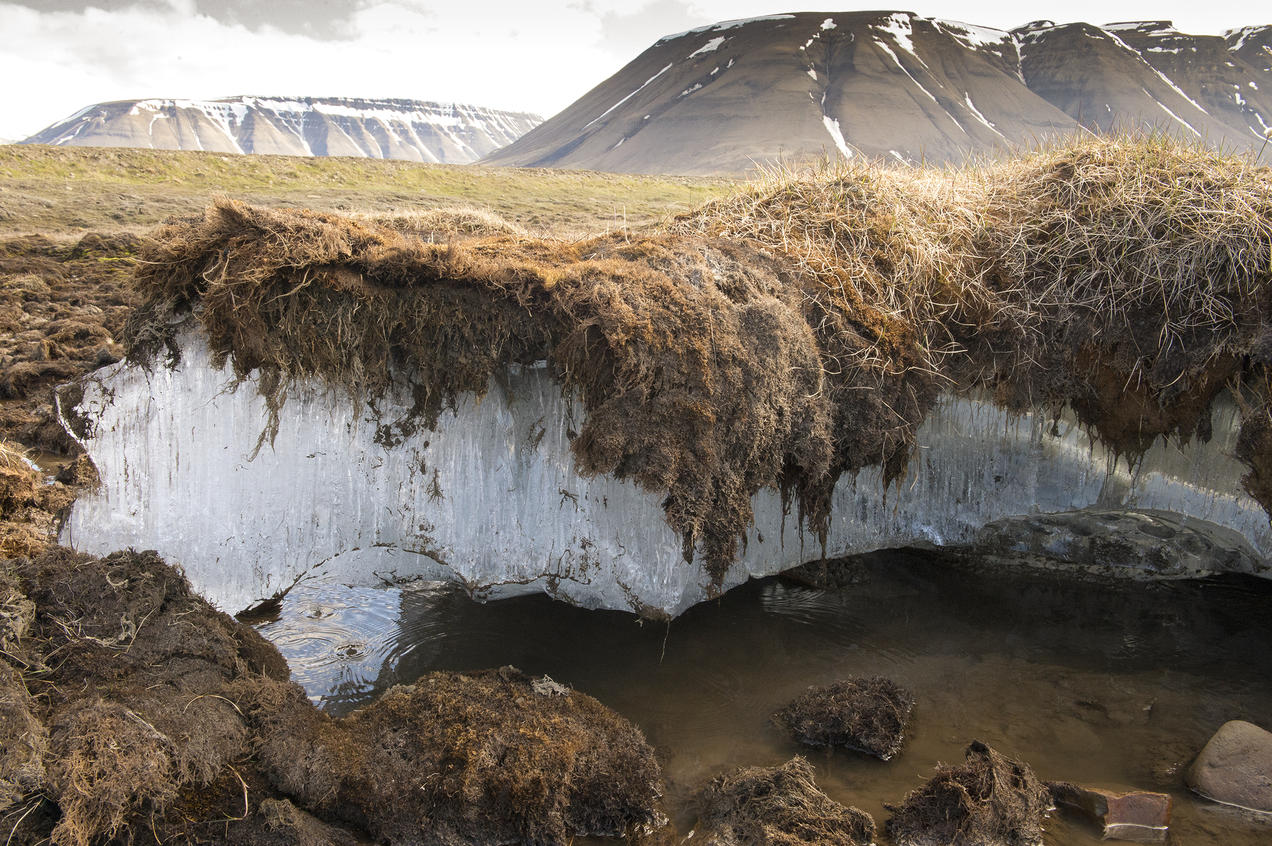
Permafrost, which covers about 24% of the Northern Hemisphere, contains roughly half of the Earth’s organic carbon and plays a crucial role in climate regulation. However, rising global temperatures are causing rapid thawing, releasing significant amounts of greenhouse gases like carbon dioxide and methane, thereby intensifying climate change in a dangerous feedback loop. Beyond contributing to global warming, permafrost thaw disrupts ecosystems, threatens biodiversity, damages infrastructure, and poses health risks, particularly in northern and Indigenous communities. This paper explores the environmental, socio-economic, and cultural implications of permafrost degradation and stresses the urgent need for integrated strategies combining scientific research, policy innovation, and community resilience. It advocates for global climate action informed by a deep understanding of permafrost’s role in maintaining ecological and societal stability.
1. Permafrost Thaw and Greenhouse Gas Emissions
Permafrost is an essential carbon reservoir. When it thaws, it exposes organic matter that has been frozen in the soil for centuries, which then degrades and releases CO₂ (carbon dioxide) and CH₄ (methane) — potent greenhouse gases that significantly accelerate global warming. Methane’s potential to cause warming is much greater than that of carbon dioxide over the same time period, making its release particularly concerning. In a 2020 report, The Arctic Institute highlighted the increasing permafrost temperatures and their contribution to climate change, drawing on long-term Arctic monitoring data. More recent findings by the Max Planck Society in 2023, led by researchers at the Alfred Wegener Institute, confirmed that thawing permafrost in Siberia is releasing large quantities of greenhouse gases into the atmosphere. Additionally, a 2021 article from Scientific American reported on research by Jean-Michel Claverie and his team at Aix-Marseille University, who observed the reactivation of ancient viruses from thawed permafrost, raising concerns about emerging pathogens. In 2024, The Guardian documented observations from the Copernicus Atmosphere Monitoring Service and the World Meteorological Organization, which linked increased Arctic wildfires and carbon emissions to permafrost degradation. These studies collectively show a feedback loop: thawing releases greenhouse gases, which in turn raise temperatures and cause further thawing. With an estimated 1.5 trillion tons of carbon stored in Arctic permafrost — nearly double the amount currently in the atmosphere — even partial release would dramatically accelerate global warming, making mitigation more urgent and modeling future climate scenarios increasingly complex. This unpredictability is due to the fact that the pace of emissions fluctuates according to temperature oscillations and several environmental cycles. These projections — which estimate future greenhouse gas emissions from thawing permafrost — should be integrated into climate adaptation and mitigation strategies to avoid worst-case outcomes. This highlights the importance of continued research on permafrost thaw, climate feedback loops, and emissions modeling.
In addition, the effects of greenhouse gas emissions from thawing permafrost are not confined to the Arctic. They have worldwide consequences: rising sea levels, shifts in precipitation patterns, and increased chances of extreme weather events occurring more frequently and with greater severity. Methane in particular may fuel the greenhouse effect and hence accelerate climate change, affecting ecosystems far beyond the Arctic region. Tackling the global effects of permafrost requires international cooperation and the development of comprehensive climate models that include permafrost dynamics.
Over time, thawed permafrost may also contribute to other forms of pollution indirectly through increased industrial activity in now-accessible Arctic regions. This increased industrialization could raise emissions even further both locally and globally. The cascading effects of greenhouse-gas release may include shifting distribution patterns for species and subsequent biodiversity loss. They would also cause a significant delay in achieving emission reduction targets while making mitigation more complex and more expensive. It is critical that policymaking and international accords take detailed account of the many layers of interrelationship associated with this issue structure.
2. Impact on Ecosystems and Biodiversity
Permafrost thaw changes Arctic ecosystems, transforming the landscape and threatening biodiversity. It destabilised soil, affecting flora and fauna and leading to destruction of human infrastructures. Once a carbon sink, the Arctic tundra has now become a net emitter due to increasingly fierce wildfires. Wildfires released over 640 million metric tons of CO₂ in 2023, which was greater than the annual emissions from most countries. These wildfires emit great volumes of greenhouse gases, reduce soil quality and destroy habitats. Shrubs are infiltrating the tundra, displacing native vegetation that provides the right habitat for species like caribou. Changes in hydrology, composition and vegetation of soil contribute to the alteration of food chain and migration routes, causing cascading ecological repercussions that can extend outside their immediate zones. Additionally, the loss of permafrost has also caused riverbanks and coastal areas to become destabilized, leading to further erosion and loss of habitat. Erosion threatens biodiversity, but it also poses a risk to human settlements and other infrastructures that depend on stable ground, therefore threatening crucial services such as transport and housing. The direct connection between permafrost thaw and biodiversity may endanger urgent conservation tasks including habitat restoration and protection for endangered species.
In addition, climate change is contributing to Arctic ecosystem alteration, which in turn is causing species responsible for maintaining ecological balance to be lost. These could include the Arctic fox or reindeer, the loss of which would bring profound changes in vegetation patterns and predator-prey dynamics. Such losses would have cascading impacts fast through the ecosystem, influencing species diversity and ecosystem health. Moreover, the encroachment into thawing landscapes of new species would disrupt the current ecosystems, thereby heightening competition for resources already under duress and putting an extra strain on species already in trouble. Changes in biodiversity can alter global ecosystems in ways that increase the risk of collapse, potentially enabling even more CO₂ to be released into the atmosphere. While the impact of this loss would be harder to measure, their potential implications could impede the ability of ecosystems to cope with climate events, ultimately amplifying the effects of climate change significantly much greater in the years ahead.
Changes in the ecosystem also affect local economies, especially when the livelihood for such economies comes from natural resources such as fishing, hunting, and tourism. The sustainability of these activities is endangered by low biodiversity and degraded ecosystems, which cause local economic disunity. In particular, declining fish stocks or loss of hunting grounds and reduced tourism offer would threaten local livelihoods, especially the Indigenous people strongly bound to their connection with land. Many Indigenous people’s cultural identities—which are deeply intertwined with ecological traditions— are in danger because of the loss of species and lifestyle changes. Biodiversity is a concern that cuts across different spheres including the environment, history, and economy as it involves the survival of ecosystems and well-being of communities. Working towards a common goal between conservationists and people utilizing traditional ecological knowledge is critical to sustaining and enhancing the resilience of Arctic ecosystems for future generations.
3. Hydrological Changes and Geomorphological Instabilities
Thawing permafrost results in the alteration of hydrology and drainage patterns and landscape changes. Ice-rich permafrost degradation results in land subsidence, lake formation or disappearance, and altered water availability. These changes negatively impact human settlements and animal ecosystems because they affect aquatic species reliant on stable aquatic environments. Slope destabilisation is aggravated by thawing, which increases landslide risk. This puts local environments further in danger and crumbles up local landscapes. Subsidence and thermokarst defloration result in uneven, unstable ground which can damage infrastructure like roads, pipelines, and buildings. This property damage places a serious financial burden on the communities affected by requiring costly repairs and infrastructure redesign. Landscape changes in water quality, sediment transport, and overall ecosystem health affect the habitats of several species dependent on reliable water supplies. Research indicates that thawing permafrost has begun to release once-trapped heavy metals and nutrients into water bodies, potentially impacting aquatic ecosystems and drinking water supplies in nearby communities. Such pollutants can bioaccumulate in fish and other wildlife, presenting additional risks to both animal and human health.
In addition, these hydrological changes impose serious challenges for indigenous communities dependent upon natural water sources for their livelihood. Changes in the patterns of rivers and groundwater levels can impact traditional hunting, fishing, and agricultural practices, thereby undermining food security as well as cultural traditions. The pollution of water bodies with toxins and heavy metals from thawing earth presents serious health dangers, making it ever more pressing to implement strict environmental monitoring with proactive mitigation strategies. Access to clean and dependable water supplies is essential for these communities’ well-being and sustainability. Meanwhile, decreased water availability can disrupt industries that depend on stable water sources- agriculture, hydropower, and fisheries- further complicating economic development in those areas. Uncertainties in water supply would fuel competition for limited resources, intensifying social and economic tensions within the most vulnerable communities.
Other catastrophes also threaten cultural heritage sites preserved in permafrost, such as ancient settlements and archaeological remains. The degradation of these sites due to thaw-induced permafrost collapse represents an irreversible loss of historical knowledge and cultural identity. Apart from helping with understanding interactions between former humans and their environments, cultural heritage sites also provide cultural continuity for Indigenous and local communities. The preservation work of such sites should reflect how vulnerable cultural landmarks are and utilize reliable contemporary science in documenting and preserving landscapes from the oncoming experience of climatic degradation. Some potential solutions include digital archiving, structural fortifications, and local community programs for landscape preservation. International cooperation for funding support is essential to conserve these heritage sites from the destruction of powerful climate processes. Addressing hydrological and geomorphological instabilities is a composite challenge which necessitates a mechanism of cross-analysis of environmental, cultural, and social economic interests.
Permafrost thaw constitutes one of the greatest threats to climate stability, ecology, and human health. Consequences include increased greenhouse gas emissions, destabilised habitats, and infrastructure problems, as well as the revival of ancient pathogens. The cascading consequences of permafrost degradation stress how environmentally, socially, and economically interdependent all these systems are. Addressing these impacts will require integrated applications through multi-disciplinary approaches including scientific investigations, policy intervention, and engagement of local communities. Scientific investigations would provide a more in-depth understanding of permafrost dynamics while policy interventions would maintain proactivity and be adaptable to emerging issues threatening permafrost regions. Fortunately, community engagement should guarantee that adaptation strategies are culturally beneficial and based on knowledge systems.
The permafrost problem must be well understood and its challenges addressed as they intersect with protecting the Arctic and broader global climate resilience. The Arctic cannot be seen as an isolated system; transformations are ripples impacting global weather, sea levels, and biodiversity. Only with innovative science, committed governance, and active involvement from the community can the expanding consequences of thawing permafrost be curbed and the fragile ecosystems of Earth be made to endure through adaptation. In that regard, global cooperation and engagement of the unique Indigenous perspectives will be essential in the formation of such global, localized, and sustainable adaptation and mitigation strategies. Traditional Indigenous communities had a long track record of surviving environmental changes, acted as valuable stores of knowledge about local ecosystems, and may use that cultural wisdom to contribute to better resilience strategies.
4. Policy Landscape and the Need for Action
While a large set of scientific evidence now points to permafrost thaw as a multiplier of climate change, policy action remains limited and disjointed. At the global scale, the current climate agreements like the Paris Agreement are important for coordinating collective emissions reduction ambitions, but they have big blind spots in regard to the unique processes of permafrost degradation. For example, the core mechanism of the Agreement involves nationally determined contributions (NDCs) that are incapable of accounting for the feedback loops which systematically arise from thawing permafrost. Failing to account for these dynamics leads to significant under-estimations of global temperature increases and leaves countries with no incentive to consider specific protections put in place for permafrost-centered risks. Incorporating permafrost thaw dynamics into calculations for NDCs would improve scientific credibility to their climate pledges.
At a regional level, initiatives like those by the Arctic Council have supported cooperation between Arctic states while promoting permafrost monitoring. However, they have not delivered enforceable mechanisms or binding agreements that would limit emissions or further industrial growth in regions sensitive to permafrost thaw. For example, Russia’s Arctic development strategy is centered around resource extraction and provides no plan for environmental protection. More infrastructure and energy development projects will simply contribute to the ongoing degradation of permafrost. The lack of any regulatory frameworks—in land-use planning, industrial licensing or environmental impact assessments—will further expose permafrost regions to the risk of destabilization.
Although technological and science-based measures will be needed, real change requires strong policies to back up those initiatives. Monitoring networks such as the Global Terrestrial Network for Permafrost (GTN-P) contribute useful data regarding thaw but have limited geographic coverage and precarious funding. If permafrost monitoring can be useful for policy makers, then it must be scaled up and embedded into national and international governance systems. For example, mandatory risk assessment protocols for Arctic infrastructure projects could ensure that climate resilience into their respective projects.
Another key component of permafrost policy is the incorporation of Indigenous knowledge systems into policy initiatives. Indigenous peoples in the Arctic have lived in the region for thousands of years and have detailed, place-based ecological knowledge of these regions. Indigenous knowledge provides an opportunity to enhance permafrost monitoring and adaptation work. Today, this resource is neglected; the involvement of Indigenous peoples in climate change policy decisions is frequently tokenistic, limited, or simply missing. Developing co-management governance structures which allow Indigenous communities and their leaders to make and participate in decisions around the environment can support culturally and ecologically appropriate outcomes. In addition, community monitoring projects funded through international climate financing can provide valuable insights for global climate efforts while empowering Indigenous communities.
In reference to these policy gaps, this paper suggests a number of recommendations. First, the management of permafrost dynamics should be recognized explicitly in international climate agreements. A dedicated Permafrost Task Force under the United Nations Framework Convention on Climate Change (UNFCCC) would help coordinate research and establish standardized monitoring protocols to ensure international policies are in alignment. Likewise, nationally-determined contributions should be re-evaluated to account for the carbon feedback mechanisms revealed by the monitoring of permafrost to improve confidence in global carbon and climate budgets.
Second, monitoring and early-warning systems must be enlarged. Expanding both satellite-based observations and ground stations—through the Green Climate Fund or related mechanisms—would allow for a wide coverage of permafrost regions. Additionally, developing legal frameworks that include assessment of permafrost risk as a requirement for all transportation and infrastructure development would work to successfully prevent maladaptive projects that can exacerbate thaw.
In addition, it is important to regulate industrial development in permafrost regions. When necessary, regulatory bodies must take a hard position by creating enforceable environmental regulations that require permafrost impact assessments for mining, oil, and gas exploration, and development. In sensitive environments of potential cultural or economic significance, moratoriums or restrictions on industrial growth may avoid significant irreversible alteration to permafrost and keep it from collateralized negative effects to the environment.
Crucially, we will also need to co-develop Indigenous-led adaptation. Climate finance initiatives that support community based monitoring programs and adaptation strategies that are aimed at increasing the resilience of Arctic communities are an important measure. It is also critical that free, prior and informed consent (FPIC) is a policy requirement of all development projects to bring Indigenous voices to the forefront of decision making.
Lastly, research on adaptive mitigation methods like low-impact geoengineering and land management should be encouraged. For instance, pilot studies for projects like “permafrost insulation using reflective materials” and “rewilding landscapes with herbivores that graze” could restore a balance with nature and even provide mitigation paths. These types of approaches must rely on ethical protocols and be supervised and authorised by international bodies to mitigate adverse effects.
This expanded policy framework acknowledges permafrost thaw as a climate risk on a global scale, not simply a regional risk. Policies developed internationally, nationally, and locally that include specific policy action for permafrost degradation provide a course of action to slow the rate of degradation, reduce emissions, and protect ecosystems and communities from cascading climate risks.
5. Conclusion
The thawing of permafrost must be tackled with utmost urgency as the ramifications will reverberate across generations and borders. Effective policies and proactive interventions are keys to safeguarding the future of the planet. That includes international cooperation to cut emission levels worldwide, creating monitoring and early-warning systems, and developing not easily affected infrastructure by permafrost. With these priorities in response, the global community can mitigate most of the awful consequences that can arise from thawing permafrost.
6. Bibliography
The Arctic Institute, “Permafrost Thaw and Climate Implications,” The Arctic Institute, 2020, https://www.thearcticinstitute.org/permafrost-thaw-warming-world-arctic-institute-permafrost-series-fall-winter-2020/.
Max Planck Society, “Permafrost and Climate Change,” Max-Planck-Gesellschaft, 2023, https://www.mpg.de/23899031/permafrost-climate-change.
“Ancient Diseases Emerging from Permafrost,” Scientific American, 2021, https://www.scientificamerican.com/article/as-earth-warms-the-diseases-that-may-lie-within-permafrost-become-a-bigger-worry/.
“Arctic Wildfires and Carbon Emissions,” The Guardian, November 21, 2024, https://www.theguardian.com/environment/2024/nov/21/canada-arctic-herschel-island-qikiqtaruk-climate-permafrost-tundra-ecology-aoe.
NASA. “New NASA Study Tallies Carbon Emissions From Massive Canadian Fires.” August 2024. https://www.nasa.gov/earth/new-nasa-study-tallies-carbon-emissions-from-massive-canadian-fires/.
Joly, Kyle, and David R. Klein. “Complexity of Caribou Population Dynamics in a Changing Climate.” National Park Service. Accessed April 24, 2025. https://www.nps.gov/articles/aps-v10-i1-c7.htm.
“Permafrost Slows Arctic Riverbank Erosion.” Nature, October 2024. https://www.nature.com/articles/s41586-024-07978-w.
Jean-Michel Claverie and Chantal Abergel, “Reconstructing a 30,000-Yr-Old Virus: Implications for the Conservation of Viable Viruses in Permafrost,” Viruses 8, no. 4 (2016): 102, https://doi.org/10.3390/v8040102.
“Putting the Freeze on Invasive Alien Species.” WWF Arctic. Accessed April 24, 2025. https://www.arcticwwf.org/the-circle/stories/putting-the-freeze-on-invasive-alien-species/.
“The State of Arctic Terrestrial Biodiversity.” Arctic Council, May 2021. https://arctic-council.org/news/snapshot-of-an-ever-changing-arctic-the-state-of-arctic-terrestrial-biodiversity/.
Indigenous Peoples Have the Knowledge and Practices to Support Climate Resilience.” WWF Arctic. Accessed April 24, 2025. https://www.arcticwwf.org/the-circle/stories/indigenous-peoples-have-the-knowledge-and-practices-to-support-climate-resilience/.
Schuur, Edward A. G., Benjamin Abbott, and the Permafrost Carbon Network. 2015. “Climate Change and the Permafrost Carbon Feedback.” Nature https://www.nature.com/articles/nature14338
Huggel, Christian, John J. Clague, and Oliver Korup. 2012. “Is Climate Change Responsible for Changing Landslide Activity in High Mountains?” Earth Surface Processes and Landforms 37 (1): 77–91. https://www.researchgate.net/publication/230539918_Is_climate_change_responsible_for_changing_landslide_activity_in_high_mountains.
Climate Institute and The Firelight Group. “The Impacts of Permafrost Thaw on Northern Indigenous Communities.” Canadian Climate Institute, 2022. https://climateinstitute.ca/wp-content/uploads/2022/06/Impacts-permafrost-thaw-Climate-Institute-Firelight-Report.pdf.
Daniel Martins. “Erosion, Permafrost Thaw, and Sea Level Rise Threaten Inuit and Arctic Heritage Sites.” The Weather Network, March 18, 2024. https://www.theweathernetwork.com/en/news/climate/impacts/erosion-permafrost-thaw-and-sea-level-rise-threaten-inuit-and-arctic-heritage-sites.
The Arctic Institute. “Thawing Grounds, Rising Stakes: The Importance of Including Permafrost Emissions in Climate Policy.” The Arctic Institute, March 2025. https://www.thearcticinstitute.org/thawing-grounds-rising-stakes-importance-including-permafrost-emissions-climate-policy/.
Schaefer, Kevin, et al. “Policy Implications of Warming Permafrost.” United Nations Environment Programme, 2012. https://epic.awi.de/33086/1/permafrost.pdf.
The Firelight Group. “The Impacts of Permafrost Thaw on Northern Indigenous Communities.” Canadian Climate Institute, 2022. https://climateinstitute.ca/reports/the-impacts-of-permafrost-thaw-on-northern-indigenous-communities/. Susan M. Natali et al., “Permafrost Carbon Feedbacks Threaten Global Climate Goals,” Proceedings of the National Academy of Sciences 118, no. 21 (2021): e2100163118, https://doi.org/10.1073/pnas.2100163118.
Other posts that may interest you:
Discover more from The Sundial Press
Subscribe to get the latest posts sent to your email.