
“He really had been through death, but he had returned because he could not bear the solitude.” Cien Años de Soledad Gabriel García Márquez. Magical Realism is a literary genre that originated in 20th century Latin America, blending surrealistic elements with ordinary activity. Unlike science fiction or fantasy where supernatural characteristics are fundamental to the storyline, magical realism subtly incorporates fantastical elements, challenging readers to reconsider the limits of reality.
Its roots can be traced back to Latin America’s tradition of storytelling, where myths, legends and folklore often blurred the lines between reality and fantasy. Alejo Carpentier, one of the founders of the movement, argued that due to the “uniqueness” of Latin Americans’ culture it is inherently “marvelous.” He explained that this is because of the region’s history of conquest, colonization, revolutions, and the syncretism between Indigenous, African, and European traditions. This perspective is materialized in his books, where rather than inventing supernatural dimensions, Carpentier drew on historical events that appeared so dramatic, violent, or improbable they appeared almost magical. For example, in El Reino de Este Mundo, he recounted the Haitian Revolution using a vivid, myth-like imagery to emphasize the strangeness and grandeur of the events, adding surreal characteristics into historical facts. For example, Carpentier used Indigenous and Afro-Caribbean spiritual practices (like Vodou) not as “fantasy,” but instead as normalised magical elements within the realities of his books. This challenged European rationalist perspectives by asserting that these worldviews were just as legitimate.
Magical Realism’s influence as a literary movement has become a vehicle for the formation of postcolonial identity, helping the region in reclaiming indigenous and non-Western perspectives. During times of oppression under authoritarian regimes, Magical Realism has also provided writers with subtle means of critiquing dictatorships, censorship, and violence. Authors highlight the corrupt character by encompassing how political realities can be phantasmagorical. Through this, Magical Realism has evolved into both a tool of social commentary and cultural empowerment. Through the juxtaposition of magical elements with everyday realities, authors sought to critique political oppression, cultural hegemony, and socio-economic disparities.
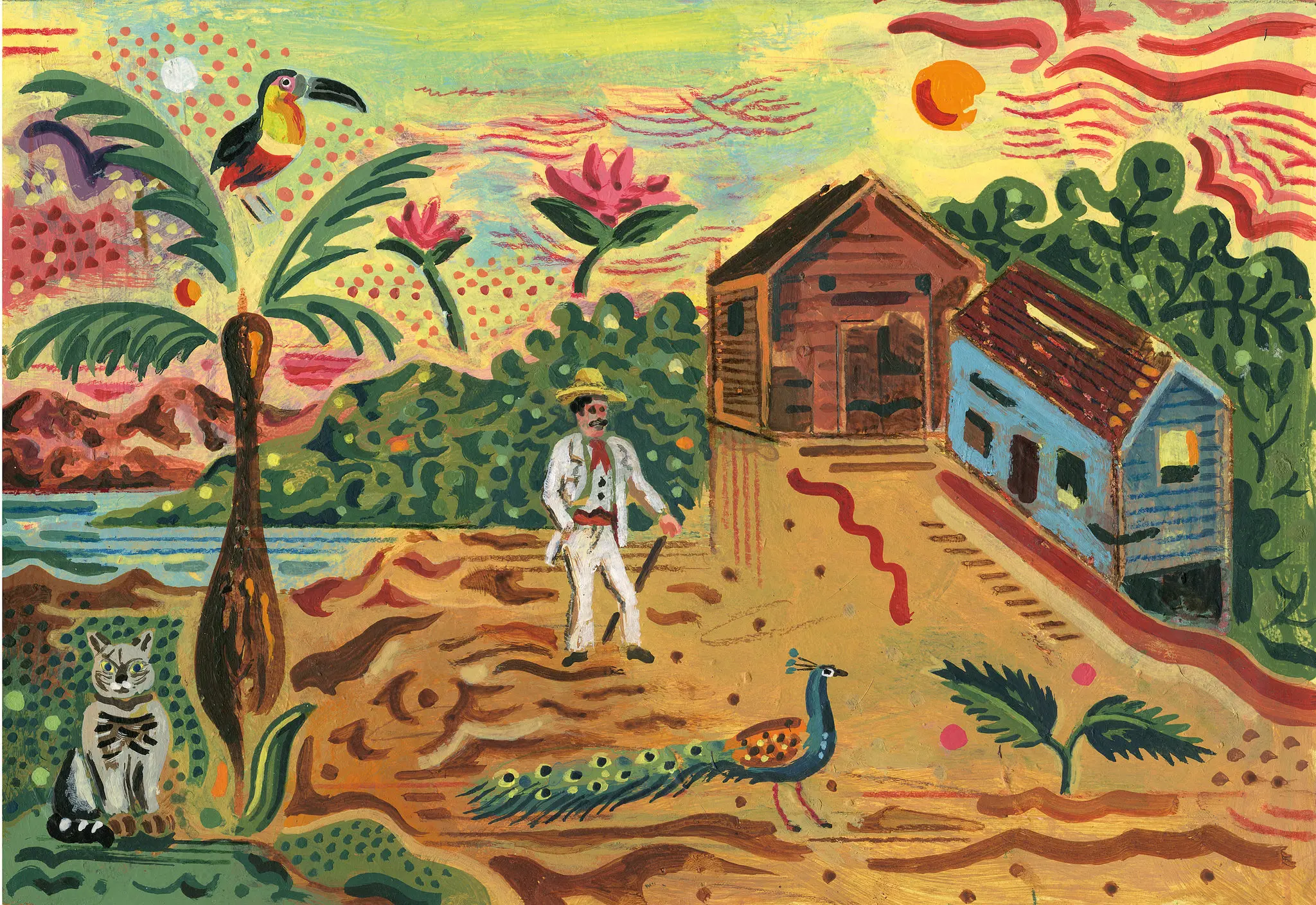
One of the most prominent figures within this literary movement is Colombian author Gabriel García Márquez. His belief that ordinary life in Latin America is full of extraordinary, almost magical motifs, permeates his stories. His masterpiece Cien Años de Soledad takes place in a fictional town called Macondo, in Colombia, in which he creates a microcosm of Latin American history of colonialism, foreign exploitation and authoritarianism. By embedding magical elements, Màrquez attempts to showcase how Latin America’s lived reality of oppression and violence is in itself surreal and more staggering than general fiction.
Today, Magical Realism has a global impact, expanding beyond the literary sphere. It has influenced individuals like Japanese author Salaman Rushdie in Midnight Children where he, like Marquez, blended fantastical elements with the historical realities of postcolonialism to explore fragmented social identity i n
and international artists like Frida Kahlo and Diego Rivera, by incorporating symbolic imagery to explore themes of identity and cultural heritage.
As a movement, magical realism also relies on recurring structural devices. Time is frequently cyclical rather than linear, emphasizing how colonial violence, inequality, and political repression repeat across generations. Myth and history are layered together: official “facts” coexist with rumor, prophecy, or spiritual practices, suggesting that Latin America’s past cannot be fully captured by European rationalist archives alone. This aesthetic becomes especially potent under censorship, because writers can represent trauma indirectly—through ghosts, enchanted landscapes, or communal curses—allowing critique without always naming the regime.Beyond Carpentier and García Márquez, other Latin American authors expanded the form in distinct directions. Juan Rulfo’s Pedro Páramo turns a Mexican village into a chorus of the dead, where memory itself speaks, blurring the boundary between testimony and haunting. Isabel Allende’s La casa de los espíritus uses family saga and spiritual presences to narrate class conflict and political rupture, showing how private life is shaped by national catastrophe. Together, these works demonstrate that magical realism is not merely “pretty” symbolism: it is a literary method for representing histories that feel unbelievable precisely because they are real.
Other posts that may interest you:
Discover more from The Sundial Press
Subscribe to get the latest posts sent to your email.