

The resurgence of the Caribbean has merged into the dominant contemporary tides of geopolitics and international Chinese power. Historically secured under the Monroe Doctrine and reinvigorated during the Cold War, the region is currently witnessing China’s reengagement, pumping large-scale loans into the local economy and effectively embedding China into its closely tied infrastructure, thus impacting the economy, labour markets, and employment.
The Chinese entry into the Caribbean is mostly considered from an economic standpoint. The Caribbean Development Bank (CDB) showcased this through their total merchandise trade with China, which “…increased from USD 167 million in the year 2000, to USD 1,713 million in 2014, which corresponds to an 18.2% annual growth rate” (Stephan, Mcleod, Peters, p.10). Investing in infrastructural points in the region was initially attractive due to the abundance of natural resources. This is exemplified most notably by oil in Tobago in 2009, the sugar industry in Jamaica in 2010, and Guyana’s bauxite mining in 2012, all of which have been largely financed by the Belt and Road Initiative (BRI) since 2013. Under the initiative, policy banks and government-owned enterprises have entered and acquired companies within the region and through Xi Jinping’s Dollar Diplomacy, the government offers concessionary loans of up to 3 billion to coerced countries to uphold diplomatic alliances. A major reason for this can be attributed to cyber operations, increasingly prominent in the Caribbean, and motivated as a by-product of China’s 14th Five-Year Plan for National Information, published in 2021.
Furthermore, these loans depend on the principal sector of each country: resorts and hotel infrastructure in the Bahamas and Barbados and transportation infrastructure, industrial parks, and convention centers in Antigua, Trinidad and Tobago, which alone have accumulated a total of US $ 2.7 billion. These investment trends are aided by Chinese policy banks, including the Export-Import Bank of China (China EXIM) and the China Development Bank (CDB), where fixed interest rates usually vary from “…2-3% maturity over 15-20 years with grace periods, and two payments per year.”
Also part of Xi’s “Go Out Strategy,” is the internationalization of Chinese companies, seen through the increase in Chinese Free Trade Agreements (FTAs), with 17 trade and investment partners, and 14 countries having signed the Regional Comprehensive Economic Partnership. In fact, 2023 marks the most recent Chinese FTA agreement to date, which was signed by Ecuador’s former president, Guillermo Lasso, and ratified in 2024, while simultaneously introducing a bipartisan bill in March 2023, that “…aims to expand trade benefits to Ecuador and U.S. trade with the Western Hemisphere…” From a historical standpoint, Chile’s free-trade pact with China in 2005 became the opening salvo for the rest of Latin America and the Caribbean. The same economic move was made four years later by Peru, now accounting for 39% of Chilean exports and 77% of bilateral trade growth. In 2010, Costa Rica joined, and traded volumes reached 3.8 billion, “…up 19.2% over the previous year, of which, China exported 690 million US dollars and imported 3.11 billion US dollars.” This domino effect continued in Nicaragua after its diplomatic break with Taiwan and dramatic turn toward China.
Finally, regional agreements also play an essential role in the rise of Latin American and Caribbean relations with China, specifically concerning the South American trade bloc, MERCOSUR. A priori, the countries that have established FTAs are considered associated members and hence do not follow the same legal regulations as full members. This trend and policy shift is beginning to challenge the stability of the bloc, American foreign policy, and public diplomacy investment, as exhibited by Argentina’s president Javier Milei’s speech at the Argentina Rural Society’s Annual Exhibition in Buenos Aires in 2025, where “he insisted that his government was seeking an FTA with the United States…” (MercoPress, 2025).
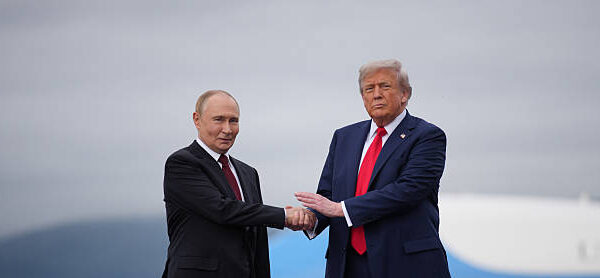
Photo Credit: Wall Street Journal
Other posts that may interest you:
Discover more from The Sundial Press
Subscribe to get the latest posts sent to your email.