
This article is part of our collaboration with International Policy Review at IE University. Photo Credits: GreenH2Atlantic
Abstract
This paper explores whether sustainability policies under the European Green Deal can stimulate green job creation without undermining business viability in Southern Europe. Focusing on countries with high unemployment, Portugal, Spain, Italy, and Greece, it examines the labor market potential of renewable energy projects such as GreenH2Atlantic, RESTORE, HYPERGRYD, and Reffect Africa. These initiatives show promise in job creation across construction, software development, biomass waste technology, and more. However, challenges persist: Southern Europe faces a significant green skills gap, while businesses, especially SMEs, struggle with high initial costs, complex regulatory compliance, and global competitive pressures. The study evaluates how EU investments, funding mechanisms, and market trends intersect with business constraints and labor shortages. It proposes policy suggestions including regional green energy hubs, tax incentives for upskilling, SME support platforms, and flexible regulatory frameworks. The conclusion argues for a balanced approach that integrates green employment growth with realistic support mechanisms to ensure both environmental and economic sustainability in the region.
Keywords: European Green Deal, Green Jobs, Business Viability, Southern Europe, Renewable Energy Projects.
1. Introduction
The European Green Deal is composed of several initiatives that shape the European Union ́s (EU) sustainability policy. With a total investment of €600 Billion, its main goal is to overcome challenges posed by climate change and environmental degradation. More specifically, via this initiative, the EU aims to achieve zero net emissions of greenhouse gases by 2050, cut greenhouse gases by 2030, decouple economic growth from resource use, and do this while leaving no one behind.
This paper will look at green jobs, which are jobs that help the preservation and restoration of the environment. They can be adapted into traditional sectors such as manufacturing or construction or into new emerging sectors such as renewable energy. They play a key role in contributing to eco-friendly processes. Most of the green outputs we see such as transportation or green construction are not necessarily done through green processes.
Green jobs can foster employment. Vacancies for green jobs are nearly double the number of workers prepared to fulfill them. Moreover, demand for green jobs is predicted to more than double by 2050. For this essay, we will be focusing on the energy sector. Demand for workers in the energy sector in Europe increased by 1.5 million in 2023. Furthermore, the supply of workers from 2023 and 2024 grew by 5.6%, outpaced by the demand for these types of jobs, which grew by 11,6%.
This study will look at Southern European countries, mainly Portugal, Spain, Italy, and Greece, where unemployment is high. The average unemployment between these countries in 2025 is 7.9%, whereas the average in the EU is 5.8%. Southern Europe has suffered several political and economic crises, leading to its vulnerable position within the union. In exchange for financial assistance, since 2009, the EU has pressured the south to implement austerity. In turn, these policies have had an impact on the extent to which the country can participate in its economy. Therefore, unemployment rates have drastically increased. This growth in unemployment is highly unsustainable in the long run, potentially causing social and political unrest. Long-term unemployment fosters distrust in government institutions. Yet, high unemployment increases dependence on government welfare. This dependence reduces tax revenue and limits the government’s capability to tackle systematic issues.
This paper will analyze different kinds of renewable energy projects under the European Green Deal that take place in Southern Europe and tackle their impact on employment. Furthermore, an analysis of EU sustainability policies under the European Green Deal and their impact on business viability. Finally, the paper will present policy suggestions, aimed at solving this challenge. With the current energy crises and political tensions with the United States, it is increasingly important for Europe to become self-reliant in the energy sector.
2. European Green Deal Projects in Southern Europe in the Energy Sector
2.1 GreenH2Atlantic (Sines, Portugal)
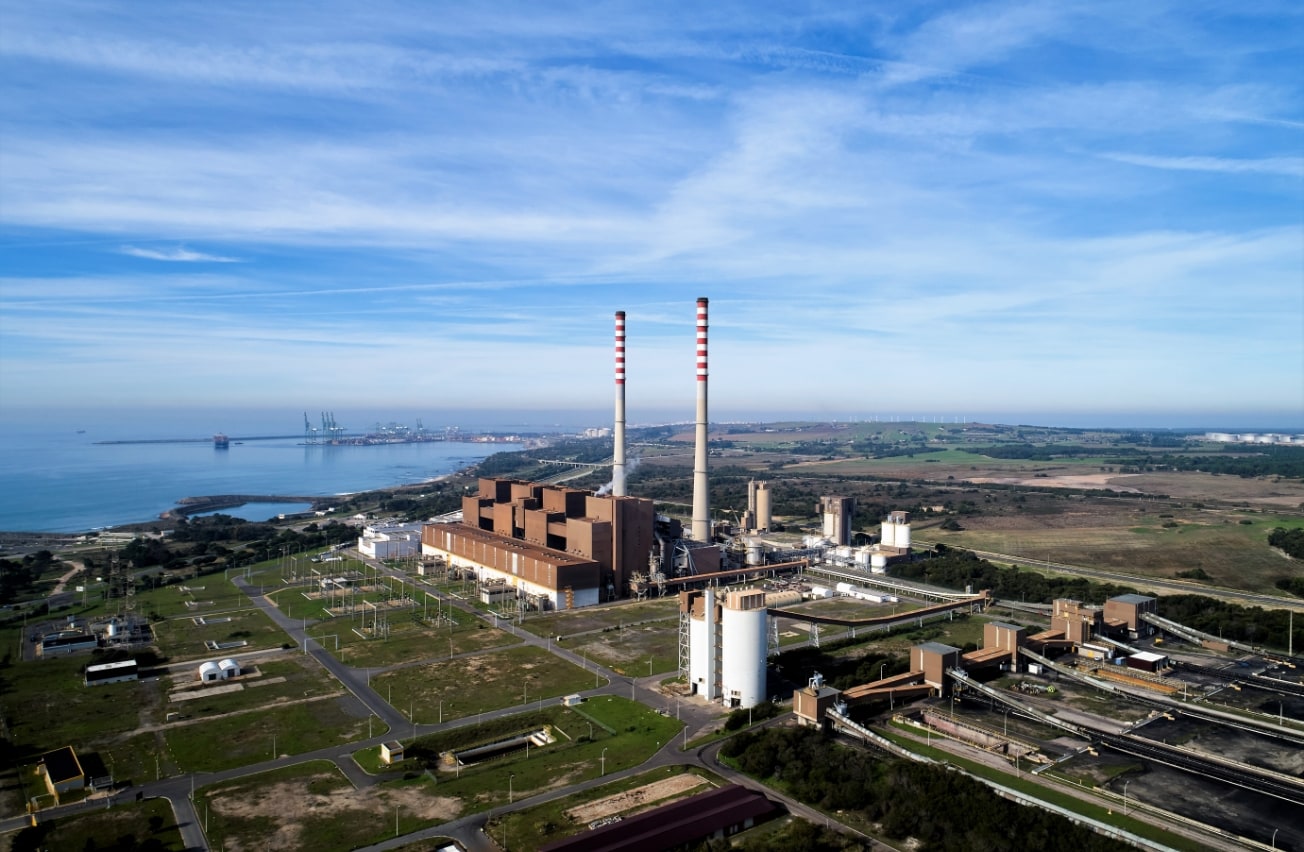
The GreenH2Atlantic is a project aimed at building a 100 MW hydrogen hub. This project officially started in December of 2021. The construction of the hydrogen plant started at the beginning of 2024 and is predicted to finish by the end of 2026. The GreenH2Atlatic involves a total of 12 European-based partners and a budget of €30 Billion.
Regarded as one of the key technologies to transition into clean energies and reduce greenhouse gases, hydrogen has shown to be cost-effective and easily scalable. Reducing reliance on coal power plants has been an issue, as we can see with Germany ́s several attempts to close its power plants. Transitioning to hydrogen energy is less time-consuming, cost-effective, and currently feasible. This project was designed to become a key point in Europe ́s transition to green energy. Its main goals are to promote decarbonization initiatives, take advantage of the already existing coal power plants and energy grids, thus, reducing building costs, expand the use of infrastructure and combining wind and solar energy, and finally, shape the EUs path towards clean energy. This is extremely important for Portugal from a political perspective, as it would enhance its position as a key player, further strengthening its position within the EU.
Due to its strategic location and easy access to water, Sines proved to be the best location for such a project. With Portugal ́s vast maritime territory, transporting water into the infrastructure would be quite simple.
GreenH2Atlatic has created 1147 direct jobs and 2744 indirect jobs. These jobs are created across the construction, operation, and maintenance sectors. This is crucial for Portugal as only 71% of its demand for renewable energy was met in 2024. With the green energy sector growing every year, and the youth unemployment rate sitting at 19,5%, the significance of this project for the national economy is huge.
However, there are still considerable challenges in this area. There is a lack of skilled labor in these sectors, showing an education gap. Yet, to tackle this, the government has launched several initiatives, mainly the “Green Skills & Jobs program.”
2.2 RESTORE (Navarre, Spain)
RESTORE is a five-year-long project from October 2021 to September 2025 focused on decarbonizing the District Heating and Cooling System.
Heating and cooling technologies have always been a significant part of the energy sector in Europe, around 40%. With recent efforts to move away from Russian energy supplies, countries in the EU, such as Germany, must rationalize their energy consumption, including in the cooling and heating sector. This project is based on the idea of seasonal storage. When demand for heating or cooling is low, it is stored and then released when demand increases. This approach, together with other already existing renewable technologies, allows for RESTORE to become 100% sustainable. Once this project proves completely effective, it can be easily scalable across Europe. This has been shown by seven successful virtual use cases conducted before its implementation.
A main pillar of its success is Europe ́s diverse climates. While central and northern European cities have a high demand for heating, Southern Europe can easily meet the demand and vice versa.
This initiative has created employment opportunities within renewable energy integration, smart grid technology, and software development. With the highest unemployment rate in Europe and the growth of the energy sector projected to be 13,3%, RESTORE is a very meaningful project for Spain. To support this growth, Spain needs to work on creating green employment training.
2.3 HYPERGRYD (Barcelona, Spain)
While RESTORE solely focuses on technological development and DHC, HYPERGRYD has a broader focus. The Barcelona-based project aims to tackle several challenges in the energy sector, such as DHC and electricity. This research and innovation program, which started in October 2021 and is predicted to end in March 2025, also focuses on community engagement by adopting the “local energy communities’ approach.” In short, this method allows citizens to produce their energy, thus, making them part of the project. Moreover, this also allows consumers to become independent from large power plants, hence, encouraging sustainable practices.
HYPERGRYD leverages existing grids and aims to connect them across seven EU countries: Spain, Italy, Sweden, Germany, Austria, Poland, and Belgium. By doing so, HYPERGRYD can reduce energy costs for citizens and boost clean energy usage.
To increase its success probability, HYPERGRYD delivers tailored technologies to different EU countries. By conducting thorough market research via a lab in cases, HYPERGRYD concluded that each country has different needs. HYPERGRYD has conducted live-in labs in Italy, Austria, and Poland, all of which have different demands. While not specified, this project ́s focus on ICT and developing smart hybrid grids, suggests employment opportunities in technology and development software.
2.4 Reffect Africa (Tinos, Greece)
Reffect Africa is an EU-Africa partnership project to integrate off-grid African societies into one common energy system. This project started in November of 2021 and is planned to end in October 2026. A total budget of €8 Million is necessary, €7 Million of which invested by the EU.
Furthermore, this project will also work on developing sustainable fertilizers for farmers through the production of biochar. This will be done through the optimization of biomass waste from the following, olive mill residues, almond hulls and husks, millet, peanut wastes, and sugar cane bagasse.
To have a full implementation across the African continent, three full-scale demonstrators were implemented in Morocco, Ghana, and South Africa. Via these three strategically built demonstrators, this technology is both cost-effective and adapted to local needs. Together with these demonstrators, water laboratories were also put in place to ensure safe drinking water and crop sterilization. To ensure its success and measure its real impact, Life Cycle Assessments, and Life cycle Costing are conducted.
Due to the project’s scale, employment opportunities vary across Europe and Africa across a variety of sectors, such as biomass waste technology, renewable energy research, and agricultural improvements. Unlike the previously mentioned projects, Reffect Africa holds possible roles in both technical and does not require high skilled labor, increasing the number of people the project could employ.
3. Business Viability under EU Sustainability Policies under the European Green Deal
3.1 Investment Opportunities
Under the European Green Deal, there are several investment opportunities within the energy sector. These include funding programs with beneficial policy frameworks. For this reason, businesses have the chance to capitalize while transitioning to renewable energies. When it comes to renewable energy investments, the EU investment fund has invested in 77 projects in 18 European countries. This investment comes to a total of €4.2 Billion.
Additionally, the European Investment Bank aims to increase investment in the energy sector to €95 Billion in 2025. This is a big jump from 2024 when only 60% of investments went towards climate action and environmentally sustainable companies and projects.
Moreover, the European Investment Bank aims to have 50% of its lending directed towards environmental sustainability, in which the energy sector plays a big role.
These investments are projected to result in €45 Billion in energy costs by 2025. In 2030, these savings would jump to €130 Billion per year.
Such investments show the EU ́s redirection toward clean energy and how businesses can profit from this decision. It is important to consider that businesses in Europe are in the process of innovating, where this investment money may act as valuable income.
3.2 Financing Mechanisms
Implemented in 2021, the EU Renewable Energy Financial Mechanism aims at fostering closer collaboration between member states to create renewable energy projects. Yet, it is known that to maximize efficiency and output, states should not work alone. Prioritizing public-private collaborations is essential for these initiatives.
A variety of financial mechanisms, such as the European Investment Bank, are working towards increasing both public and private investments. A notable example of private funding is the Green Climate Fund. With the help of the European Investment Bank, the GCF tackles climate action in developing countries. Using climate investment expertise, the GCF has 297 projects in 133 developing countries, all of which add to a total of USD 16.7 Billion.
3.3 Market Trends
Over the last decade, the renewable energy sector has grown, mainly due to global demand and innovation. Solar power is predicted to grow by 10% in 2025. Most of this growth is in southern Europe, where sunlight is a year-round asset.
Furthermore, solar power is one of the cheapest energy sources. This has increased the profitability of solar power companies, fostering investment and competitiveness of European-based companies.
It should be noted that 48% of electricity demand in Europe was renewables, furthering their dominance as a low-cost energy alternative. The EU remains the leader in this sector, with strong competition from North America and Asia. Yet, with proper labor and motivation, Southern Europe has a lot to profit from this.
4. Challenges Energy Sector Businesses face under EU Policies
Although these policies present strong incentives for businesses to invest in renewable energy sectors, there are several underlying challenges that can disincentivize a business from doing so.
4.1 High Initial Costs
Transitioning to green technologies requires high initial capital investment for investment in appropriate technologies, innovation, and compliance measures. The EU environmental legislation outlines specific rules common to all EU-based companies, that sometimes result in unpredicted costs. For example, uncontrollable external factors such as conflicts create interruptions in the supply chain. Supply chain disruption then leads to price changes. These price changes impact a company’s ability to acquire these technologies that are considered upfront investments. Not only in technology and compliance measures but also in infrastructure modernization. The energy sector requires large investments in infrastructure and production facilities.
Even though renewable energy can lead to long- term efficiency, the EU estimates that to make this transition happen, an investment of €447 Billion per year is required. For a wealthy organization like the EU, this is already around 3,4% of its GDP. If we take this data and look at what private companies must invest out of their total revenue, we conclude that it is not as feasible as previously thought. This is especially accurate if we look at
Small and Medium Enterprises. How can SMEs comply with EU targets and policies while remaining competitive?
4.2 Regulatory Complexity
Regulatory complexities can be a huge burden, especially for SMEs who cannot lobby their war around them. Failure to comply with set regulations may result in lawsuits and financial troubles.
The European Green Deal has over 175 regulations businesses must comply with. These policies encompass three main pillars: financial incentives such as tax, transparency and reporting, and value chains. Value chains tackle how governments and private businesses must interact. These regulations contribute to a very complex landscape, which businesses struggle to navigate.
One of the main regulatory compliance issues put forth by set regulation is reporting. Reporting became increasingly challenging for businesses with limited staff and dimensions. Reporting is time-consuming and costly. On average, producing a complete sustainability report costs around €57,000. However, the EU has promised to
reduce regulatory compliance by 25%.
Moreover, funding applications are very complex and costly. To apply for funding, companies must submit specific documents and legal paperwork. This plus the low success rate due to the high number of applicants, makes the effort to navigate this application process not worth it.
Additionally, because of lengthy decision-making processes, the final decision from the government may be delayed, impacting a firm’s profitability. This delay is further aggravated because of frequent changes to regulations and policies. The European Green Deal has ongoing legislation and changes leading to uncertainty. This uncertain environment is not attractive to businesses.
4.3 Competitive Pressures
The energy sector is highly competitive. With EU-based businesses being threatened by emerging markets such as Asia, they would rather prioritize short-term goals over sustainable-oriented investments with long-term profitability.
The development and profitability of companies in the energy sector are larger where policies are weaker. The energy sector has never been ethical; hence, EU policies are more of a burden rather than a development tool for energy companies.
72% of businesses confess feeling pressured by all these policies. With governments implementing stricter regulatory compliances to match EU policies, the burden is continuously increasing. If businesses fail to meet these requirements, they face potential capital flight and reputational damage. On the other hand, managing to meet these requirements results in financing opportunities and greater support. Nevertheless, this goes back to our main point. With emerging markets offering competitive prices, companies would much rather prioritize short-term goals rather than long-term ones.
4.4 Skilled Labor Shortages
There is a significant gap between green jobs demand and the supply of skilled workers in the energy sector. Labor shortages in the renewable energy sector doubled between 2015 and 2021. An additional 200,000 workers will be needed by 2027 in the solar energy sector. Furthermore, by 2025, between 20,000 and 54,000 workers will be needed in the offshore renewable energy sector.
This current and projected shortage is mainly caused by the industry growth and technological advancements. Technological advancements are constant in a developing market like the renewable energy market. These advancements require workers with up-to-date knowledge, which are costly and time consuming to find and train. Despite the 65 billion euros EU investment in training programs, the lack of accessibility to training programs and necessary education is a pressing issue.
Although companies can conduct their training and re-skill existing staff, it is challenging to do so. Constant innovation and regulatory compliance make it hard for companies to plan the necessary investments in talent and development.
5. How can the EU Integrate Green Policies with Business Needs
A key component of integrating green policies with business needs is to have a balanced approach that meets three requirements: flexibility, support and cross-sector collaboration.
5.1 Staff Development
As we have seen, one of the key components to ensure success in this transition is staff training. By creating a common EU-funded training program, the burden of skill development no longer falls on the business. To do this, the EU could invest in global partnerships. North America has a solid educational background in energy transition. Not only, but China has also emerged as a key player in the sector. The EU must leverage already existing expertise. This would not only cut costs but foster future global partnerships. Furthermore, there is significant know-how within the EU to leverage. Germany has extensive know-how and experience in the electoral sector. By creating an EU model program, it is possible to spread knowledge to countries that are behind. While creating a common EU knowledge base, you also harmonize green skill qualifications within the Union.
5.2 Flexible and Adaptive Frameworks
Moreover, it is crucial to implement flexible and adaptive frameworks. It is not realistic to expect MNCs and SMEs to have the same capacities for producing reports or to be able to adapt to changing external circumstances at the same speed. Allowing SMEs to produce limited reports or to do so once every three years would reduce the regulatory burden and foster a business environment within the EU. Not only at a business level but also at a country level. Adjusting environmental targets based on the region of the EU. For example, implement solar power targets in southern Europe and not in the North. A holistic approach to the capabilities of every country is key to business viability. It is not worth investing in solar energy in the North when you can do so in the South.
5.3 Financial Compensation
As we have seen, transitioning requires a high initial capital. Additionally, if we do a cost-benefit analysis, transitioning is not in the best interests of businesses. It is key for the EU to foster an environment where companies are incentivized to transition and invest in renewables. Through tax cuts or financial benefits such as easier access to grants. Businesses need more support and carry less of the financial burden of transitioning.
5.4 Monitoring
Finally, implementing policies is not enough. It is important to see if they work. In a constantly changing world, policies and frameworks need to be constantly changed. Track workforce groups and measure policy impacts in real-time. When change is necessary, it is essential to provide the necessary tools for such change instead of businesses adapting by themselves. Although this requires extensive capital investment, it is a good opportunity to reinvest eco-friendly taxes such as carbon taxes.
6. Policy Suggestions: Integrates Green Employment Growth without Jeopardizing Business Viability in Southern Europe
6.1 Implement green energy clusters
Implementing regional hubs in southern Europe that foster close collaboration between research institutes and staff training. These regional hubs would receive special funding from the EU and constant monitoring. Deploying experts to these hubs to train future professionals in the field, hence, accelerating innovation and increasing workforce.
6.2 Green Skills Tax
As discussed, one of the main issues in Southern Europe is the lack of workers qualified for green jobs. A possible solution would be to give tax cuts to companies who work on upskill or reskill their current workforce. Through these tax cuts, they would be able to afford necessary training and infrastructure.
6.3 Support Program for SMEs
A special platform designed to support SME ́s. This platform would be dedicated to funding and technical assistance, thus, creating green jobs. Through this simplified mechanism SME ́s would be able to enter the renewable energy sector without compromising their operation and stability.
7. Conclusion
In conclusion, this paper aims to evaluate whether it is possible to increase green jobs via sustainability policies, without jeopardizing business viability in southern Europe. We can see that there are four main projects taking place in southern Europe focusing on renewable energy. These projects do contribute to employment due to the high demand for renewable energy sources. However, southern Europe faces a serious challenge of unskilled staff. Because of the lack of skilled staff, Southern Europe has not been able to fully leverage this demand for renewable energy. Furthermore, current EU policies such as mandatory regulation, have not provided a framework where businesses can thrive. Given that Southern European companies are mainly SMEs, a lack of funding and support has prevented them from thriving. To tackle this the EU must implement favorable policies and take part of the financial burden that goes into transitioning to renewables, such as the high initial cost and the necessary staff training. Moreover, in order not to minimize uncertainty and the impact that goes into transitioning to renewables, the EU must offer greater support through funding. As shown, accessing funding is very challenging. By simplifying this process, firms would be more open to making such a change. It is important to note that making such a change involves increasing costs, ergo, increasing the price of the energy. The price increase is unfeasible in an international order where EU-based companies are struggling to remain competitive.
8. Bibliography
Axelera. (n.d.-a). https://www.axelera.org/press_release/2022/01/AXELERA-Communique-Assemblee-Generale-240621.pdf
Interactive projects map. Research and Innovation. (n.d.). https://projects.research-and-innovation.ec.europa.eu/en/strategy/strategy-2020-2024/environment-and-climate/european-green-deal/green-deal-projects-support/green-deal-projects-interactive-map/map.
Portugal: Green Skills & Jobs Programme. CEDEFOP. (2025, March 14). https://www.cedefop.europa.eu/en/news/portugal-green-skills-jobs-programme.
PricewaterhouseCoopers. (n.d.). How the EU’s green deal is driving business reinvention. PwC. https://www.pwc.com/gx/en/issues/esg/eu-green-deal-reinvention.html.
Restore – a technology for decarbonising heating and cooling. dhc.eu. (2023, June 6). https://www.restore-dhc.eu/about-restore/restore-technology/.
Restore project: Build up. RESTORE project | BUILD UP. (n.d.). https://build-up.ec.europa.eu/en/resources-and-tools/links/restore-project.
What is a green job ?. International Labour Organization. (2024, April 19). https://www.ilo.org/resource/article/what-green-job#:~:text=Green%20jobs%20are%20decent%20jobs,energy%20and%20raw%20materials%20efficiency.
Zamora-Kapoor, A., & Coller, X. (2014, November 1). The effects of the crisis: Why Southern Europe?. The American behavioral scientist. https://pmc.ncbi.nlm.nih.gov/articles/PMC4437526/#:~:text=Since%202009%2C%20the%20European%20Union,in%20turn%2C%20increased%20unemployment%20rates.
Other posts that may interest you:
Discover more from The Sundial Press
Subscribe to get the latest posts sent to your email.