
What happens when America’s most polarizing slogan becomes Europe’s newest political export? Enter Make Europe Great Again, an emerging set of right-wing movements that see themselves as part of a shared transatlantic struggle with the United States of America.
Make Europe Great Again, the European spin to President Trump’s widespread slogan Make American Great Again, has existed within Europe’s right-wing community since the slogan’s appearance in 2016. Up until Trump’s second presidential term, the movement had gained relatively little momentum. However, it appears as though the tide is changing, as Make Europe Great Again has gained exponential popularity in the recent year.
Unsurprisingly, Make Europe Great Again holds similar ideological ideals to the traditional Make America Great Again movement. The policies within the platform include decreasing taxes, preserving traditional cultural values, and increasing the birthrate. Generally, there is an emphasis on it being a movement that serves the “ordinary person” instead of the elite, a direct reflection of President Trump’s populist campaign in the 2024 US Presidential Election.
The name of the movement was first coined by The Heritage Foundation, the right-wing think tank behind the creation and publishing of Project 2025. The Heritage Foundation is a far-right wing organization that aims to provide solutions by mobilizing conservatives and preparing future generations that will lead the US. Now, the organization is extending its focus from just mobilizing conservatives in the United States to right wing populist movements in Europe.
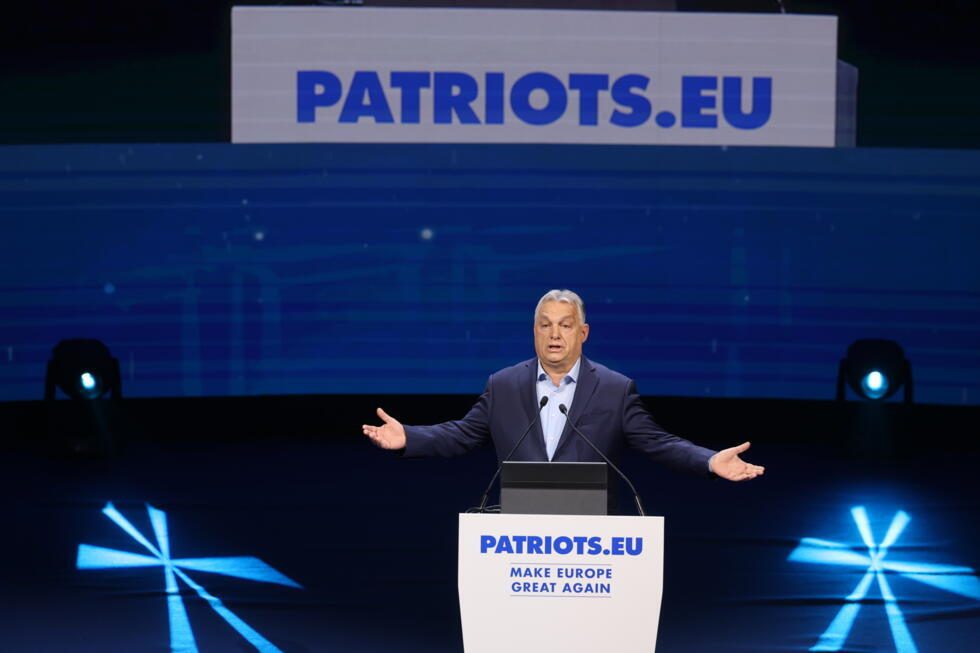
In 2025 specifically, the organization has placed an increasing emphasis on Europe. For example, in February, there was a far-right Patriots for Europe meeting in Madrid. Here, one of the speakers stated that Donald Trump is “the one who is not physically present, but who dominates the entire Ultra summit in Madrid,” emphasizing the immense control Trump holds on far right politicians, even on the other side of the Atlantic. Furthermore, a number of important right-wing figures were present during these meetings and conferences, including Marine Le Pen from France and certain members of the Brothers of Italy party.
The frequency of these meetings has also significantly increased this year since Donald Trump’s reelection. In the last 12 months, The Heritage Foundation has had seven official meetings with members of the European Parliament, as opposed to only one meeting in the past five years beforehand. Additionally, multiple other unofficial meetings have taken place which are not reported in this data, underscoring the momentum that the Heritage Foundation has gained in propelling the Make Europe Great Again movement.
For both The Heritage Foundation and far right European politicians, Make Europe Great Again provides a mutually beneficial and dependent relationship. European politicians are able to utilize the connections through The Heritage Foundation to get closer to Trump, while the Foundation is able to accomplish its long term goals of extending right wing influence past Washington D.C. and make Europe a mirror of Trump’s America. For the first time, this relationship seems to be flourishing, leading political experts to infer that this relationship should foster long term change for right wing organizations in Europe.
This is a significant shift from President Trump’s past term, when Trump’s strategist, Steve Bannon, had attempted to unite populist and nationalist parties in Europe in the United States under the Movement think tank which promoted an “America First” policy platform. The attempt largely failed due to a lack of buy-in from participants. This time, however, Heritage has been able to unite think tanks and parties across Europe more successfully, leaving room to question how far reaching this movement could become.
Parallel to organizing meetings, Heritage was also able to host the presentation of two far right European think tanks which advocated for reducing the influence of the European Union. This is a shift likely the result of the status and legitimacy granted to The Heritage Foundation after their publishing of Project 2025, which Trump has welcomed and begun adopting. This win for Heritage has gained attention from European institutions, allowing for transatlantic communication to exponentially increase.
Despite this, the future extent of Heritage’s influence remains largely unclear. Some academics believe that the long term effects of Make Europe Great Again will be relatively miniscule. For example, EJ Fagan, the author of The Thinkers argues that, “The European right have their own resources that produce policies, so there’s not a lot Heritage can provide to European parties.” Moreover, he goes on to question the understanding Heritage has on laws and treaties specific to Europe, arguing that their influence will be small when it comes to producing legislation in far right parties because they simply don’t hold the expertise necessary for working within European legal institutions.
Still, institutional limits haven’t prevented MAGA’s political language from finding new life in Europe. Europe didn’t ask for it, but MAGA seems to have moved in anyway. Now, only time will tell how long Europe will let them stay.
Cover image: Hungary’s Viktor Orban launched the Patriots bloc last year. Thomas COEX / AFP
Other posts that may interest you:
- The Militarization of Outer Space: How Low Orbit Space is Increasingly Becoming a Zone of Military Competition
- Rising Parallel Economies in Iran, A Threat to the Power of Sanctions?
- Sweatshops to Sustainability, Will Fashion Ever Be Truly Ethical?
- NAFTA’s Dark Side, and the Bloody Link Between Economic Exploitation and Femicide
- The Arctic Awakens—A New Geopolitical Hotspot in a Warming World
Discover more from The Sundial Press
Subscribe to get the latest posts sent to your email.