
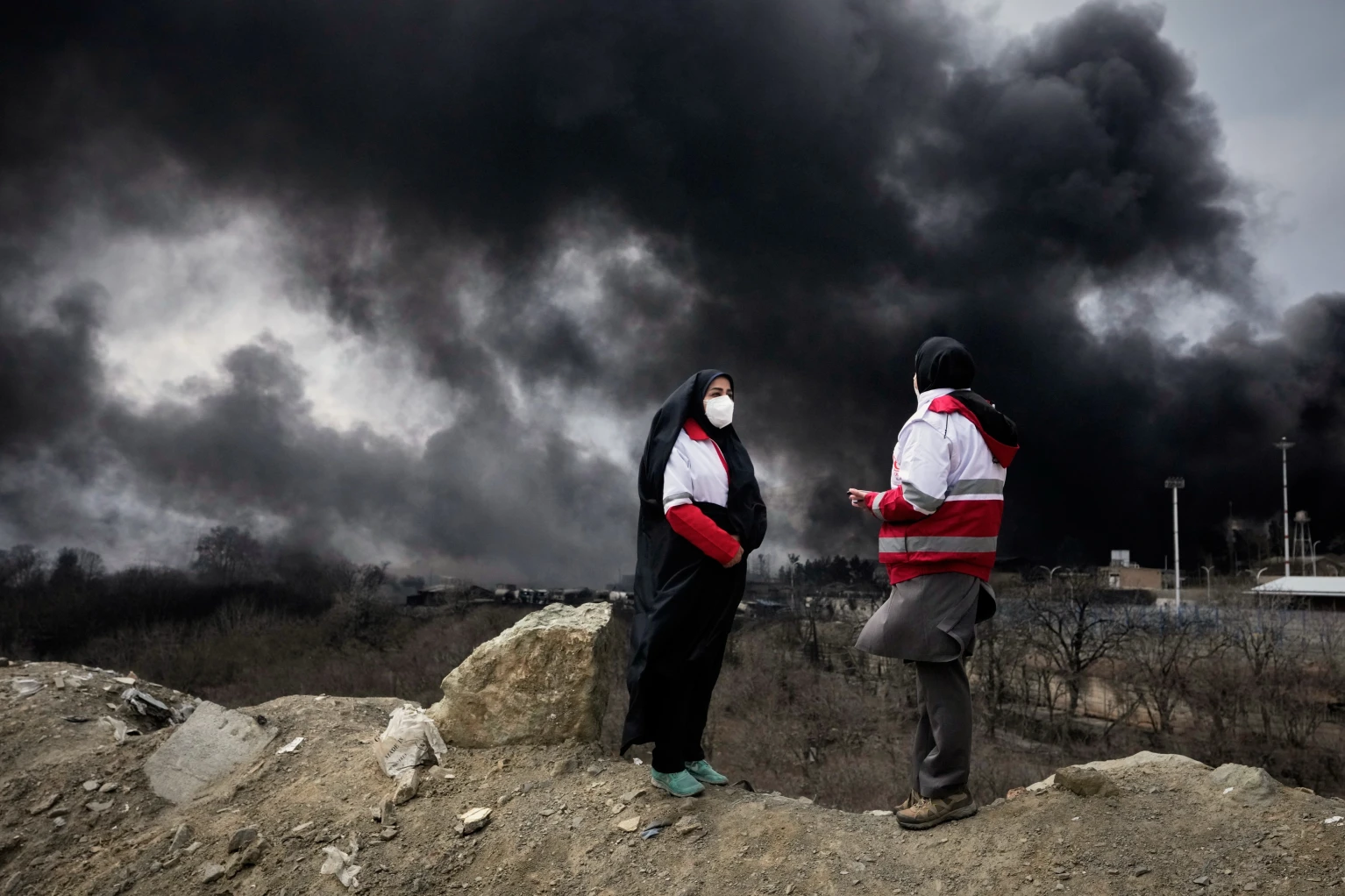
The sky turned black over Iran’s capital city, Tehran, on March 8, 2026. Israeli airstrikes on four oil storage facilities near the city, had sent chemical pollutants into the atmosphere – and back down, in the form of oil and acid rain.
The strikes came on the eighth day of warfare in Iran and surrounding regions, which was initiated on February 28 by US-Israeli strikes on Iranian military assets. Since then, Iran’s Supreme Leader Ayatollah Ali Khamenei has been killed, and Iran has launched retaliatory attacks on US military facilities in neighbouring states.
The ongoing conflict has already resulted in extensive infrastructure damage and loss of life in the region. However, the black rain in particular highlights another often overlooked consequence of war: environmental damage. While direct casualties and material harm are immediate and easier to quantify, the extent and impact of a conflict’s environmental damage is much more insidious. Military strikes generate a complex variety of pollutants including “fuels, oils, heavy metals, energetic compounds,” and fires that release toxic chemicals. The effects are long term and hard to trace, especially with competing interests and limited state transparency.
However, a study by Brown University attempted to quantify the extent and effects of environmental damage from war, concluding that it is an “important and understudied causal pathway,” to indirect casualties of war. For example, since the Gulf War, Iraq has experienced higher cancer rates, infant mortality, birth defects, miscarriages, and leukemia, along with unusually high levels of lead detected in children. While the exact cause cannot be conclusively determined, these patterns are likely linked to environmental damage caused by the conflict.
Tehran is now experiencing a similar phenomenon. When airstrikes hit its oil storage facilities, they sent a potent mixture of pollutants into the atmosphere, including explosive gases, fossil fuels, and carcinogens. These pollutants get trapped in the atmosphere, mix with precipitation, and fall down on buildings and residents. This creates the black smoke and rain visible in photos. It gets inhaled, ingested, and absorbed into soil and waterways, threatening both human health and ecosystems. Furthermore, the city’s geography does not lend well to purifying airflow, as the Alborz mountain range and high-rise buildings block winds and keep the pollution concentrated. As an immediate result, the people of Tehran have already reported burning eyes and throats and painful breathing.
Historical examples demonstrate the long-lasting effects of such events. During the Gulf War, oil fires in Kuwait released similar thick black smoke. The US Department of Defense later found the smoke contained sulfur dioxide and nitrogen oxides, chemicals that inflame the respiratory system and cause lasting health issues. Similarly, environmental assessments of oil spills such as the Exxon Valdez disaster have found residual effects on wildlife and human health decades later. The specific impact of the attack in Tehran will likely not be known for a long time, but effects are inevitable.
Other civilian and military infrastructure in Iran has been the target of airstrikes, as well, broadening the scope of environmental damage. On March 18, US-Israeli strikes hit South Pars in Iran, the world’s largest natural gasfield. This caused fires and released debris and pollutants. Beyond the known environmental effects of explosions however, hitting a field holding 51 trillion cubic meters of natural gas likely released extreme amounts of methane as well.
To put it into perspective: when Europe’s Nord Stream Pipeline exploded in the Baltic Sea, it released 485,000 tonnes of methane. It was the largest human-caused methane leak in history. The pipeline’s carrying capacity was about 55 billion cubic meters of natural gas per year, although it is impossible to know how much gas actually escaped. In contrast, South Pars holds over 400 times more gas than Nord Stream. Although official numbers are not yet available, it is safe to assume that release of methane from the strike could have been much larger than what resulted from Nord Stream. The environmental effects of methane are not insignificant; they are 80 times more potent than carbon dioxide.
Many countries have condemned this natural gas field strike as an extreme escalation of the conflict, with the UAE addressing the “serious environmental consequences,” in particular.
Beyond air pollution and methane emissions, the conflict also raises concerns about water security. Since the beginning of March, desalination plants have been hit in Iran, Bahrain, Kuwait, and the UAE. Serious damage to this infrastructure could be detrimental, as desalination plants provide 100 million people with drinking water across the Persian Gulf region. Additionally, the chemicals used in the desalination process already “put pressure on the coastal and marine environments.” Excess chemical discharges from the strikes could have a serious impact on these ecosystems.
As the conflict continues, its environmental consequences are becoming increasingly difficult to ignore. It points to a broader pattern in modern conflict, where damage to energy and civilian infrastructure carries environmental consequences that are long-term, transboundary, and difficult to fully assess.
Cover image: Humanitarian workers stand among rising plumes of black smoke in Tehran, March 6, 2026. AP News.
Other posts that may interest you:
Discover more from The Sundial Press
Subscribe to get the latest posts sent to your email.