

University culture is highly school- and country-specific. French university culture tends to place less emphasis on campus community; students live off campus in apartments, and there are less school-led events. Instead, they meet and engage in bars, restaurants, and cafes. Schools have associations and extra-curricular activities, but sources on the matter only briefly mention this before redirecting to France’s general cultural activities throughout the cities, which don’t happen on campus.
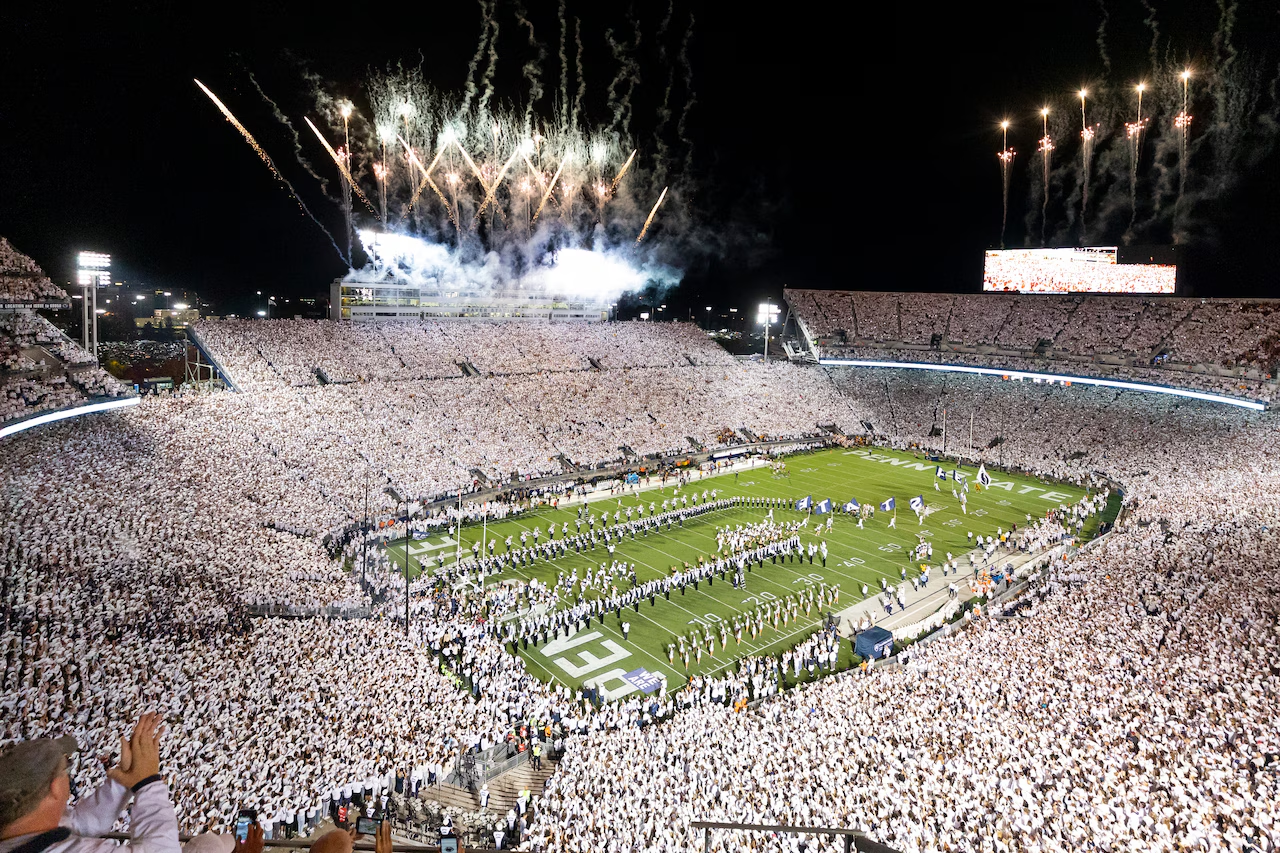
In contrast, American university culture is heavily dependent on community and collective experience; it is established through a variety of extra-curriculars, clubs, and student unions. First-years living in dorms directly on campus also forces interactions between students, which generates university solidarity. Moreover, sports in the US are thoroughly used to foster unity amongst peers. Huge crowds gather to witness games, and fan traditions are in place to make the experience more interactive for the audience. Some events have a theme like “white out” (where everyone dresses in white outfits) or “neon” (where everyone dresses in neon costumes, usually taking inspiration from the eighties).
If I were to speculate why the US makes such an effort to reinforce the university community, I would certainly highlight how students do not have access to bars or clubs, as alcohol consumption is restricted to individuals over twenty-one. As a result, students do not have access to a “third place” to congregate and decompress from their studies. That being said, our French campus is unique as it has aspects that are reminiscent of American university culture. Having events such as the Sup Cup and WEIC, as well as programs such as Cheerleading and the Ultra-Violet association, are examples of the American university culture that has been integrated into Sciences Po.
Both The Sup Cup and WEIC are major sporting events. The former was an event at the start of the school year, where teams competed against other universities in Reims. Both EURAM and EURAF cheerleading, basketball, football, and volleyball teams participated with both teams placing in the top five. Overall, EURAF placed second on the podium, and EURAM placed fourth. WEIC took place on November 22-23. Both of these events are centered around competition and campus pride, which is similar to the ethos of US college football; the stands are filled with excited supporters chanting and cheering for their teams. At the Sup Cup, the North American students made it clear that they were used to this atmosphere and, if anything, expected a larger turnout and more campus pride. In comparison, the French students noted that this behavior was unusual to find in France, and had no complaints with the atmosphere and number of attendees.
Cheerleading holds an importance in the US that is not found in other countries. Its history is fairly short, starting around 1860 and rising in tandem with American football; it only recently gained more popularity. As it was originally a male-dominated sport, US Presidents Roosevelt, Eisenhower, Reagan, and Bush participated in cheerleading. Initially, Cheerleaders’ roles were to control the crowd and harness their energy. Now, there is All Star Cheer, which is separate from other sporting events. Teams compete against each other by showing off their skills (a mixture of gymnastics, stunting, and dance). In Reims, there are two teams: the Beavers representing EURAM, and Le Cheer EURAF. When talking to Sydney Paillet on Le Cheer EURAF, she described their style as more dance-oriented cheerleading based off of French Pop music. This is a perfect example of combining both the American sport of cheerleading and French culture.
Another program on campus is the Ultra Violet (UV) association; it is the spirit association on campus. They are usually on the sidelines cheering on our sports teams; taking over the role of traditional cheerleaders. Recently, the association took part in the Sup Cup, rooting for the athletes and leading the crowd with classic Science Po cheers. In general, American universities are known for their intense and devoted school spirit. Sporting events, usually called pep-rallies, have pep squads in place to make sure their school garners the most and loudest support. This spirit can be seen through Harvard and Yale’s famous rivalry; the most notable example was in 2016 when Yale students, disguised in Harvard clothing, handed out signs that, when held up, were supposed to say ‘Go Harvard’, but unbeknownst to the Harvard students, when raised, read “WE SUCK.” While UV has never done anything this crazy or low, they harness the same energy and excitement that American pep squads and pranks like this bring in.
Through participating in school events, it is clear how much the culture of American universities resonates throughout campus, with sporting events and programs being reminiscent of those celebrated in the United States.
Photo Credit: Penn State takes the field for the White Out game against Minnesota on Oct. 22, 2022. Joe Hermitt
Other posts that may interest you:
Discover more from The Sundial Press
Subscribe to get the latest posts sent to your email.


