
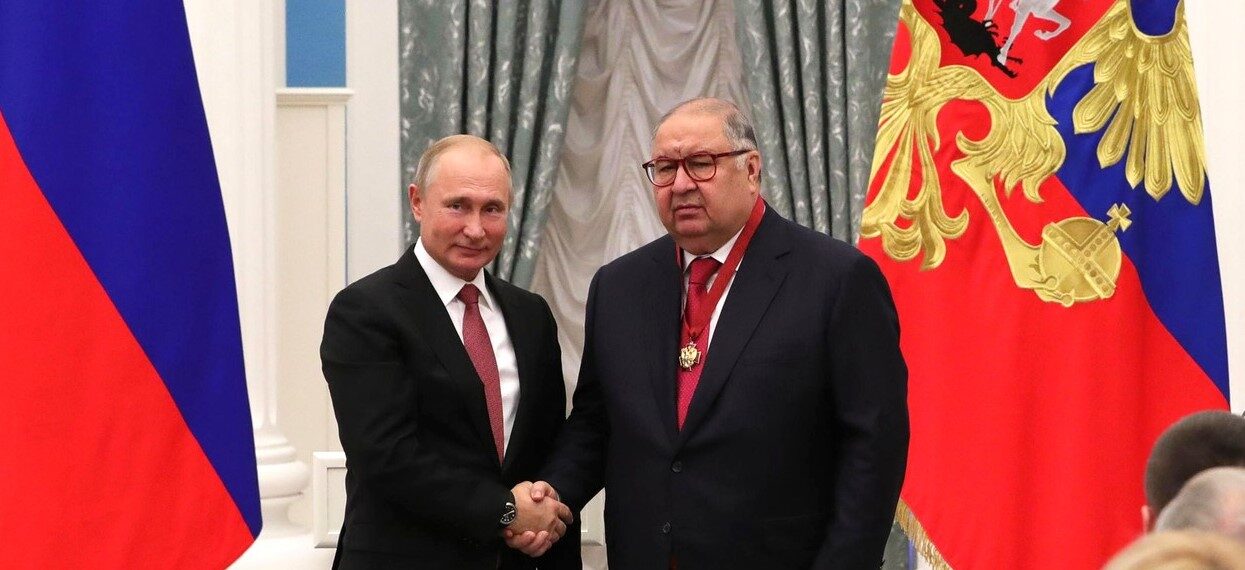
On the evening of September 22, the EU’s sanctions on roughly 3,000 Russian entities were hours from expiring when Latvia finally dropped its opposition. Riga abstained, and the renewal passed, extended for three years instead of the usual six months. The price was two names. Alisher Usmanov, a metals magnate, and Mikhail Fridman, co-founder of Alfa Group, were quietly removed from the list. The Council’s statement did not even mention them, referring only to “three individuals and one entity.”
The timing was striking. The day before, the EU declared that Russia’s parliamentary elections had deprived voters of any genuine choice over their country’s future, after Yabloko, the only party campaigning against the war, was barred from the ballot. Within 24 hours, Brussels acknowledged that ordinary Russians have no say over the Kremlin, yet demonstrated that the most powerful among them can negotiate their way off its sanctions list.
The push came from an unexpected direction. France, among the most vocal advocates of pressure on Moscow, joined Slovakia in demanding Usmanov’s delisting, offering only “a specific national security issue” as explanation. According to European diplomats, Paris was under pressure from Azerbaijan, which was holding two French nationals and had lobbied for years, alongside Turkey and Uzbekistan, on behalf of a tycoon listed since 2022 for his ties to Vladimir Putin. Luxembourg, which Fridman is suing for $16 billion over his frozen assets, then requested the same treatment for him. Tellingly, a day after the decision, Azerbaijani President Ilham Aliyev pardoned a French citizen convicted of espionage. According to Reuters, it was the first time the EU lifted sanctions on members of Russia’s billionaire elite who had never publicly condemned the war.
Seen from Paris, the shift looked like an “intriguing and sudden leniency,” difficult to reconcile with France’s own record. Yet France’s motives matter less than what the deal exposed about the sanctions themselves. Bringing home citizens detained abroad is one of a state’s most serious duties, and few would blame a government for making the attempt. Individual sanctions, however, are not ordinary diplomatic currency. Each listing is an accusation against a named person, which the Council must justify and which the person concerned can contest in court. Removing Usmanov and Fridman would have been defensible had either ceased to meet the criteria; no one claimed they had. Their names were simply exchanged. The signal to Moscow and to every government holding European citizens, was unmistakable: the EU’s sanctions list has a price.
At the other end of the scale, Russians with no connection to the Kremlin describe a very different experience. EU law guarantees every consumer legally resident in the Union access to a basic bank account and forbids discrimination based on nationality. In practice, banks, which face heavy fines for any sanctions breach and lose almost nothing by turning away a small client, increasingly treat a Russian passport as a risk in itself. In Germany alone, the financial regulator receives thousands of complaints about account closures every year. Journalists have documented students, long-term residents and opposition activists being turned away across the bloc.
Some fight back. Iskra, an Italian human rights group, says it has helped reverse around 5,000 bank decisions against Russians since the start of the war. Yet challenging a bank requires time, lawyers and money, the very resources that allowed Usmanov and Fridman to contest their listings in European courts and find governments willing to argue their case. For an emigrant who fled mobilisation, the right exists mostly on paper.
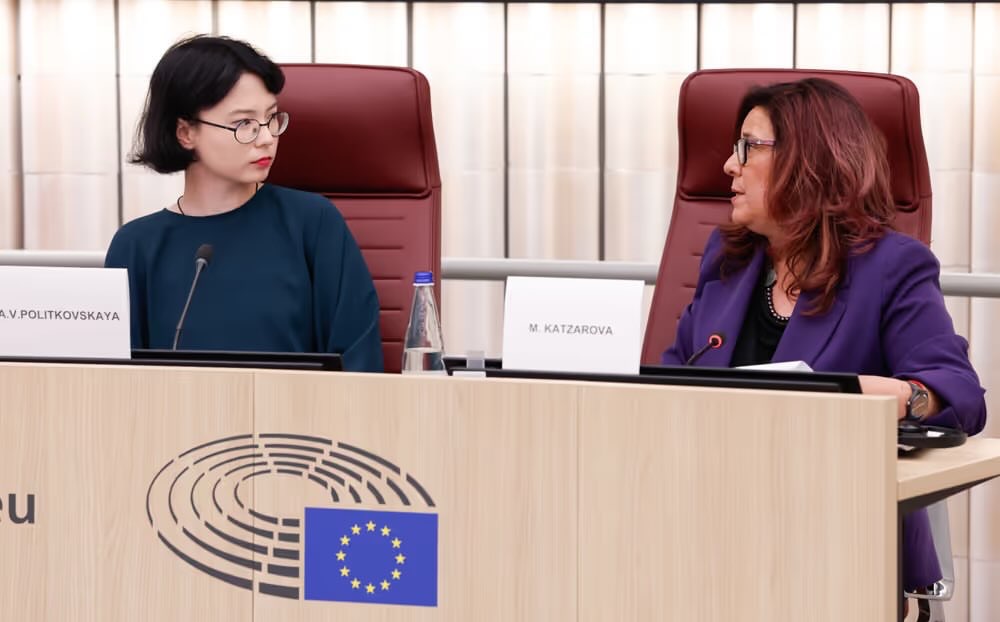
Anna Victoria Politkovskaya (left) and Mariana Katzarova, UN Special Rapporteur on the situation of human rights in Russia, at the European Parliament’s tribute to Anna Politkovskaya, Strasbourg, 5 October 2026. © European Union 2026, Source: EP.
Even within the EU’s own institutions, support for these Russians often remains symbolic. On 5 October, Anna Victoria Politkovskaya, the 19-year-old granddaughter of the murdered journalist, asked the European Parliament to create emergency humanitarian visas for Russians fleeing the regime, and MEPs rose to give her a standing ovation. Yet the Parliament has no power over either sanctions or visas. The institutions with actual power had, only two weeks earlier, shown whose case they were willing to hear.
So who, in the end, pays for Europe’s sanctions? In 2022, Ursula von der Leyen presented the sanctions as a weapon against the Kremlin, describing Putin as the one “putting at risk the future of the Russian people.” The distinction between a regime and its citizens was the moral foundation of the policy. Four years on, sanctions designed for individuals are increasingly enforced by nationality.
In September 2022, von der Leyen told MEPs that the moment demanded: “resolve, not appeasement.” September 2026 revealed a third path: negotiation, open mainly to those with wealth and well-placed allies. Resolve, it seems, has its exceptions. Two names came off the list in September. Most of the ordinary Russians who opposed the war were never on it, and they are the ones still paying.
Photo credit: Reuters, via BBC News Russian (22 March 2022)
Other posts that may interest you:
Discover more from The Sundial Press
Subscribe to get the latest posts sent to your email.