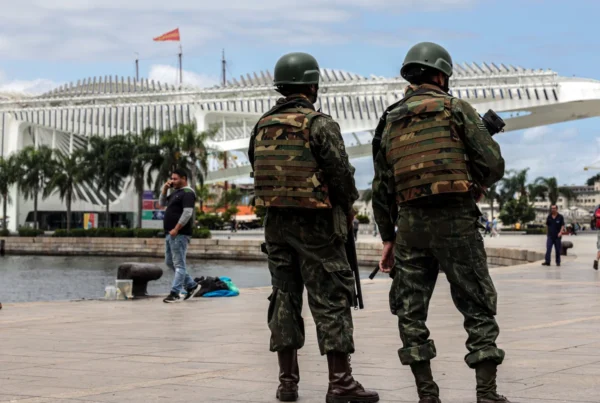


This article is part of our collaboration with International Policy Review at IE University. Photo Credits: Al Día.
Abstract
Puerto Rico faces significant challenges in achieving Sustainable Development Goal (SDG) 11, which aims for safer, resilient, inclusive, and sustainable cities by 2030. The island’s historical context of colonialism, economic instability, and susceptibility to natural disasters has severely deteriorated its poor infrastructure, exacerbating social mobility issues. Inadequate housing and systemic inequalities disproportionately limit access to essential services. Hurricanes María and Fiona, alongside frequent earthquakes, reveal long-standing deficiencies in disaster preparedness and sustainable urban planning. Austerity-driven budget cuts have further hindered municipalities’ ability to address local needs. Despite these setbacks, local initiatives like the El Caño Martín Peña Community Land Trust represent community-led organizations and resilience. This article examines the intersection between federal oversight and local governance, emphasizing the pressing need for sustainable and equitable urban planning investments. Using quantitative data from Puerto Rican statistical agencies, interviews, and policy analysis, the study pinpoints systemic barriers to achieving SDG 11 and proposes actionable recommendations. These recommendations prioritize empowering municipal governments, fostering public-private partnerships, reforming restrictive federal laws, and recreating successful community-driven models. Targeted reforms and strategic investment are crucial in guiding the island toward long-term climate resilience and sustainable urban development.
1. Introduction
After the Spanish-American War, Puerto Rico was annexed by the United States, and its residents were granted U.S. citizenship in 1917. However, in 1954, the U.S. government officially designated Puerto Rico as an “Estado Libre Asociado” (ELA), or Free Associated State, which granted the island limited authority, remaining as an incorporated territory subject to federal oversight, and without voting representation in the U.S. Congress. This arrangement meant that Puerto Rico had no control over key economic decisions, including shipping regulations, taxation, and local autonomy. In essence, the commonwealth status restricts fiscal autonomy, disallowing the local government to control its revenue toward disaster relief. Due to persistent patterns of dependency and a lack of local agency, there is a long-term chronic underinvestment in housing and public services, which are essential for achieving Sustainable Development Goal 11.
Additionally, the U.S. government has historically implemented tax exemptions to attract foreign investment and stimulate economic development on the island. Section 936, enacted in 1976, provided federal tax exemptions for companies operating in the island during a ten-year period. The programme’s failure led to its elimination by the Small Business Job Protection Act of 1996. The programme went through a 10-year phase-out period, officially coming to an end in 2006. The economic repercussions were severe, leading to stagnation, debt accumulation, high unemployment, and economic decline.
In 2016, the “PROMESA” (Puerto Rico Oversight, Management, and Economic Stability Act) was enacted, establishing an unelected Financial Oversight and Management Board (FOMB) to address the US$72 billion debt crisis. The FOMB has been accused of reinforcing austerity measures, with budget-driven cuts prioritising debt payments over capital spending to improve deteriorating roads, infrastructure, and transportation systems.
The energy sector has also been affected by these tensions. The Puerto Rico Electric Power Authority (PREPA), a public entity, was dissolved in 2020 due to bankruptcy, aging infrastructure, and frequent power outages. In 2021, LUMA Energy became the official distributor under a private consortium with a 15-year contract. Since LUMA took over, the island has experienced skyrocketing electricity costs, more frequent blackouts, and power surges that damage home appliances.
Instead of addressing the root cause of Puerto Rico’s infrastructure vulnerabilities, federal authorities have pressured the local government to prioritise profits, signing vague contracts that result in massive losses, such as those seen with LUMA Energy.
Large-scale corporate restructuring has become the mainstream alternative for Puerto Rico. While residents advocate for decentralised energy solutions, community microgrids, and renewable energy projects, federal oversight has neglected transformative approaches in favour of importing solutions.
2. Background: The Path Toward SDG 11
2.1 Target and Indicators
According to the UN-Habitat, SDG 11 targets safe housing (1.1), sustainable transportation (11.2), and disaster resiliency (11.5). Unreliable housing, inefficient transportation, and delayed disaster responses have led to mass migrations, resulting in population decline and underinvestment in infrastructure.
2.2 Recent Trends
During the period from 2012 to 2022, mass migration patterns and low birth rates led to a 12% decline in the island’s population, which has negatively affected the tax base necessary for funding public services. Puerto Rico’s birth rate was reported to be 5.9 births per 1,000 people in 2022, one of the lowest globally.
Significant population losses have exacerbated labor force conditions, hindering consumer demand, further amplifying fiscal distress and infrastructural neglect. Additionally, essential services such as education and healthcare have contributed to outward migration patterns, particularly among the youth population.
Moreover, fiscal shortages have directly contributed to the island’s rising unemployment and economic inequalities. According to the U.S. Census Bureau, Puerto Rico’s median income was $25,096 in 2023, while the national median household income in the United States was $74,580 in 2022.
2.3 Constitutional Constraints
Under the U.S. Constitution (Article IV, Section 3), the territorial status impedes the island from restructuring its debt independently. The territorial clause provides Congress the ability “to dispose of and make needful Rules and Regulations respecting the Territory or other Property belonging to the United States; and nothing in this Constitution shall be construed as to Prejudice any Claims of the United States or of any particular State.” Due to this, 25% of local revenues were allocated toward debt service payments before the implementation of PROMESA, hindering investments in improving transportation services, bridges, and roads.
These fiscal limitations are due to unequal access to federal programees; for example, Puerto Rican residents receive lower Medicare and Medicaid reimbursements than U.S. states, hindering health infrastructure and overall investment.
In 2021, the U.S. The Department of Transportation reported Puerto Rico had 282 bridges (out of 2,325) and over 1,492 miles of highway in poor condition for transit. The American Society of Civil Engineers’ 2021 Infrastructure Report Card for Puerto Rico indicated that more than 11% of the island’s bridges were in poor condition and structurally deficient. These reports underscore the pressing need for reliable bridges and roads to support transit infrastructure and services. Improving access to urban mobility is crucial for achieving the core targets of safe housing (SDG 1.1) and sustainable transportation (SDG 11.2) in Sustainable Development Goal 11.
3. Analysis: Austerities and Urban Fragility
Austerity measures have prioritized debt payments over urban development, placing public services on the back burner.
3.1 PROMESA’s Implications
PROMESA addressed the island’s crisis by imposing a fiscal control board (FOMB) that oversees economic matters, approves fiscal plans and budgets proposed by the Puerto Rican government. The board also monitors debt restructuring and creditor litigation. In essence, FOMB hinders decision-making processes, further limiting local agencies’ ability to handle crises independently. While the board aims to recover the island’s financial landscape, its track record suggests a deep disconnect between democratic practices and SDG 11.
In the documentary País de Apagones, journalist Bianca Graulau conducts interviews with residents that expose how economic and infrastructural deficits are manifesting in their daily lives. One elderly person from the municipality of Bayamón expressed, “They cut the budget, but they didn’t cut our need for safe streets and water.” Her community experiences regular flooding due to obstructed storm drainage and deteriorated pipelines. Nonetheless, such deterioration is not incidental: it reflects years of top-down fiscal planning that has neglected local realities in urban and rural areas.
3.2 Repeating Unsuccessful Models from the Past
While tax exemptions under Section 936 failed in 1996, the local government implemented the Export Services Act of 2012 and the Individual Investor Act of 2012 to stimulate economic development after the phase-out period. These incentives granted 1) a 4% corporate tax rate and up to 100% dividends for businesses exporting services from the island. It also granted investors 2) a 100% tax exemption on all dividends, interest, and long-term capital gains accrued after establishing residency for new bona fide residents.
The FOMB continued to follow unsuccessful models from the past in an attempt to rectify a debt that originated from the incentives imposed in the first place. The board implemented Act 60, the Puerto Rico Incentives Code, in 2019, consolidating the Export Services Act and the Individual Investor Act, streamlining processes and extending benefits.
Act 60 mirrors past approaches, such as tax exemptions, which provide external investors with economic incentives to establish operations on the island. At the same time, residents suffer from economic disparities and the double burden of being treated as second-class citizens in their nation. The influx of wealthy investors has increased overall housing and rental costs, leading to the displacement of local communities. The documentary Aquí Vive Gente by journalist Bianca Graulau depicts “this is not a game. It’s a matter of life and death for our communities.”
Critics and social activists argue that Act 60 is prolonging unequal economic development practices, prioritising foreign investments over the well-being of Puerto Rican residents.
3.3 Further Restrictions Jeopardising Disaster Preparedness
Natural disasters have further revealed the vulnerabilities in the island’s poor infrastructure and lack of sustainable, long-term urban planning. In the wake of hurricanes María, Irma, and Fiona, there was clear evidence suggesting the lives of almost three million U.S. residents were put in danger by delayed disaster relief responses from the mainland.
After World War I, federal authorities installed various economic barriers that hindered the island’s local economic growth for centuries. One of the most significant laws enacted was the Jones Act, known as the Merchant Marine Act of 1920, which regulated maritime commerce on the island. Under Section 27 of the Merchant Marine Act, the Jones Act outlines that all goods entering the island must come in ships 1) built, 2) owned, 3) registered under the U.S. flag, and 4) transported by U.S. permanent citizens.
As a result, Puerto Rico was denied the opportunity to participate in the global economy competitively. The Jones Act has directly supported the U.S. maritime industry, resulting in higher freight rates for Puerto Rican companies compared to neighboring countries and territories not subject to this cabotage law. The Jones Act deepened dependency patterns by limiting the island’s competitive advantage. Furthermore, the need for U.S.-compliant vessels to receive and transport goods and services has recently been shown to jeopardise disaster relief responses.
After Hurricane María on September 20, 2017, Puerto Rico faced many challenges in receiving humanitarian aid due to the Jones Act. Ships coming from other countries were not allowed to enter, and many goods were damaged while waiting at sea. The mayor of San Juan at the time, Carmen Yulín Cruz, advocated for waiving shipping constraints as residents were “not getting the supplies fast enough.” The Trump administration responded to these claims by expressing, “We have a lot of shippers and a lot of people that work in the shipping industry that don’t want the Jones Act lifted.”
It was not until September 28, eight days after Hurricane María, that the Trump administration granted a short ten-day waiver to facilitate the delivery of foreign aid to the island. However, lawmakers and U.S. representatives argued the waiver needed to be held for longer than 10 days. Rep. Jose Serrano (D-N.Y.) highlighted “much longer than that” was required.
At the time, Senator Marco Rubio addressed a letter to President Donald Trump, “Regarding Federal Relief Efforts in Puerto Rico,” urging immediate action as well as military cooperation to tackle the humanitarian crisis on the island. Rubio expressed, “there is no clear command, control, and communication between local officials on the ground and federal agencies, and many roads and bridges remained unpassable, making it even more difficult for repair crews to restore power and communications to areas of the island outside of San Juan…” resulting in “lifesaving supplies sitting in containers rather than being distributed upon arrival.” Nonetheless, President Trump argued emergency supplies were tough to be delivered promptly as Puerto Rico was an island “surrounded by big, ocean water.”
3.4 The Costs of Dependency
The historical context of dependency on the United States has increased overall costs, debt service, and taxes. This is significantly affecting the island’s ability to recover fast and efficiently. Studies from 2016 estimated the Jones Act has cost around 1.4 billion dollars annually, with residents paying additional costs. The Act’s restrictions contribute to higher shipping costs, increased consumer prices, and extensive economic inefficiencies.
Federal tax obligations contributed over 5 billion dollars in federal taxes in fiscal year 2023, exceeding the overall contributions of several U.S. states. The lack of access to federal decision-making processes, along with these tax obligations, contributes to the economic disparities on the island. While Act 60 uses tax incentives to attract foreigners and investors, Puerto Rican residents experience higher tax burdens and limited access to capital. Ultimately, tax exemptions attracting foreign companies have left local business owners vulnerable to competing with big corporate giants entering the local market.
With the most significant debt restructuring in U.S. history, the economic decline of the island is a result of various factors, including limited autonomy, corruption, constitutional restraints, mismanagement, and delayed federal actions. The Council on Foreign Relations also made salient “the island’s average household income is about one-third of the U.S. average and its property rate is more than twice that of the poorest state, Mississippi.”
4. Recommendations
While there are many barriers to address, the following recommendations will focus on how the island can successfully achieve the SDG 11 targets by 2030.
1) Provide municipal governments greater fiscal autonomy and resources to address community needs. The U.S. government should focus on redesigning fiscal oversight to enhance self-governance and accountability.
2) Leverage Public-Private Partnerships (PPPs) to renovate urban infrastructure and transportation. Targeting private investments towards goods can improve services, ensuring they reach all sectors of the island.
3) Adjust restrictive laws and policies that hinder urban development. Since 1920, the Jones Act has prevented Puerto Rico from fully entering the global economy for more than a century. It has also let thousands of people die through delayed responses. Reforming and recreating a new system that supports equal distribution among all.
4) Partner with community-driven projects and scale successful grassroots initiatives rather than importing solutions from the outside.
5. Conclusion
The journey to achieve Sustainable Development Goal (SDG) 11, which aims to build inclusive, safer, resilient, and sustainable cities by 2030, faces significant challenges deeply rooted in the island’s colonial past, economic dependencies, and environmental challenges—the territorial clause under the U.S. the Constitution limits fiscal autonomy over decision-making processes, hindering local agency to restructure its debt and make long-term, necessary investments to rebuild its infrastructure. On the other hand, the establishment of the Financial Oversight Management Board (FOMB) underscored the federal priorities of debt service payments over public services, contributing to infrastructural decline and social inequality.
The impact of recent natural disasters, such as Hurricanes María and Fiona, has highlighted the island’s weak infrastructure and inadequate disaster preparedness. Moreover, the restrictions imposed by the Jones Act on maritime commerce have delayed timely disaster responses, underscoring the urgent need for policy reforms to address Puerto Rico’s unique circumstances.
Despite these adversities, grassroots initiatives showcase local community organization and resilience. Community-driven efforts, such as El Caño Martín Peña Community Land Trust, demonstrate the potential for sustainable development when local communities are empowered and engaged.
Achieving SDG 11 in Puerto Rico requires strategic actions, including increasing fiscal autonomy for municipal governments, encouraging public-private partnerships for urban development, reforming restrictive policies such as the Jones Act, and amplifying successful community-led models. Aligning local initiatives with effective policy reforms is essential for Puerto Rico to transform its urban areas into more resilient, inclusive, and sustainable communities, ultimately fulfilling the promise of Sustainable Development Goal (SDG) 11 by 2030.
As the 2030 deadline approaches, the island of Puerto Rico offers a critical case study on addressing current development goals within postcolonial contexts. Through the right combination of resources, international cooperation, and political will, Puerto Rico can successfully implement accountability measures, as well as bottom-up leadership approaches, on the island. Puerto Rico not only has the ability but also a persistent quest to transform its crisis into climate-resilient, community-centered, and sustainable long-term urban planning and development.
6. Bibliography
Amnesty International. “Human rights in Puerto Rico.” Accessed April 30, 2025. https://www.amnesty.org/en/location/americas/central-america-and-the-caribbean/puerto-rico/report-puerto-rico/
American Society of Civil Engineers. “2019 Report Card for Puerto Rico’s Infrastructure.” November 10, 2019. https://infrastructurereportcard.org/state-item/puerto-rico/.
Brumbaugh, David L. “The Puerto Rican Economic Activity Tax Credit: Current Proposals and Scheduled Phaseout.” Congressional Research Service, October 4, 2000. https://www.everycrsreport.com/reports/RS20695.html.
Carlos Vargas-Ramos, Laura Colón-Meléndez, Jorge Soldevilla-Irizarry, Damayra Figueroa-Lazu, Jennifer Hinojosa, and Yarimar Bonilla. Pervasive poverty in Puerto Rico. Hunter College, City University of New York, 2023.
Center for the New Economy. “Building a new economy for Puerto Rico.” Accessed April 30, 2025. https://grupocne.org
Cruz, Carmen Yulín. Interview by Alisyn Camerota. CNN New Day. September 29, 2017.
Federal Reserve Bank of New York. “Puerto Rico economic indicators.” April 15, 2025. https://www.newyorkfed.org/medialibrary/media/research/regional_economy/charts/Regional_PuertoRico
Goodman, Amy, and González, Juan. “Puerto Rico faces blackouts as critics denounce power grid privatization & demand renewable energy.” Democracy Now!, November 30, 2022. https://www.democracynow.org/2022/11/30/puerto_rico_blackouts_power_grid_luma
Graulau, Bianca. “País de apagones [Country of blackouts].” Bianca Graulau, Youtube. 13:35. February 27, 2025. https://www.youtube.com/watch?v=aQiMZa7x76I
Graulau, Bianca. “What U.S. occupation did to Hawai’i.” Bianca Graulau, Youtube. 10:00. February 7, 2023. https://www.youtube.com/watch?v=NO83K8s8dnk
Hillberry, Russell, and Manuel I. Jimenez. “Economic Consequences of Cabotage Restrictions: The Effect of the Jones Act on Puerto Rico.” Cato Institute Research Briefs in Economic Policy, no. 380. May 21, 2024.
Instituto de Estadísticas de Puerto Rico. “Datos y estadísticas oficiales de Puerto Rico.” Accessed April 30, 2025. https://ods.estadisticas.pr/es
Lefebvre, Ben. “White House Waives Jones Act for Puerto Rico.” Politico, September 28, 2017. https://subscriber.politicopro.com/article/2017/09/trump-waives-jones-act-for-puerto-rico-093592
LUMA Energy. “About us.” Accessed April 30, 2025. https://www.lumapr.com/en/about-us/
Martínez Ocasio, Benito. “Bad Bunny – El Apagón – Aquí Vive Gente.” Bad Bunny, YouTube. 22:53. September 16, 2022. https://www.youtube.com/watch?v=OS0Tg0IjCp4
North American Congress on Latin America. “Puerto Rico’s population decline and mass migration.” Accessed April 30, 2025. https://nacla.org
PR51st. “Puerto Rico’s Debt.” February 12, 2024. https://www.pr51st.com/puerto-ricos-debt/.
Puerto Rico. Act No. 20 of 2012: Act to Promote the Export of Services. San Juan: Government of Puerto Rico, 2012.
Puerto Rico. Act No. 22 of 2012: Act to Promote the Relocation of Individual Investors to Puerto Rico. San Juan: Government of Puerto Rico, 2012.
Puerto Rico. Act No. 60 of 2019: Puerto Rico Incentives Code. San Juan: Government of Puerto Rico, 2019.
Schneider, Mike. “Child Poverty in the US Jumped and Income Declined in 2022 as Coronavirus Pandemic Benefits Ended.” Associated Press, September 12, 2023. https://apnews.com/article/poverty-income-health-insurance-census-623f928ddcceca2bc5e69948929d266c
U.S. Census Bureau. “QuickFacts: Puerto Rico.” July 1, 2024. https://www.census.gov/quickfacts/fact/table/PR/HSG010223.
U.S. Congress. House. Puerto Rico Oversight, Management, and Economic Stability Act (PROMESA), Public Law No. 114-187. HR 5278. https://www.congress.gov
U.S. Constitution. Art. IV, § 3, cl. 2. In Constitution Annotated. Library of Congress. https://constitution.congress.gov/browse/article-4/section-3/clause-2/.
U.S. Department of Transportation. The Bipartisan Infrastructure Law Will Deliver for Puerto Rico. Washington, D.C.: U.S. Department of Transportation, 2021. https://www.transportation.gov/sites/dot.gov/files/2021-12/Puerto%20Rico.pdf.
U.S. Department of the Interior, Office of Insular Affairs. Puerto Rico (Estado Libre Asociado). https://www.doi.gov/oia/islands/puerto-rico
UN Women. Puerto Rico country fact sheet. https://data.unwomen.org/country/puerto-rico
Shugerman, Emily. “Donald Trump Says Puerto Rico Is ‘an Island Surrounded by Big Water.'” The Independent, September 29, 2017. https://www.independent.co.uk/news/world/americas/us-politics/donald-trump-puerto-rico-hurricane-maria-comments-island-big-water-a7975011.htmlWhiting, Elizabeth. “Puerto Rico Debt Restructuring: Origins of a Constitutional and Humanitarian Crisis.” University of Miami Inter-American Law Review 50, no. 1 (2019): 237–272. https://repository.law.miami.edu/umialr/vol50/iss1/8/.
Other posts that may interest you:
Discover more from The Sundial Press
Subscribe to get the latest posts sent to your email.