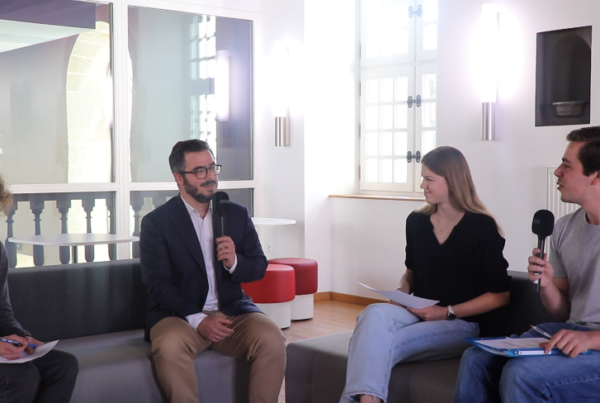


As the Dean of the Collège Universitaire and a sociologist at the Centre for the Sociology of Organisations, Ms. Jeanne Lazarus oversees both the academic and student life of Sciences Po’s undergraduate campuses. “My role as Dean,” she explained, “is to be responsible for the quality of teaching, but also for the student life, and everything that happens on the campuses.” With the excitement of the new academic year rising at the time of the interview, and with the first semester slowly coming to a close, the Dean sat down with The Sundial Press to share her perspective on the university’s academic direction, the international value of a Sciences Po education, and her hopes for the students who will shape the world’s future.
While proud of the diverse extracurricular activities taking place across the campuses, the Dean believes that it is time to refocus more strongly on the importance of academics at Sciences Po. For her, strengthening academic excellence is essential in preparing students to “move between different kinds of knowledge” in an increasingly complex world.
When asked about the evolution of Sciences Po’s reputation, the Dean emphasized how its international standing has grown significantly, highlighting the strength of the university’s partnerships with institutions from around the world. “Twenty years ago, people didn’t know Sciences Po very well,” she said. “Today, our graduates are welcomed by top universities in North America, Europe, and Asia. That’s the best evidence of the value of this diploma.”
Diversity remains one of the main pillars of the university’s mission, especially following the recent reforms of the admission process. “It’s a necessity for us,” she explained. “Students learn from each other—they need to meet people very different from them.” She believes that the mix of students from across France and around the world keeps the environment of the seven campuses dynamic and socially enriching.
Ms. Lazarus also shared her perspective on Sciences Po’s ongoing collaborations with American universities amid the turbulent political climate in the United States.
“Education is a long-term process, so we can’t react to every political change,” she explained. “The best solidarity we can show is to continue those relationships: to keep welcoming students and scholars from the U.S.” The Dean remains optimistic and hopes that the universities, which are ranked among the best in the world, will continue to operate as effectively as they usually have.
Finally, she addressed Sciences Po students—the young leaders who are working hard to shape the future in an ever-changing world. “My advice is to be very committed when it comes to your academic work, to really nourish yourself with what we bring to you. We gather the best professors in Reims, English-speaking professors who are very good and have a lot to give to you. I think before being a leader, just try to get what you can get from the previous generation.” Recalling her own experiences as a student, Ms. Lazarus stresses the importance of focus in the digital age, encouraging students to seize every opportunity to improve their concentration—whether it is working in the library or just reading.
As students have returned to campus for yet another exciting academic year, and with the last remnants of midterm season in the air, the Dean’s message serves as a reminder of what makes Sciences Po unique: a community built on curiosity, diversity, and intellectual engagement. She believes in the importance of students’ ability to combine knowledge and human understanding—a balance that will help them face the challenges of the future with empathy and confidence.
Photo Credits: SciencesPo
Other posts that may interest you:
Discover more from The Sundial Press
Subscribe to get the latest posts sent to your email.