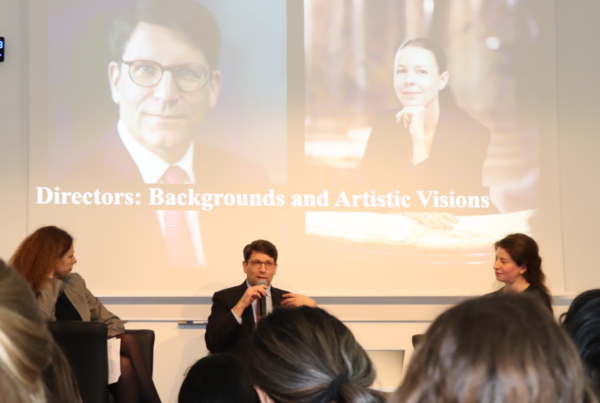


On 16 February, Pierre Catalan (P.C.) was officially introduced before the first-year students in the EURAM minor as the new Reims Campus Director, a role he shares with current interim director Marie Rassat until the start of the next academic year. Some fifty days into his new position, he joined Tomás Cifrián Solís (T.C.S.) and Paul Quero (P.Q.) from the Sundial Press and Amelie Sadlo (A.S.) from Sciences Po TV in the campus lounge, where the team inquired into his motivations, aspirations, and vision for the campus (watch the full interview here). Here’s what he had to say.
T.C.S. – Bienvenue à Reims ! How are you settling into your new city?
P.C. – Well, it is not yet my new city because I still live in Paris. I take the earliest train to campus three or four times a week. I am getting used to this city, getting to know the campus, the staff who take care of the students… I have yet to get to know the teachers better.
T.C.S. – Is there anything about the campus that has surprised you?
P.C. – Apart from the beauty of it and the exceptional conditions of study you have compared to any other Sciences Po campus, nothing has yet surprised me. We recently started the theatre season, which is the accomplishment of the year for many students, and I have just started to get surprised by how students can perform.
P.Q. – Si vous vous imaginiez devant un miroir, comment est-ce que vous vous verriez ?
P.C. – Je suis arrivé à Sciences Po pour la première fois en septembre 2003. J’étais étudiant sur le campus de Dijon, une expérience qui m’a beaucoup marqué, en tout cas j’ai beaucoup d’empathie, d’ambition… Pour vous qui êtes étudiants sur un campus non-parisien, il est une chance énorme de passer deux ans avec de la liberté, des opportunités, aussi une spécificité avec les spécialités géographiques qui va les rendre originaux, et je pense que les étudiants ne se rendent pas compte à quel point ils sont originaux par rapport aux autres quand ils étudient ici.
Après, j’ai été diplômé, j’ai fait comme beaucoup de gens qui sont diplômés de Sciences Po, j’ai fait du conseil parce que je ne savais pas quoi faire. Après j’ai rejoint le milieu associatif et puis je suis revenu à SciencesPo en 2023 à la vie étudiante avant de prendre la direction du campus de Reims récemment.
Si j’étais devant un miroir, j’essaie d’évacuer toutes les difficultés inhérentes à la prise de poste, les zones de progression, les éléments que je ne connais pas encore… tout le complexe de l’imposteur quand je me regarde dans le miroir. Pour le moment, je me vois un peu comme l’ingénu qui arrive sur cette petite communauté qui est le campus de Reims, sans a priori, sans jugement, avec juste l’envie de découvrir… et puis quelques ambitions pour améliorer à la fois la place du campus et l’expérience étudiante.
A.S. – You were previously a student and you have also worked in the Paris campus administration. What motivated you to apply for the position of Campus Director here in Reims?
P.C. – When you are based in Paris taking care of student life, you are in charge of the good sides of all students at Sciences Po, and some of the bad ones as well (not necessarily for students, sometimes you just have to ensure the rules and regulations of Sciences Po are respected). It brings a lot of satisfaction to see all the accomplishments that students achieve, all the expectations they bring with them at the start of the year being fulfilled by the end of the year… But I also wanted to see something more complex: being Campus Director and having complete responsibility over all studies, the two minors…is a much bigger ambition to me, with a lot of areas of improvement that I can learn from. My main motivation was to move a step up in terms of responsibilities and acquire the capabilities to deal with such a complex environment.
A.S. – Looking back, what do you think are the experiences that best prepared you for this role?
P.C. – Not a lot…The studies that you have at Sciences Po allow you to meet standards in almost every situation you can think of; when I was a consultant, when I worked at the Chirac Foundation, when I worked at the Red Cross…I faced challenges on subjects which I previously knew nothing about: individual situations, diplomatic challenges… For the past 15 years, all of that made me aware of what my limits are; they taught me when to ask for advice…and I realised that most of the time, people know the answer to a specific situation. You just have to let them work together in the most collegial way possible, and from my experience, a solution will come up. This is an approach I plan on applying when working with students and staff: nothing too vertical, but more of a horizontal way to make decisions.
T.C.S. – You have experienced Sciences Po both as a student and as an administrator: have you changed your perspective on student life in any way?
P.C. – The environment has changed a lot. [My time as a student] was several years ago, even before you were born. At the time, there was no money dedicated to student life. Half of what you pay as a student, the CVEC, now comes back to Sciences Po to finance the health services, visa and administrative support… and for association funding as well. That did not exist twenty years ago. Back then, any theatre play or newspaper had to be financed by us, and €500 was considered a “big” budget to deal with. During my second year in Paris as Director of Student Life, over 100 students created a theatre play: writing the script, adapting the music, even including falcons as part of the show… on a budget of almost €40,000. Realities are not the same at all, and any student wanting to accomplish a project now has many more opportunities and greater help from staff.
P.Q. – La Marne a récemment annoncé qu’ils iront retirer leur subvention à Sciences Po (environ 600 000 euros). Est-ce que vous pensez que cela va avoir un grand impact sur la vie de campus ?
P.C. – Ça a déjà un impact alors que j’espère que vous ne le ressentez pas. Lorsqu’on prépare le budget du campus pour ces prochaines années, on doit nécessairement le préparer sans cette subvention qui contribue au fonctionnement du campus. Le département de la Marne n’a pas fermé la porte à subventionner le campus, mais il va plutôt subventionner des investissements – ils trouvent qu’il y a beaucoup d’investissements à faire, donc c’est pas forcément une problématique du point de vue comptable, mais clairement aujourd’hui on cherche les marges de réduction de dépenses. Il y en a beaucoup dans le fonctionnement au quotidien du campus qui peut être largement perfectible. On n’est pas excessivement inquiets sur l’ensemble du budget du campus et la perte de la dotation au fonctionnement du département de la Marne. On est aussi conscient que les collectivités locales ont leurs propres contraintes budgétaires. En tout cas, on a un petit travail sur nous-mêmes pour réduire le train de vie sans réduire la qualité de vie sur le campus.
A.S. – What is your vision for the Reims campus, and what aspects would you like to focus on particularly?
P.C. – That’s still in progress. I won’t be definitive about that since the people I first need to announce things to are my colleagues on campus. What I really want to accomplish is better work with the associations, students, the health service, and indeed with any person interested in how the campus can be a better place in terms of health, mental health, and well-being. It’s about animating health and health promotion policies and projects, and working with students in order to better take their experiences into account. I am also discovering the two minors now, and I would say there is room for improvement in the plan we have for newly admitted students in the Africa or the North America minors: their two-year path, how consistent and how logic that path is, what kinds of knowledge and skills we would like them to leave the campus with… That’s something that is not written in paper or well thought out, and my ambition is first of all to provide greater coherence to everything that’s already in place.
T.C.S. – Would that involve the creation of a guiding path for students to follow?
P.C. – As you know, there is a reform of the undergraduate programme that we will base our work on, in order to offer a more understandable academic pathway, from the very first courses, through the three seminar options in the second semester of the first year, all the way to the proposed majors for second-year students. We first have to work on this with permanent faculty and the academic advisors, whose job it is to guide students within that pathway – as they currently do by helping you choose your majors for the second year. What I want is to make it more intuitively explicit for students: what they are here for and what they can obtain from it.
T.C.S – On this topic, what would be a good quality for a leader like the academic advisors or yourself to have?
P.C. – My first piece of advice is to be yourself, knowing your strengths and weaknesses instead of hiding them behind fake kinds of authority. I mainly look for team workers who are empathetic. Empathetic doesn’t mean being benevolent; it means being able to put yourself in other people’s shoes – people who are twenty years younger than [the leaders] – in order to better understand how they see the world and why their expectations are different than [the leaders’] own. Another important ability I have learned is the ability to say “no” and to be very strict with frameworks and regulations in a very comprehensive way.
P.Q. – Comment voyez-vous les relations et la place des mineurs EURAM et MINAF sur le campus sachant que c’est le seul campus de Sciences Po avec deux mineurs géographiques ?
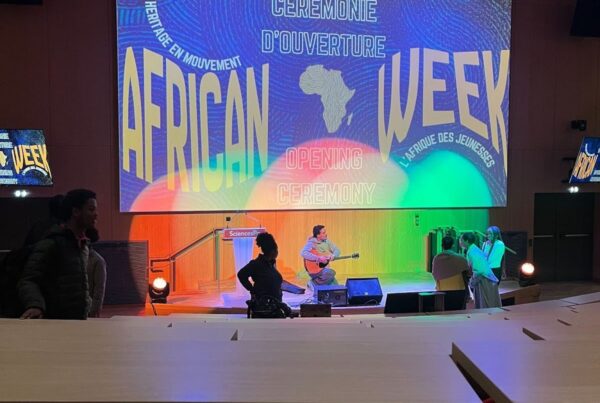
P.C. – Il y a de fait un déséquilibre, qui est un déséquilibre numérique et aussi linguistique sur les deux mineures, renforcé par le fait que tous les étudiants qu’on reçoit en échange et qui sont pour l’extrême majorité pas francophones vont plutôt investir des cours en anglais. En fait, on parle du campus de Reims, mais on devrait parler des campus de Reims, ce serait plus simple. Le campus de Reims est souvent réduit à sa spécialisation nord-américaine. L’intérêt médiatique, de la géopolitique est beaucoup articulé, et encore plus depuis la réélection de Donald Trump autour des décisions ou des politiques américaines. Mon envie, et c’est ce qu’a déjà amorcé Hamza Bensouda depuis quelque temps, c’est qu’on ouvre de plus en plus des conférences de la mineure Afrique, qui traite de l’actualité et porte un éclairage sur des faits et des actualités qui malheureusement, ne passent pas le filtre médiatique. Il en a organisé une superbe sur le Soudan et qui était pleine d’étudiants, mais je pense que c’est aussi important qu’on fasse vraiment exister avec rigueur intellectuelle les réalités et les actualités du continent africain. Après, je pense que c’est aussi la vie associative étudiante qui s’exprime très bien, même quand je rencontre des partenaires extérieurs, on me parle de la semaine africaine organisée par l’ASPA. Les caractéristiques du campus vivent aussi à l’extérieur et les caractéristiques de la mineure Afrique aussi, le problème est que spontanément elle n’est pas valorisée ou elle marque moins, mais parce qu’il y a un environnement médiatique comme celui-là. Donc c’est aussi à nous de faire plus d’efforts pour rééquilibrer notamment tout ce qu’on ouvrira au grand public rémois comme contenu scientifique et académique.
A.S. – In both minors, there have been considerable changes in the composition of the staff this semester. What motivated these changes?
P.C. – Well, that’s the life of an organisation. If you take all the 10 or 11 academic advisors for the undergraduate programme, the longest-serving one is Lucas Sageot-Chomel, who arrived at Sciences Po in 2023. So there is turnover in these positions which we have to deal with. The biggest change – which I am not directly responsible for, but in my opinion is a good move – has been the suppression of the role of the deputy campus director and replacing it with a permanent academic advisor. That leaves the North America minor with three academic advisors who have to work together de facto because although each one has their own specialisation – Humanities and History for Keridwen François-Merlet, Law and Political Science for Lucas Sageot-Chomel, and Economy and Sociology for Giulia Verardi – they will also have to oversee different cohorts (1As, 2As, and exchange students) for the entire duration of the studies. This will force the academic advisors to work together, thinking in a more collegiate way, and putting collective projects first, before focusing on recruitment and class scheduling.
A.S. – Do you expect any other changes or appointments – for the Africa Minor or in general – in the near future?
P.C. – Not for now. Hamza Bensouda is staying in Reims, and the students he supervises – both from the Africa and BASC programmes – are kind of an average [workload] when compared to other academic advisors. There is an assistant coming in May to replace Perrine [Ebodé], who left for Paris, so the team will be complete by mid-May.
T.C.S. – When she first started as Campus Director, Crystal Cordell told the Sundial Press about her love for live music and cooking. Are there any interests outside the work that you do that you would like to share with us?
P.C. – I know I’m not in a good place to say this, but I am very interested in Southern and Eastern Europe, a legacy from my time in Dijon and the friends I have from back then. I would say travelling in this region and meeting with people. I have not travelled that often during the last five years as I have kids now. That is another passion of mine, spending as much time as possible with them. In fact, their own energy replaces any other hobby I could have in the past.
T.C.S. – En regardant votre carrière professionnelle, y a-t-il quelque chose que vous feriez différemment ?
P.C. – Je ferais très différemment le tout début. Comme beaucoup d’étudiants, on a le luxe d’être admis à Sciences Po pour cinq ans, ce qui fait qu’il y ait beaucoup de questions qu’on ne se pose pas où qu’on se pose peut-être un peu tard. C’est vrai que dans d’autres cursus, il faut penser dans son inscription en master, et c’est très inconfortable (je comprends que ce soit très critiqué), mais ça force quand-même à se poser des questions. À l’époque, il n’y avait pas les majeurs de deuxième année, le choix de master intervenait toujours en troisième année mais pas avec autant de préparation qu’aujourd’hui… Donc, je me pose beaucoup de questions que je ne me suis pas posées. J’ai commencé à travailler là où c’était possible. Si je revenais en 2008, je ne ferais pas la même choix.
T.C.S. – The French government announced in their loi de finances (latest financing bill) that there would be an extension of €1 meals to all students starting this May. Can you give us any updates on whether we will get to see that?
P.C. – You will get to see that, but for a very short period of time, because the CROUS restaurant will be closing its doors by mid-May, once the final exams are over. Students next year will get to benefit from it every day. That measure has inspired us to increase investment to allow for more seats in the restaurant so that we can ease the queue we already foresee happening next year. We will have a 2-3 month-long adjustment period so that we can absorb the effect of the €1 meal extension. The restaurant currently serves around 280 daily meals, and we expect that to increase up to 380 (maybe 400) meals.
Concluding thoughts: As we head into a new academic year, questions such as the implementation of the new curriculum, the re-organization of staff, or the improvements to the school cafeteria will require time in order to be fully answered. Sciences Po TV and the Sundial Press will be covering any events related to what Pierre Catalan has shared with us, and we will particularly welcome your reactions to them.
Thank you for reading until the end, and also to Sarah Gougeon for her technical assistance.
Photo Credit: Sarah Gougeon
Other posts that may interest you:
Discover more from The Sundial Press
Subscribe to get the latest posts sent to your email.