
Hungary’s prime minister Viktor Orban has become one of the most controversial political figures of Europe. His admirers praise him for supporting national and family values, with some even viewing him as the sole saviour of Hungarian national sovereignty.
Conversely, he faces criticism for his migration, gender, and domestic policies, as human rights, economic stability, and education have been in decline in the country. Many have raised concerns about the extent to which Orbán has been steering Hungary towards a system some perceive as increasingly autocratic, veiled in the guise of illiberalism. The European Union, of which Hungary is a member, has deemed the country to be a “hybrid regime of electoral autocracy,” meaning that fairness, competition, and transparency are not guaranteed for the electorate.
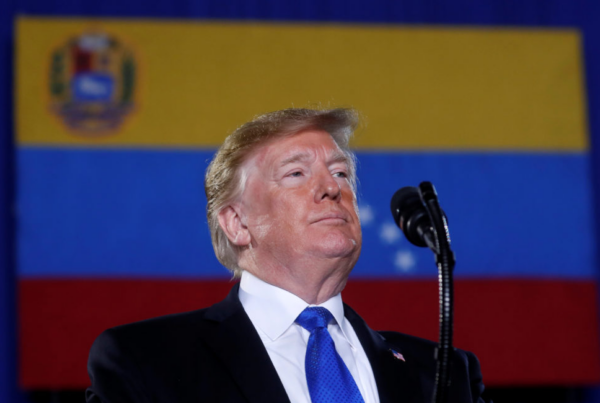
It is noteworthy that Donald Trump and Vladimir Putin, who promote and adopt similar domestic policies and values as Orbán, have designated Budapest as the venue for the next peace conference of the Russo-Ukrainian war. The president of the United States announced on October 16 that they are planning to take the next step towards peace in Hungary.
Before the announcement, Trump met with the Hungarian PM in Egypt, where he called Orbán a “fantastic man,” distinguishing him from the other guests. Interestingly, the President accurately referred to Orbán as Hungary’s Prime Minister, having earlier misidentified him as Turkey’s leader.
The relationship between POTUS and Orbán had already proven to be extremely close, as the leaders of the two countries have currently and previously openly advocated and campaigned for one another ahead of their respective national elections. This is particularly striking—and sufficiently hypocritical—given that Orbán is extremely insecure about Hungary’s sovereignty and constantly attacks his opponents by claiming they are EU puppets, arguing Brussels has a deliberate aim of interfering in Hungary’s elections, simply because they expressed support for a given candidate. Equally paradoxical is the fact that he built a narrative during the 2022 elections accusing the opposition of being financed from abroad, while at the same time his own party, Fidesz, openly funded Spain’s far-right VOX party, interfering into the Spanish elections.
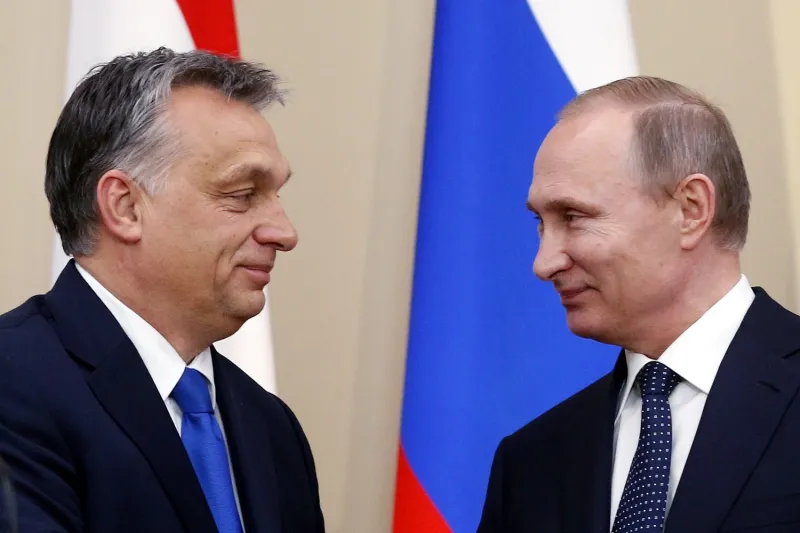
As for Putin, he and Orbán have long maintained a very close relationship with each other and between their countries. The Paks I and II nuclear power plant agreements have left Hungary in immense debt to Russia, while Orbán—in exchange for the supposedly excellent diplomatic relations and deeply unfavourable deals—has vetoed most of the EU’s attempts to support Ukraine.
Additionally, the Hungarian PM launched a smear campaign against Ukraine and Volodymyr Zelensky, conflating him with the Hungarian opposition leader Péter Magyar. The conflict culminated when Ukrainian intelligence services captured Hungarian spies in the Transcarpathia region. According to reports, Hungary’s secret services had allegedly been mapping weaknesses in Ukraine’s defence system and assessing the reactions of the local population and public opinion in the event that Hungarian or NATO forces were to enter the territory.
Subsequently, the question arises: What could a peace conference in Hungary bring to the parties involved and to Viktor Orbán himself? The answer is multifaceted. However, given the 1994 Budapest Memorandum—when Russia promised to respect Ukraine’s territorial integrity in exchange for relinquishing its nuclear weapons, only to later violate this commitment with the 2014 annexation of Crimea—any negotiations should be approached with caution.
A successful outcome would most probably mean a remarkable step toward peace; however, with the conference currently postponed by president Trump, this outcome seems highly unlikely. Moreover, without including Zelensky in the peace talks, it is plausible Putin’s interests would prevail. For Orbán, a tangible outcome would provide a substantial boost, raising his political capital, as his agenda centers around peace. To gain legitimacy and counter the opposition, which he has labeled as “war-mongering,” it would be essential to demonstrate concrete results.
On the other hand, an unsuccessful outcome could still benefit the Hungarian PM. The mere ability to seat the leaders of the two “greats” at one table is a message Orbán would undoubtedly reiterate at every opportunity. Just as he did with his friendship with Trump, he would once again use it to position himself as Europe’s strongman. As Orbán is in desperate need of validation with the Hungarian elections approaching, with polls showing the opposition leading by more than 10% among likely voters. Thus, a move of this caliber could prove decisive.
Cover image: Viktor Orban (left) and Vladimir Putin (right) meeting in Moscow (2016). Maxim Shipenkov/AFP via GETTY IMAGES
Other posts that may interest you:
Discover more from The Sundial Press
Subscribe to get the latest posts sent to your email.