
Yup. There it is: a small smile and “bro nod” of agreement, followed by a swivel. A quick glance towards a man, as if whatever I was saying had to be confirmed by a male figure. In school, sports, and extracurriculars, whether in a position of leadership or just making a contribution, I became used to spotting that turnaround when a guy would have to find another guy for validation instead of taking me at my word.
During volleyball practice in high school, I once told a teammate it was my turn to serve, not his. It was a simple rotation mistake, and I treated it as such. He, however, looked to the male coach and players for confirmation, and once they nodded, threw the ball at me. As he passed by, he muttered “bitch” loud enough for me to hear but quiet enough that no one else did. It didn’t matter that I was right; my word alone was not enough. Justifying the insult…did he hate that I was right?
In college, in a progressive country and a progressive campus, as the only female captain alongside two male co-captains, I notice that swivel again, the “bro nod.” Their need for fellow male validation, the double standards, and my exhaustion of not being recognized as a leader persist. Guys gravitate towards guys, regardless of experience or authority. As someone who has been in a position of leadership in both all-women and co-ed teams, playing at a higher level with both men and women has made me much more aware of these sexist dynamics.
In co-ed teams, people tend to cluster along gender lines, reinforcing divisions that often go unnoticed in our subconscious. Ideas and experience become secondary to gender, and usually authority is more easily granted to men–especially in sports.
The more I think about that familiar swivel, the more examples come to mind outside of sports. In debate class, I would present my arguments only for a male classmate to interrupt me and repeat the exact same thing, earning nods of agreement. Working in a gym, I often deferred to a male coworker when speaking to customers, assuming my authority alone wasn’t enough. Instead of recognizing this as quiet sexism, I blamed myself. Maybe I wasn’t good enough at volleyball to be listened to. Maybe I wasn’t articulate enough in debate. Maybe I wasn’t meant to be a leader. That must be why they seek extra validation—right?
But that does not hold up. I am good at volleyball. I can build arguments and articulate my ideas clearly and concisely. I’ve earned and am in multiple leadership positions. So why do I not present enough authority? What about me is less convincing? Smile more, dress better, wear makeup, be agreeable, be funny… How much do women have to accommodate just to receive the basic recognition men are given automatically?
I have never even called out a guy’s behavior. The reaction feels too predictable: tell someone, “You wouldn’t do that to a guy,” and the response is immediate defensiveness. Suddenly, you’re labelled difficult, dramatic, overexaggerating, or making things up. You’re aggressive. You can’t take a joke. You’re a “feminazi.” I’ve run through these scenarios a million times.
Maybe I’m wrong. Maybe the way my friends and I have been treated is just a coincidence. That explanation is certainly easier to accept. It is simpler to dismiss these moments than to confront how much unconscious misogyny still shapes everyday interactions. Either way, it feels like there’s no winning. It is so taxing to have to balance double standards, jump through hoops, advocate for yourself, but also remain pleasant, be a leader, and smile big. It becomes so tiring that the easiest response is to doubt yourself, give up, move on, and maybe miss opportunities.
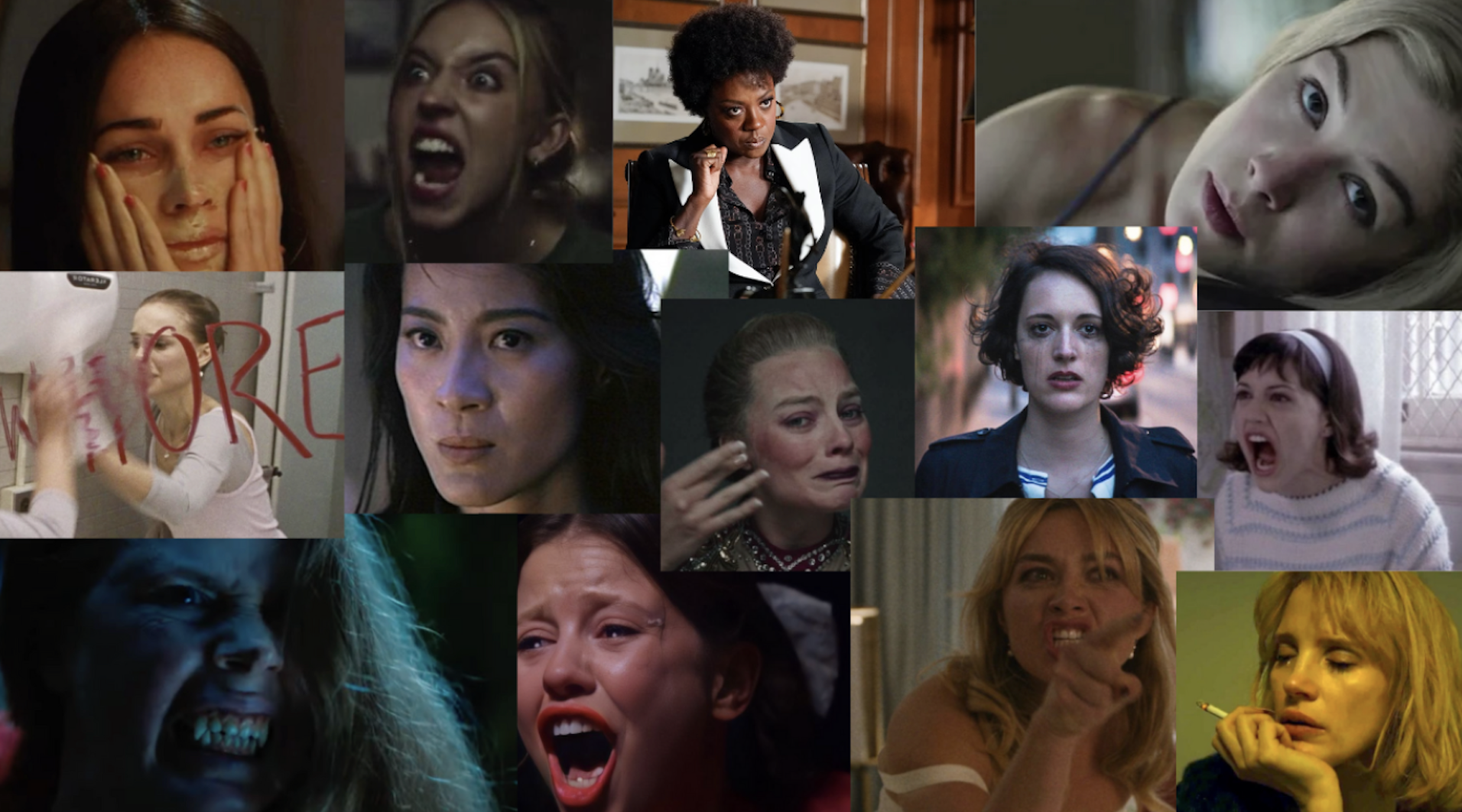
So how should women respond? Recently, people have become fascinated with the idea of feminine rage. A man wronged you? You’re a man-hater. Tired of playing the games of men, and you’re going to start playing them back? You’re a man-eater. Women will no longer sit and tolerate male disrespect, with a single tear sliding down their face, as actress Ana Taylor-Joy describes.
But this is not some dramatic phenomenon. It is simply a normal response to being treated unfairly. When women do get angry or when they do exhibit strong emotions, they are labelled “difficult,” “emotional,” or “aggressive.” Yet a man could punch a hole in the wall or curse someone out, and there would be no issue: “He’s a man.”
Labeling women’s anger as “feminine rage” disconnects from a simple truth: women are allowed to be angry. It’s not feminine rage. It’s just rage. It does not have to be given a gendered connotation. If adding “feminine” to rage is viewed in an empowering way, of women reclaiming their emotions and autonomy, great. Yet, it arguably takes away from the fact that women should be a lot angrier, and not in a feminine way. In just a human way.
Before dismissing these examples with the argument that men would also be criticized for such behavior, it is important to recognize the broader context. While the world tends to focus on a plethora of other issues (and rightfully so, they still matter), sexism is still a major problem.
Research only reflects these patterns. Sociological and psychological studies have found that coed team sports maintain gender imbalances and mixed-sex settings. Even when people are cooperating to achieve a common goal, they are prone to the reproduction of gender stereotypes. According to UNESCO, women and girls are being sidelined in science-related fields due to their gender. There are still glaring gaps in beliefs about gender discrimination, according to the violence prevention organization Our Watch. Twice as many male employees as women employees believe women have the same opportunities in Australia. AI systems, which learn from data filled with stereotypes, have also been reinforcing and reflecting gender biases.
This does not even begin to cover the “manosphere,” a loose network of communities claiming to address men’s struggles but actually promoting harmful advice and attitudes. According to UN Women, the content is gaining traction, and it normalizes violence against women and girls. It is also linked to radicalization and extremist ideologies. It allows unfiltered, easily accessible online misogyny to enter schools, workplaces, and relationships, proliferating an issue that was hard enough to address without social media. Sexism and misogyny are far from relics of the past; they are alive and well in the 21st century.
The difficulty is that subtle sexism, or microaggression, is hard to address. It doesn’t only exist with gender, but with race, and other identifiers. Institutions can add quotas and initiatives to balance the percentage of female hiring. But in school? In daily interactions? When someone calls out sexist behavior, the response often shifts the focus back onto the woman herself rather than the behavior. Talk about embedded habits. And then it’s easy to believe that, because maybe it is you. Maybe you are being a drama queen, and maybe it is something you have to work on.
Because these behaviors are so subtle or easily dismissed as harmless, confronting them becomes a catch-22. Speaking up can jeopardize your social standing or credibility, yet staying silent allows the pattern to continue. How do you challenge something that is difficult to prove? I want to call out double standards, dismissive comments, or the familiar look toward a male authority figure instead of taking me at my word. But I’m worried I’m wrong. I’m scared of it being viewed as a negative comment, instead of a chance to learn.
Recognizing unconscious sexism and misogyny is not about attacking or hating men. It really is about becoming aware of the habits and traits we encompass in our day-to-day that reinforce sexism. If I were to tell someone, “You wouldn’t have said that to my male co-captain,” it could become an opportunity to reflect. But it could also be dismissed with, “You don’t know that,” and jeopardize my legitimacy. We get defensive on these issues, and that prevents us from being willing to actually uproot all of these subconscious actions.
Cultural moments further highlight these dynamics. At the 2018 Golden Globes, Natalie Portman got mixed reactions when she introduced the “all-male nominees” for Best Director. Similar conversations resurfaced when Greta Gerwig was overlooked for directing Barbie, despite the film’s cultural and commercial success. Even within Hollywood, where progress is often celebrated, recognition and authority still favor men. Kathryn Bigelow, the first woman to win the Oscar for Best Director, once avoided publicly identifying with feminism, fearing it might harm her career.
This article cannot capture the full complexity of sexism and its intersection with race, workplace hierarchies, relationships, and abuse. It only offers a glimpse into how these dynamics persist in everyday life and how they seed self-doubt in women. But perhaps the question should shift. Instead of women always thinking, “What if I were a man,” men might start asking themselves about why they crave male validation, why a man’s word is worth ten women’s, and how they can stop perpetuating this tiring cycle.
I remember seeing that swivel in middle school, recognizing its meaning in high school, and now wanting to challenge and expose it in college. It’s funny how such a small gesture, a tilt of the head, carries so much weight, yet not for the person doing it. Eventually, it stops being about skill, knowledge, or authority. Sometimes it comes down to something much simpler: he’s a man, and I am not.
Cover Image: Rose McMackin
Other posts that may interest you:
- All’s Quiet on the Democratic Front
- An I for an “AI”
- The Politics of Dehumanization
- (Un)Healthy Hustling
- The Ever-Burning Flames of Tempi
Discover more from The Sundial Press
Subscribe to get the latest posts sent to your email.