
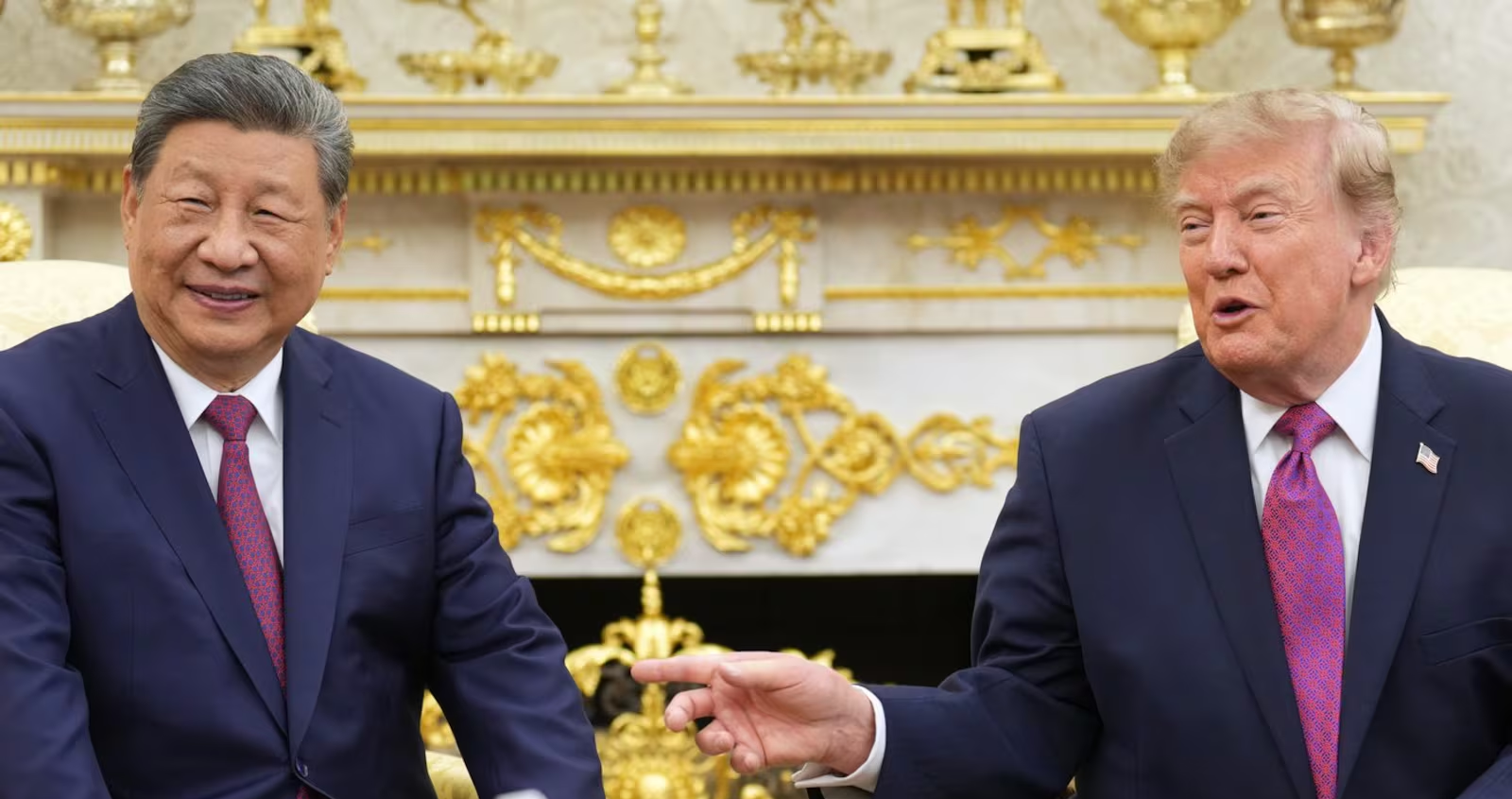
On September 23, 2026, Chinese President Xi Jinping arrived in the United States for a three-day state visit. This was Xi and Trump’s second time meeting in 2026, and Xi’s second state visit to the United States, the first being in 2015.
In a Truth Social post after the visit, President Trump described the visit as “one of Friendship, Strength, and Success, for both China and the U.S.A.[…] Much has been, and will be, accomplished,” and said that “a lot of very positive things happened […] Great things for both countries. It’s just been very, very productive.”
Despite President Trump’s words, and President Xi saying that the two leaders “had sincere and in-depth exchanges and reached common understanding on many issues,” very few tangible, concrete agreements seemed to come out of the summit.
So, despite a summit with significant planning, touting, and full of events, what issues did the leaders discuss, and what did the summit actually accomplish?
The summit came during a time of strained U.S.-China relations. Since the first Trump Administration, the two nations have been in an on-again, off-again trade war that reached tariff rates of up to 145% on China, but tensions have since cooled down with a temporary truce at the October 2025 summit between the two leaders. Competition in artificial intelligence (AI) and whether and how the industry would be regulated, especially in light of recent incidents of AI going rogue and industry leaders ringing alarm bells, were also expected to be discussed. Likewise, the American position on Taiwan and reports of China providing possible military support to Iran in its conflict with the U.S. were anticipated topics of discussion at the summit.
One of the clearest outcomes of the summit happened before it began, and without the heads of state. On Wednesday, September 23, the day before bilateral talks between Trump and Xi began, U.S. Treasury Secretary Scott Bessent announced on Fox News that after successful four-day talks with his counterpart, Vice Premier He Lifeng, the nations had agreed to extend the October 2025 truce on the trade war. The truce was previously set to expire on November 10, 2026, and is now in place until January 10, 2027.
The two sides also agreed to initiate tariff reductions worth $60 billion in goods imported from each other. It was agreed that China would reduce duties on American agricultural goods, while the U.S. would do the same for Chinese consumer goods such as toys and kitchen appliances. Notably, soybeans, America’s biggest agricultural export to China, were not included.
Lastly, on the topic of the economy and trade, the countries launched the U.S.-China Board of Trade, tasked with managing “trade in non-sensitive products between the two largest economies in the world … including recommendations for non-sensitive products that may qualify for better trade treatment.”
However, the summit did not address the structural and long-term disputes behind the trade war. The truce provided a temporary band-aid and extension, but was not a substitute for resolving the nations’ disagreements, including over U.S. restrictions on China’s access to advanced technologies considered crucial for American national security and AI. In fact, on October 1, Reuters reported that the U.S. was restricting exports of aircraft parts to China.
On the topic of AI, the countries launched an “AI dialogue” and established “a bilateral communication channel for AI incidents” to “exchange views on risks and benefits related to AI.” The countries also announced that they would meet again in China in two months to discuss how to respond to AI security and safety incidents. However, during Trump’s AI summit with top industry leaders on September 29, he “ruled out any sort of joint venture with China in artificial intelligence (AI), arguing it would be tantamount to ‘giving away secrets’ to America’s main economic rival.”
The summit did not lead to a comprehensive agreement on AI regulation, safety, or control, or do much to address the broader U.S.-China competition over advanced AI. Trump and Xi agreed to talk more about the topic in the future rather than agree on any rules.
Trump has also continued to downplay the need for government intervention in regulating AI and reducing the speed at which the industry is developing, instead promoting self-policing and voluntary commitments.
During the summit, Xi asked Trump to oppose Taiwan’s independence; however, Trump seemed to decline, as U.S. Ambassador to China David Perdue told CNBC in an interview: “We’re not changing our position.” As a result, the summit left one of the most dangerous flashpoints of U.S.-China relations unaddressed and unchanged.
Regarding Iran, according to Perdue, Trump warned Xi not to support Iran and received promises that China would not. The leaders also agreed that “Iran should honor its commitment to not developing nuclear weapons, and no country or institution can be allowed to impose tolls on international waterways.”
The summit has left U.S.-China relations with more doors open than closed. On trade, a definitive answer has been delayed; while the summit prevented further deterioration of trade relations, the leaders took no large steps toward normalization. On AI, the leaders agreed on vague frameworks moving forward but stopped short of any definitive action or guidelines. On Taiwan, both countries remained where they were, and China promised that it was not providing military support to Iran in its conflict with the U.S., although China has been accused of, and denied reports of, the contrary in the past.
Looking ahead, Trump and Xi will be meeting again at the Asia-Pacific Economic Cooperation summit in Shenzhen, China, in November and at the G20 summit in Miami, Florida, in December.
While the summit ended without any breakthrough, one aspect was particularly unprecedented. In a Fox News interview, Perdue said that Trump offered to sell American weapons to China. China is seen by many in the U.S. as the nation’s greatest rival, especially militarily. The possibility that the U.S. might provide arms to China, particularly given the worries that even Trump himself has about sharing technology with China, is notable. When asked to comment, the White House said that “the United States had no plans to sell arms to China,” and the State Department said that “U.S. law prohibits arms sales to China and there is no offer or plan to sell arms to China.”
Photo Credits: Jacquelyn Martin / Associated Press
Other posts that may interest you:
Discover more from The Sundial Press
Subscribe to get the latest posts sent to your email.