
Article by Linda Reeder with reporting by Ogan Göncü.
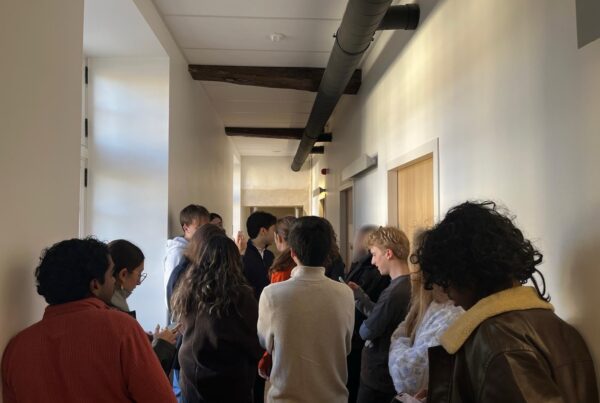
Blockades on Sciences Po’s Reims campus resumed on November 5th, as students organized a demonstration in support of the national general strike, organized by l’intersyndicale, the group representing France’s main trade unions.
On Thursday, October 8th, Sciences Po’s Reims students had initiated the first blockade of the campus. Blockades had continued the next day, October 9th, and the following Tuesday, October 13th, before ceasing until November 5th. The pause in student demonstrations came following an agreement with the administration, which held that student blockades would halt in exchange for absences from October 6th to October 16th not being taken into account, and none of the students involved with the blockades receiving disciplinary action.
Campus director Pierre Catalan first alerted the students on November 4th, via email, of a possible blockade on the following day after calls by student unions. At 10:18 a.m. on November 5th, he confirmed that the campus would be closed until the blockade was lifted.
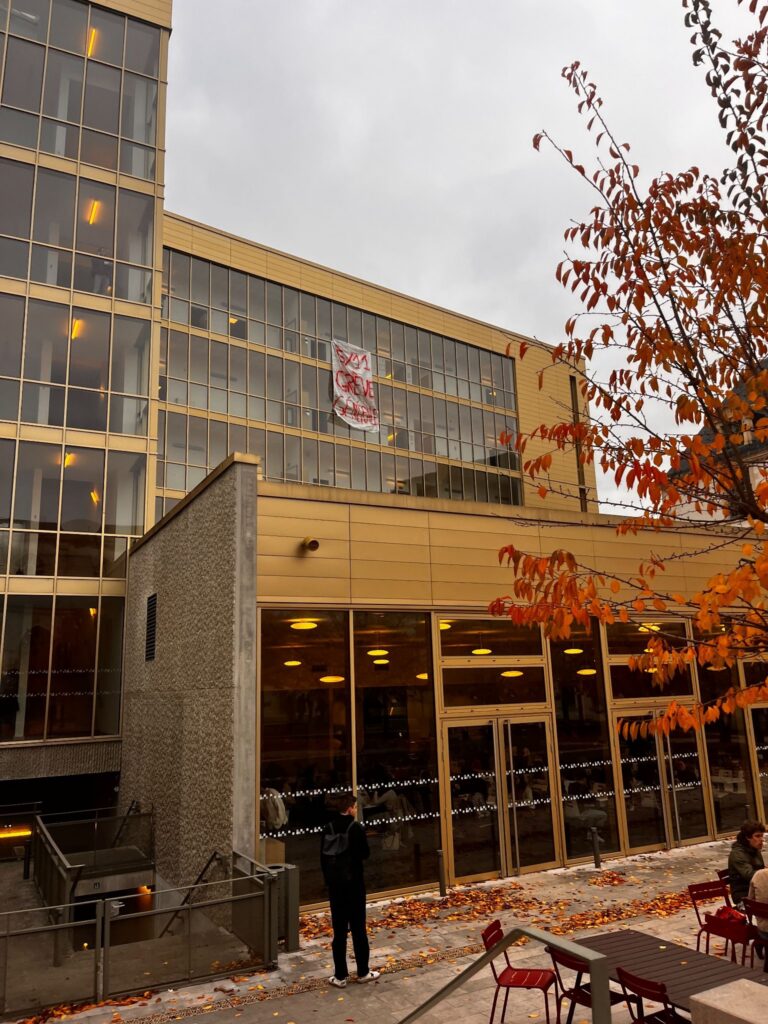
A banner on the campus’ K-building reads “5/11 general strike. Linda Reeder
The blockade was organized in support of the November 5th French general strike. Across France, protesters gathered to demand higher wages, increased school funding, and other anti-austerity measures. The Interior Ministry estimated that 600,000 people participated in nationwide strikes and demonstrations.
Due to the general strike, many classes were already set to be held online, as professors commuting from Paris would be unable to travel to Reims to hold in-person sessions. According to Mr. Catalan, only 12 of the 122 teachers scheduled to be on campus had intended to hold their classes in person on November 5th.
In an email interview conducted with Mr. Catalan, he pointed out that the main result of the blockade would be to block access to campus amenities rather than disrupting classes.
“In my opinion, there is no point in blocking a campus which teaching activities have adapted beforehand to this inter-sectorial strike day, except if your intention is in fact to prevent any student to live a normal student life and access the basic services such as the library, the 1€ meal at the CROUS, or simply a day in a well-heated facility,” Mr Catalan wrote.
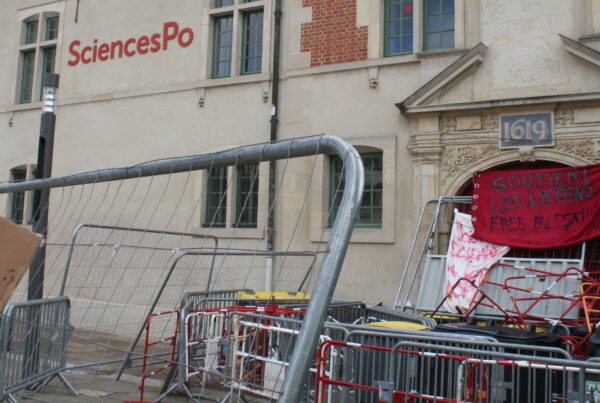
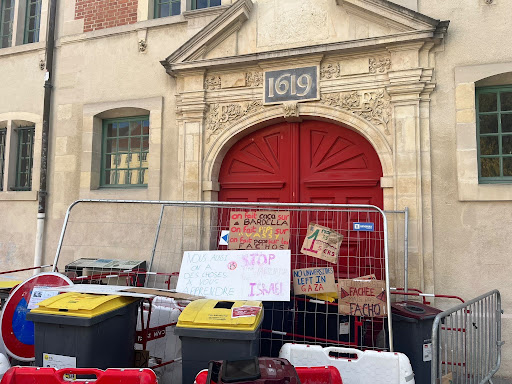
As the blockades have continued, student organizers have developed different methods to encourage student participation. Compared to previous blockades of the campus, the protesters on November 5th said they aimed at creating a more festive atmosphere through games and music, as well as drawing slogans and symbols on the pavement, and a mural on the campus wall.
“Pierre Catalan wanted us to express ourselves through art instead of blockades, we decided to do both,” said one protester, who wished to remain anonymous.
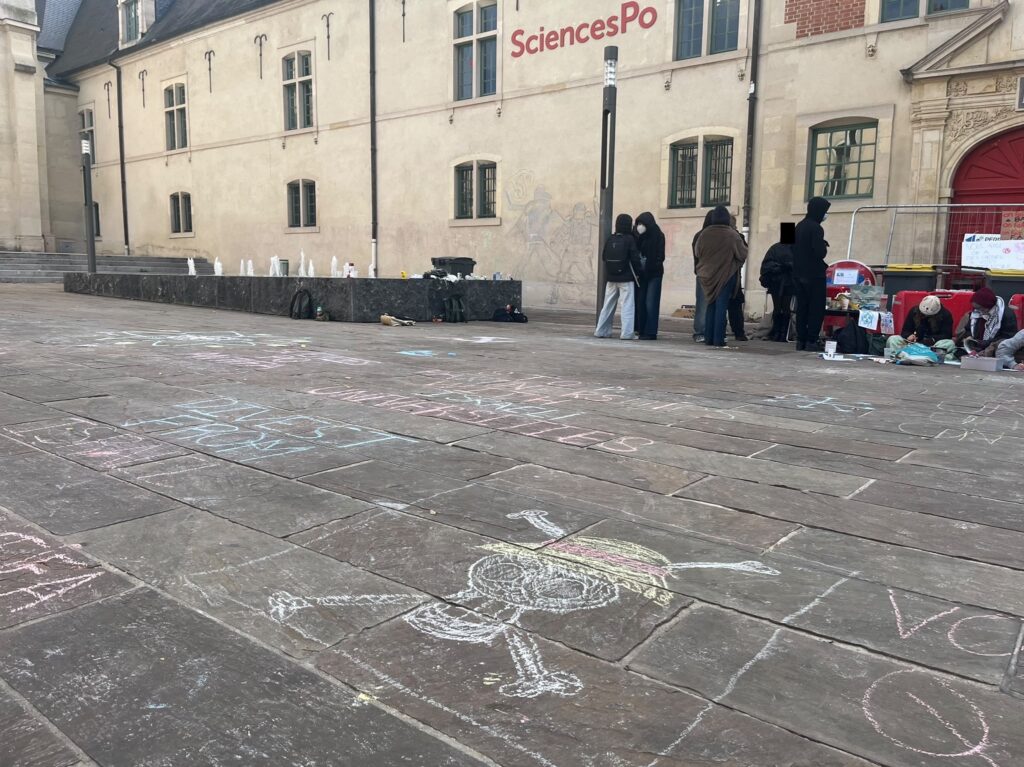
Drawings in front of campus display protest symbols and slogans. Ogan Göncü
Student organizers also hosted a collaborative lesson with a Sciences Po instructor which lasted from 2:00 to 3:30 p.m.
Following the lesson, participants joined other protesters in marching towards the Reims rectorate.
Mr. Catalan claimed that despite the change in approach, demonstrators continued to be unwilling to work with the administration.
“I notice a change of mindset by the protesters, who are much less aggressive than they used to be—perhaps for public relations reasons—but their will to engage in a productive discussion is still very low,” Mr. Catalan wrote.
Despite the earlier agreement made among student unions and the administration, tensions have only escalated. On the side of the administration, Mr. Catalan criticized demonstrators for refusing to communicate with the administration.
“The same protesters behave the same way than before, with no intention to discuss whatsoever with us, and with very little consideration to their peers,” wrote Mr. Catalan.
On the other hand, demonstrators argued that the administration had attempted to delegitimize and marginalize them by adopting a condescending tone in their communications.
When reached for comment, Mr. Catalan denied these claims.
“I tell and report things as they are, trying to put myself in the shoes of the 1400 students who do not block the campus and who have needs protesters superbly ignore, and want need very concrete information,” Mr. Catalan wrote.
In an email sent on November 4th regarding the planned blockade, Mr. Catalan highlighted the legal limits of students’ right to demonstrate, pointing out that it cannot infringe on students’ right to education by citing articles of the Education Code pertaining to the use of educational facilities and freedom of expression.
“I think that it is important to know the legal framework before one takes part in this type of action. No one is presumed ignorant of the law. Blocking a campus is not a trivial act, nor a normal practice,” said Mr. Catalan.
Despite this, the efforts of student demonstrators’ have persisted.
“We are not afraid, we know what we are fighting for,” said the protester we talked to.
Photo credit: Ogan Göncü
Other posts that may interest you:
Discover more from The Sundial Press
Subscribe to get the latest posts sent to your email.