
Because the Sciences Po Reims campus wouldn’t be what it is without its African minor, it is essential we took a closer look and appreciated the work that ASPA undertook to propose its fabulous African Week this past February. Happening between February 9 and 14, the theme of this year’s event was centered on the youth, offering an opportunity to delve deeper into subjects, debates, and discussions regarding potential domains where the youth can play a significant role in the future. And for those who didn’t have the chance to attend the events organized, here is a recap of the moments to remember.
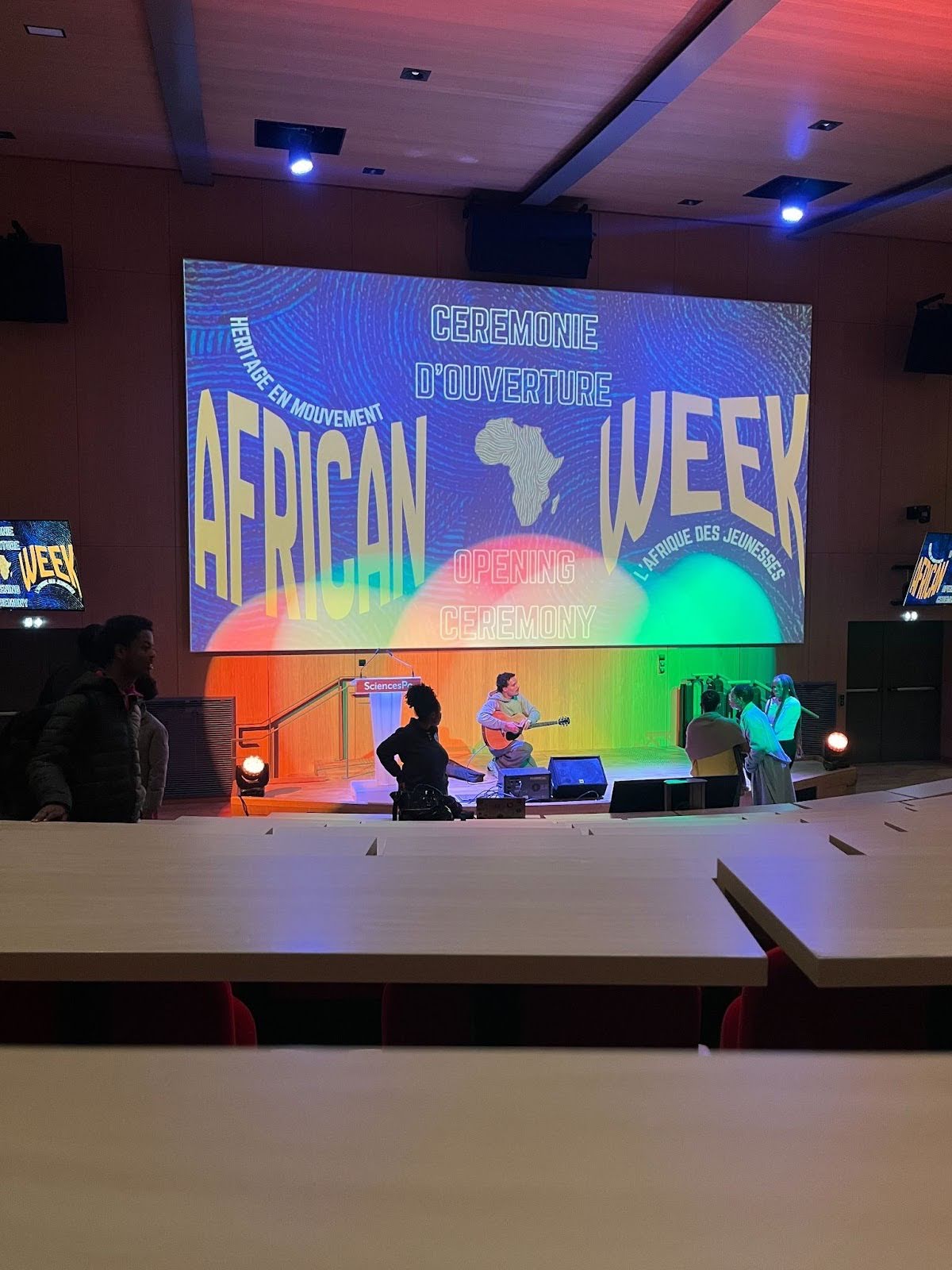
The week started off strong with its opening ceremony on Monday, where ASPA invited to the stage, though sadly by videoconference due to last-minute issues, Aïssa Diaby, a Franco-Guinean filmmaker and screenwriter. She explained the role she plays in cultural diplomacy, which was central to the whole week in general, and how she tries to bring parts of French and African culture together. She delivered an inspiring speech outlining her own experience of growing up with two cultures, and how it can sometimes be a struggle to navigate between the two. Still, she highlighted the importance of recognizing and acknowledging whatever culture an individual may have. Culture is not simply part of who we are, but a culture must also be respected, which taken together can be used to turn it into a positive image and vision of yourself and for others as well.
The opening ceremony featured a short performance by Elefunk, the special music group of the Africa minor, which played two songs combining voice and music accompanied by a guitar. Finally, the audience welcomed to the stage Dia Alihanga—a chronicler, educator, orator, and figure in Gabonese Hip Hop. With a strong passion for slam poetry, she delivered a speech about youth engagement and how her own story led her to use music as a tool for cultural exchange.
African Week was also animated with a variety of different events that were meant to attract students based on their personal interests. One of these events was a movie screening, focused on the ongoing Sudanese humanitarian crisis. The movie, titled The Quiet Heroes of Sudan, is produced by the Emergency Response Rooms (ERRs), a humanitarian organization from Sudan. The movie showed that even with the presence of international humanitarian aid, bringing relief to a population living in an ongoing civil war remained a difficult and perilous task to undertake. It was a profound and difficult movie to watch emotionally, yet it nonetheless helped shed light on this ongoing international humanitarian crisis.
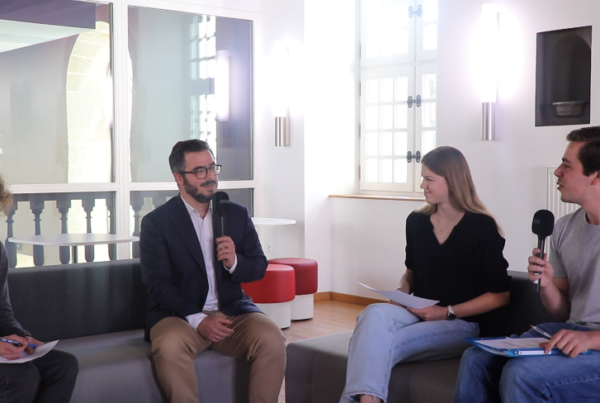
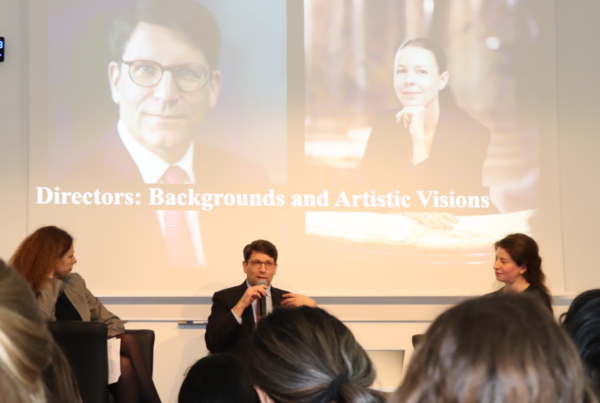
Additionally, the week featured a series of conferences, both in person and online, on subjects related to diplomacy and Africa. The first one focused on Franco-Algerian relations, notably on colonial heritage, memory, and contemporary diplomatic challenges. The discussion was presided over by three renowned guests: Stéphane Romatet, the current French Ambassador in Algeria; Nedjib Sidi Moussa, a political science doctor, professor, and author; and Nadia Henri Moulai, a Franco-Algerian journalist and author who notably published Un rêve, deux rives. Part of the discussion centered on the historical ties between the two countries, reminiscent of the period of Algeria under French colonization, but also on the mutual views that the two countries have in regard to the other in contemporary times. They also sought to question the possible evolution of the relation between the two. While they acknowledged tensions remain important as of right now, notably on the question of immigration, they also evoked the possible role that Algeria can play in the geopolitics in Africa. A task which won’t be easy, considering that some of Algeria’s neighbors such as Morocco have recently attracted world attention through the organization of international events, like sports with the CAN and the upcoming 2030 FIFA World Cup.
The second conference focused on cultural diplomacy and how cultural dialogue could be incorporated into international negotiation. This discussion focussed primarily on Ghana, notably due to the presence of Professor Frederick Owusu Nyarko (L.H.D), who is an Ambassador of Culture for Ghana, as well as Nyarko Frederick Owusu, a cultural activist and co-founder of the Ancestral Foundation. Among these guest speakers was also Jérémis Desjardins, a French expert in international cultural cooperation. He works primarily for the French Ministry of Culture on projects with French international organizations; one example is the Alliance Française, which seeks to spread French culture globally. With these highly knowledgeable speakers, the discussion delved into the use of poetry and art forms as a potential tool for cultural diplomacy and soft power. They notably pointed out how they could be key elements for a transmission of culture and heritage, and how oral storytelling is particularly important in Ghanaian culture. Finally, they stressed the importance of getting both women and children involved in the world of culture, with the fact being that culture, like anything, is an always-evolving and transforming product. As such, it must involve everyone in its process, and that is also about believing in the ability of all to innovate in this field to make a culture live and thrive.
In sum, these two conferences proved to be very insightful to better understand some current diplomatic tendencies and objectives that African countries like Algeria and Ghana may share. Additionally, they shed light on the role that the youth can play in displaying and sharing to the world part of the culture and vision of these countries, thereby contributing to a better recognition on a more global stage.
And finally, to end the week on a high note, ASPA had organized two distinct events on Saturday: a visit to UNESCO, as well as its own night gala. The UNESCO visit was coordinated with RIMUN, where participants were able to visit the headquarters and engage with the Africa Priority and External Relations Sector (PAX). With the former, participants received information from Julia Negumbo on multilateralism as well as a recap of the history of UNESCO, its current missions and challenges. Later on, they attended a conference at Sciences Po, on the Paris campus, with Sandra Coulibaly Leroy, who works for the Organisation Internationale de la Francophonie (OIF), providing them with another opportunity to learn the missions and challenges of the organization. Overall, it was an insightful visit that provided a more concrete meaning to the subject of cultural diplomacy that had previously been tackled during one of the organized conferences.
To finish the day off, the ASPA gala took place in the evening at the Salon Degermann, centered around the cosmology theme: “Eclipse.” The program included a live performance by Sucré Salé, a musical duo from Reims formed by two African artists from Madagascar and Gabon. Through their music that blends African sounds from the 1970s–1990s with original compositions, they revive the rhythms of their youth and the African diaspora, offering concerts that celebrate cultural unity, reflection, and shared heritage. Other musicians and artists included André Ze Jam Afane from Cameroon, a musician and storyteller from the Bulu tradition. He works to blend jazz and contemporary music by mixing fables, myths, and rhymes into poetic reflections on the world to his audience. He was accompanied by Seyba Sacko, a musician who plays the kora, a famous string instrument from West Africa, but who is also able to play different instruments such as the n’goni, the balafon, the bass, and drums. As a whole, this artistic combination of voice, songs, stories, and music offered a truly cross-cultural sonic experience. The ASPA gala offered a great moment to appreciate the diversity of African culture. It allowed many to enjoy their Saturday evening in a colorful spirit, which also proved to be another unique and original experience to have on Valentine’s Day, for anyone who wanted different plans.
As a whole, African Week was a great opportunity to appreciate and benefit from the cultural richness and diversity of our Reims campus, which continues to offer many opportunities to still learn from people, their cultures, and their stories—all worth preserving and sharing for whoever wishes to learn more about the world.
Cover Image: Paul Quero
Other posts that may interest you:
- Interviewing Our New Campus Director: Pierre Catalan on His New Role, Student Life, and CROUS.
- Alain Chatriot on Post-WWI challenges in France
Discover more from The Sundial Press
Subscribe to get the latest posts sent to your email.