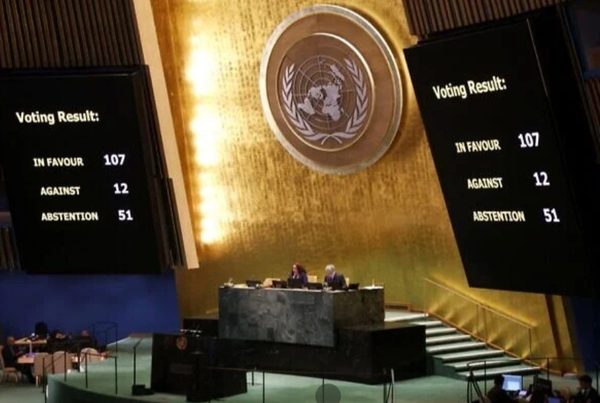

On Sunday, Beijing will celebrate for the second time the “Taiwan Restoration Day”. The National People’s Congress Standing Committee set October 25 as the date, surely a deliberate coincidence: not only did the Japanese army surrender in Taipei on this day in 1945, but on October 25, 1971, the UN General Assembly also adopted Resolution 2758. It is part of Beijing’s narrative: in 1945 the island was restored to China, and in 1971 the world certified it. But the second half of the story is nowhere to be found in the text.
A seat but not an island
Resolution 2758 is about one thing only: who takes China’s seat? It restores “all its rights” to the People’s Republic of China and recognizes its representatives as the “only legitimate representatives of China to the United Nations”, therefore expelling “the representatives of Chiang Kai-shek”. The resolution is not about Taiwan, and whoever reads it as a victory of a specific side on this matter is mistaken, for a precise reason: in 1971, no one argued that Taiwan was not China. Two governments were contending for a seat in an international institution. Although the General Assembly has the power to deliberate on that matter, the UN Charter gives it no power to assign territories. Jacques deLisle and Bonnie Glaser, in their legal report of 2024, are very straightforward: the Chinese thesis “relies on a text that does not contain any such language”.
When did Beijing’s narrative start? According to a GMF report, the effort to rewrite Taiwan’s status at the UN intensified in the 1990s, “at the same time as the island’s democratization”. In 1996, Taiwan held its first direct presidential election. Right after, on January 30, 1997, Chinese Ambassador Qin Huasun wrote to the Secretary-General, stating that “no change in the way in which leaders of Taiwan are produced” could alter the island’s status as part of China, and that Resolution 2758 had resolved the issue of China’s representation at the UN “once and for all.” On September 8, spokesperson Mao Ning used the same formula, adding “of the whole of China, including Taiwan.”
Law of habits
We are taught that a resolution means what it says. International law is less naive.
In 2010, while interpreting a Security Council resolution concerning Kosovo, the International Court of Justice stated that the subsequent practice of United Nations bodies and the states involved also carries weight. The meaning of a text is also shaped by how it is put into practice.
Beijing understood that matter before everyone, and has built on top of that an annexation by interpretation policy. The White Paper of 2022 defines Resolution 2758 as a political document about the One-China principle, with a legal authority that “leaves no room for doubt”.
The practice, however, came first: in 2007, the UN Secretariat refused Taiwan’s membership application, quoting Resolution 2758.
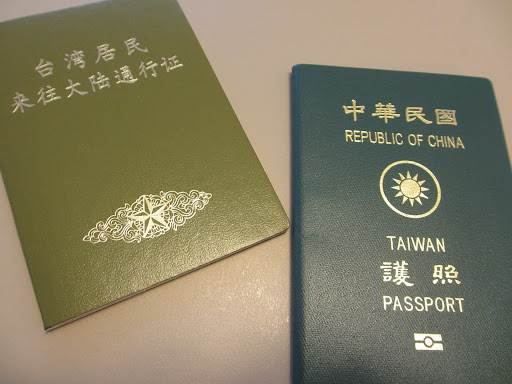
This uncertain diplomatic status of Taiwan affected Taiwanese citizens, causing, for example, humiliation in international events. In 2015, a Taiwanese citizen was barred from entering the UN office in Geneva because her Taiwanese ID and passport were refused. In 2024, the UN asked Taiwanese journalists for an “official Chinese passport in accordance with UN policies and General Assembly resolutions” to attend the World Health Assembly.
A resolution on a seat, used to reject a passport. In this way, a contra legem interpretation becomes legal practice. For most states, the issue has, as deLisle and Glaser write, “low salience,” whereas for Beijing, it is “of great importance.” The one who persists, wins.
The need for a counter-practice
A counter-practice began in 2024. A US official said publicly that Resolution 2758 concerns only the UN seat. The European Parliament, along with the parliaments of Australia, the UK, Belgium and the Netherlands, has voted for motions opposing the Chinese interpretation. Taipei, on September 26, recalled that the People’s Republic “has never ruled Taiwan”. These words have yet to reach the UN.
This asymmetry poses a real threat to Taiwan’s security. Article 2(4) of the UN Charter prohibits the use of force in international relations. If Resolution 2758 were read as making Taiwan a territory of the People’s Republic, a naval blockade in the Strait would become an internal matter, and anyone helping Taipei would become the aggressor.
The most important judge of Resolution 2758 does not sit in The Hague. It is the clerk at the reception desk of the UN, who for now checks passports along the lines of Beijing’s interpretations. Motions will only truly matter the day a Taiwanese passport opens that door. Until then, every October 25th, Beijing will have one more reason to celebrate.
Credits: Zhang Yongtai / Voice of America, via Wikimedia Commons
Other posts that may interest you:
Discover more from The Sundial Press
Subscribe to get the latest posts sent to your email.