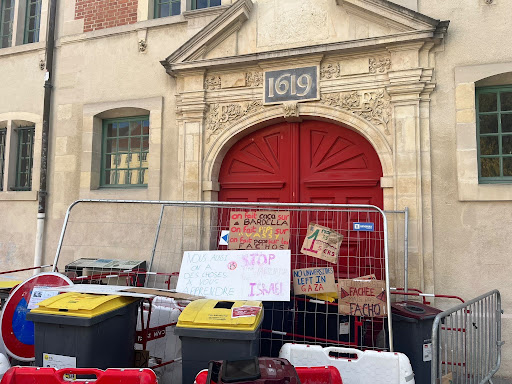

On November 17, Sciences Po’s Reims campus was blockaded for the 6th time in as many weeks by students advocating for a number of campuswide and national causes. Protesters made good on their promise to try again, after their attempt on November 16 was thwarted by the back entrance on Rue Eugène Wiet being opened to students. This time, both the main and back entrances of the campus were closed off by 6:53am. The administration, on the other hand, kept its own promise. By 9:05am, the police had twice intervened and at least eight Gendarmerie Nationale vans had arrived on scene. The blockade on Rue Wiet was lifted by students as the first Gendarmes, wearing riot gear, began walking towards the campus. The definitive resumption of in-person classes was announced by campus director Pierre Catalan in an-email to students at 9:41am.
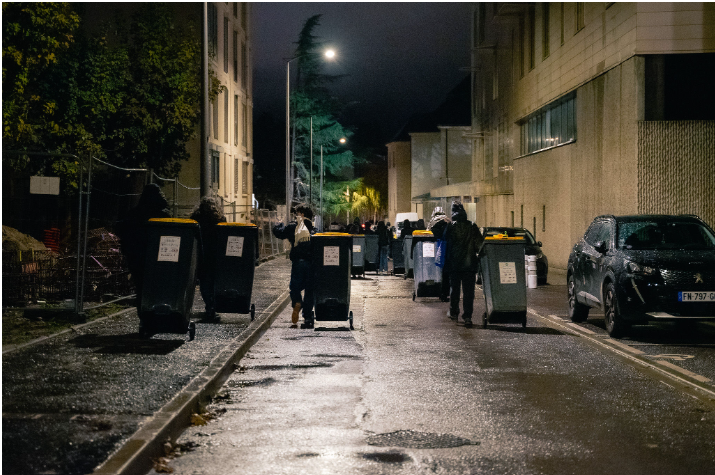
The first blockade on Rue Wiet
Almost as soon as the group of about 25 protesters arrived at the campus’s back entrance in the early hours of the morning, a police vehicle, already positioned nearby, began circling the campus. Mr. Catalan confirmed to the Sundial Press that he had requested the presence of law enforcement to “watch over” the back entrance, as had been the case on November 16. He reiterated, however, that any police intervention (or lack thereof) on a public road was not his, or Sciences Po’s, responsibility.
The campus director arrived to talk to the demonstrators at 7:20am, before sending the first of what would be many emails at 7:46am, announcing the move of all classes scheduled for 8:00am to an online setting. In that email, Mr. Catalan also expressed his belief that the majority of students needed to come to campus while lamenting: “I am sorry, I thought collective intelligence could prevail.”
Mr. Catalan’s presence on Rue Wiet was followed by the arrival of six police officers at approximately 8:05am. The officers immediately began dismantling the barricades and warned the protesters that they would be arrested if they did not comply with instructions. The students then abandoned the scene and proceeded to Place Museux to continue their demonstration. No attempt was made by law enforcement to clear the barricade erected there, in keeping with the campus director’s remarks to The Sundial Press on November 16 that protesters expressing what they’d like “without disrupting the campus and community lives and without doing harm to other students” was a “very good thing.” The Sundial Press reporters present were also ordered to disperse. There were no physical confrontations. At 8:14am, all students received an email from Mr. Catalan announcing that in-person classes would resume.
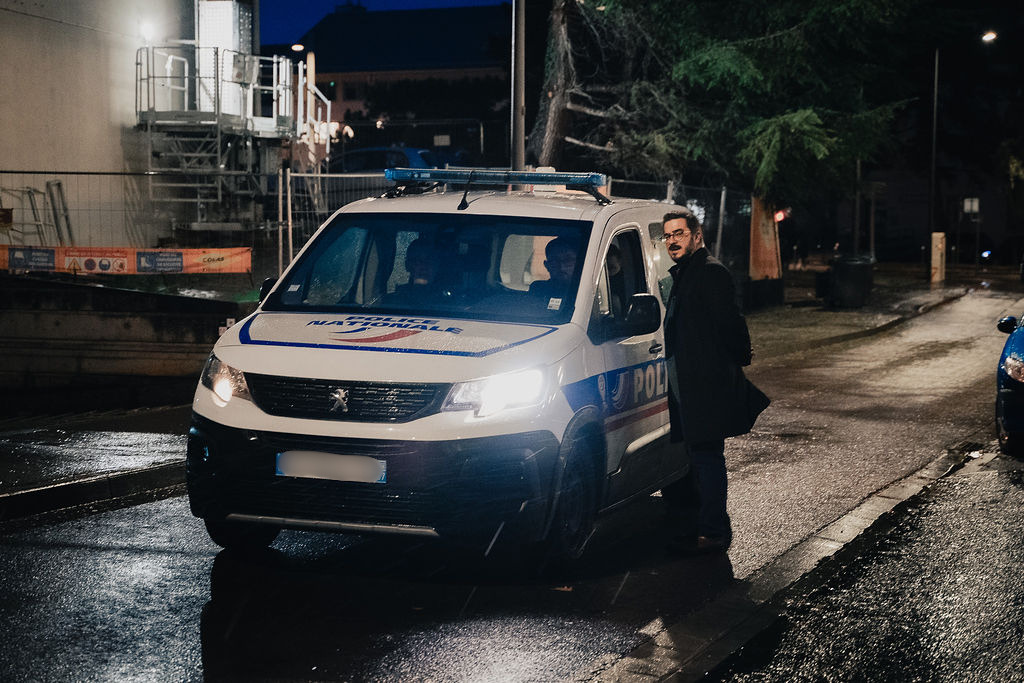
The second blockade on Rue Wiet
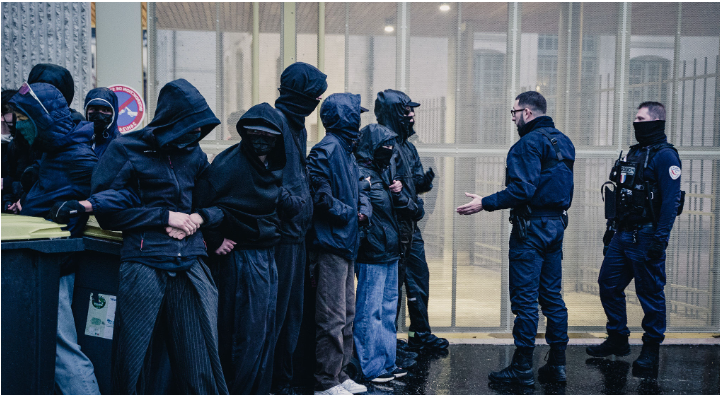
After a brief general assembly on Place Museux, the dispersed group of protesters decided to return to Rue Wiet at 8:23am to reinstate the blockade. Having realized the futility of physical barricades against the police, they contented themselves with a few trash bins and formed a human chain in front of the door.
The police officers, who had withdrawn from the street in the interval, were quick to return and take up positions in front of the students. Upon arrival, they again demanded that protesters disperse. It seemed then that a lighthearted moment was within reach, as both sides laughed at the protesters’ joking response to the order. It was not to be, however, as officers began a physical intervention shortly thereafter, attempting to grab and drag the demonstrators away from the campus’s back entrance. Mr. Catalan, who had also come back to the scene, winced at the sight. The campus director had earlier told The Sundial Press that he had asked law enforcement not to use force while handling the blockade.
As the police were not immediately successful at breaking the human chain, a state of limbo took hold. The officers would lunge towards the protesters, fail to dislodge them, and retreat. The two groups would meanwhile talk and even exchange a few mellow words with each other, occasionally laughing, before the police again attempted dispersal.
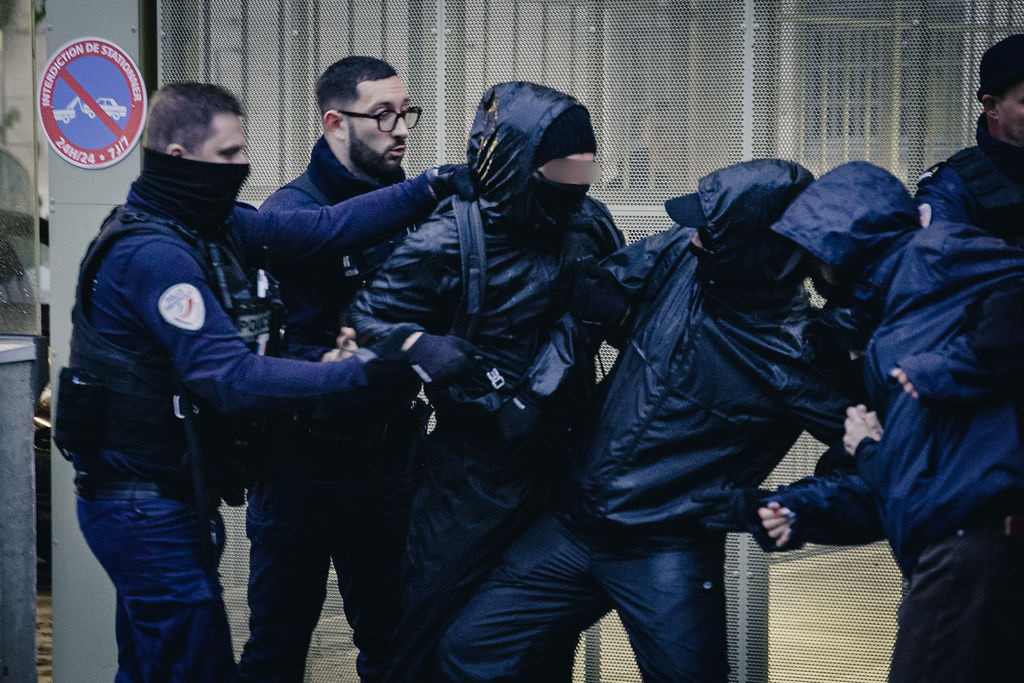
The cycle was finally broken after a shouted threat to use pepper spray and a change of strategy by police officers, who decided to focus on the door itself rather than the people blocking it. Slowly but surely, the officers were able to move the human chain, still intact, far enough away from the campus’s entrance to permit the circulation of people. The situation remained awkward though: two dozen protesters surrounded by half a dozen police officers, with a few staff members and students being let into the campus by an officer manning the door. It would take something else to bring the tango to an abrupt end.
The Mobile Gendarmerie’s trucks, notorious in France for their association with the forcible dispersal of protests, appeared in the protesters’ line of sight at about 9:02am. The demonstrators decided to leave, walking back up the road while maintaining their human chain. It would become clear later how wise a decision this was, as photos would reveal that not one, not two, but at least eight of the aforementioned trucks had lined up on Rue Wiet, with the last overflowing onto Rue Gambetta.
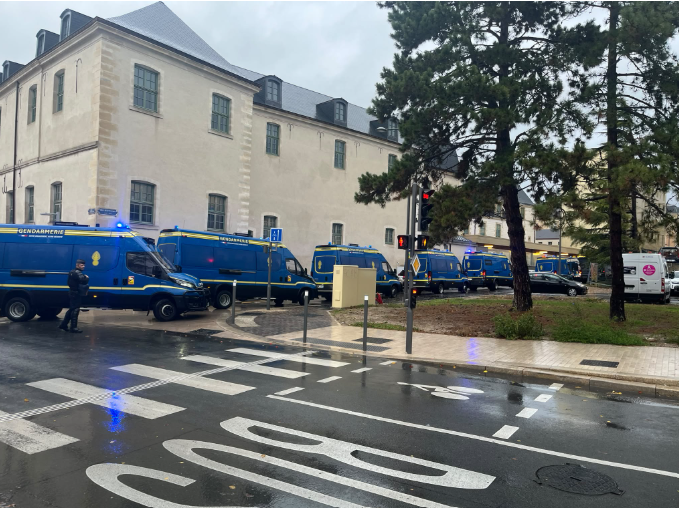
Retreat and the end of the blockade
Mr. Catalan’s last communication to the student body on the day’s blockade was delivered by email at 9:41am. In it, the campus director affirmed that the back entrance on Rue Wiet was once again accessible and repeated his call for “methodical and calm discussion,” emphasizing that his office was open to everyone for such dialogue.
The students who had departed Rue Wiet, on the other hand, returned to Place Museux, where the blockade of the campus’s main entrance continued until 4:00pm. Though their faces were tired and their clothes were wet, they remained in good spirits, sharing coffee, biscuits, and bread. While their goals for the day would remain unachieved, the sense that they had gone through a trial together and emerged from it stronger was inescapable.
When asked about the prospect of disciplinary action against the participants of the blockade on 17 November, Pierre Catalan gave the following statement:
“Every individual is subject to laws and regulations, that is how the rule of law works. We do not live in a society where anyone can exempt themselves, in advance, from shared rules.
This morning, there was no degradation, no public insult or affront. But preventing the circulation of people and the holding of classes constitutes a disturbance of public order.”
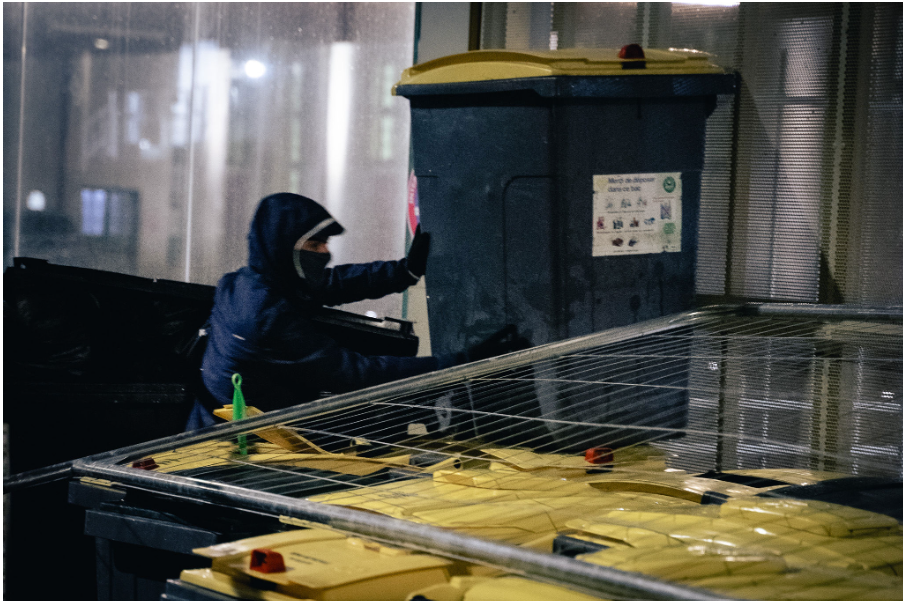
Student protester places garbage bin on Rue Wiet barricade. Jurgis Dapkevičius/Sundial Press 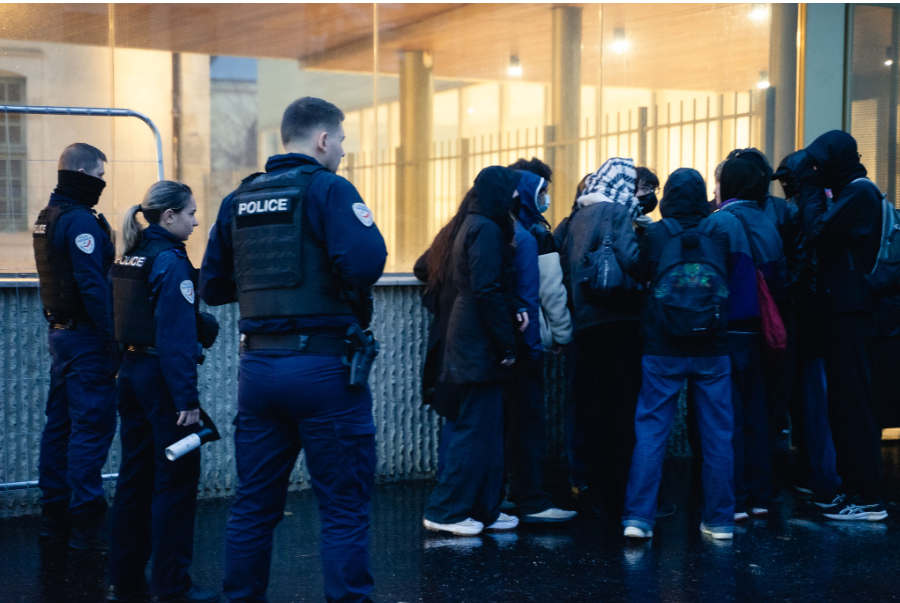
Protesters during the first blockade on Rue Wiet discuss whether to disperse as police officers look on. Jurgis Dapkevičius/Sundial Press 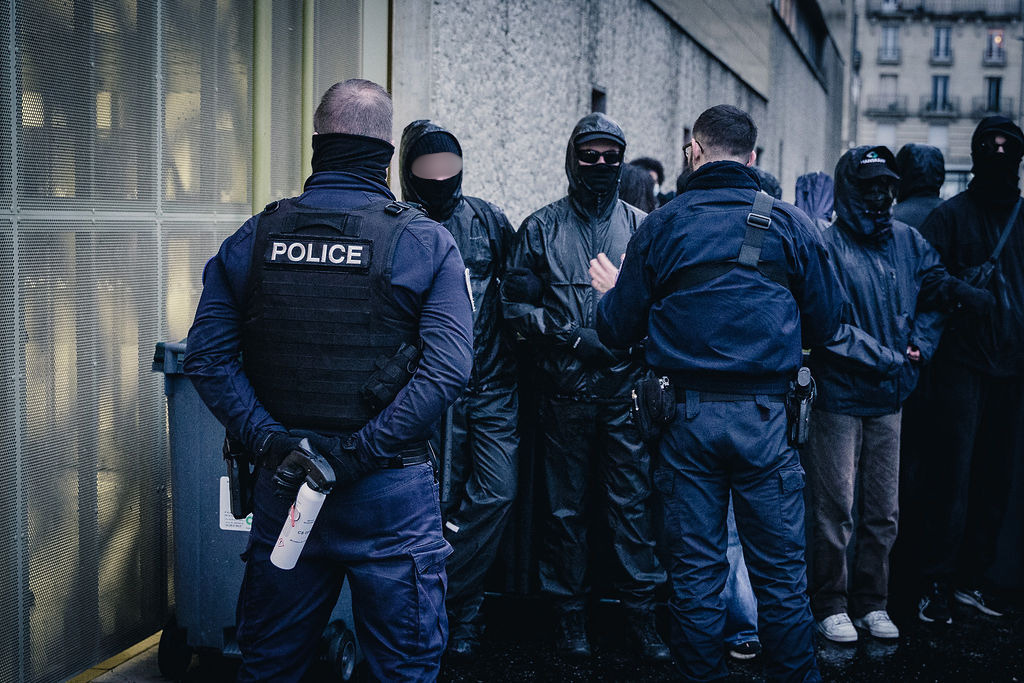
A police officer looks on at protesters as his colleague orders them to disperse. Jurgis Dapkevičius/Sundial Press 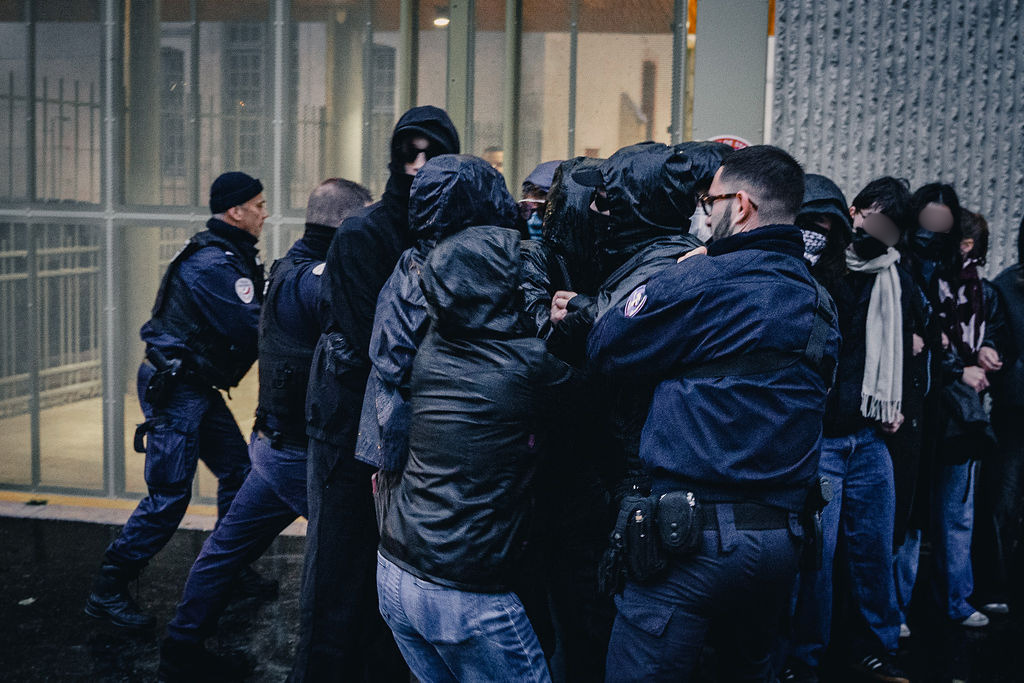
Police and protesters scuffle in front of the campus on Rue Wiet. Jurgis Dapkevičius/Sundial Press 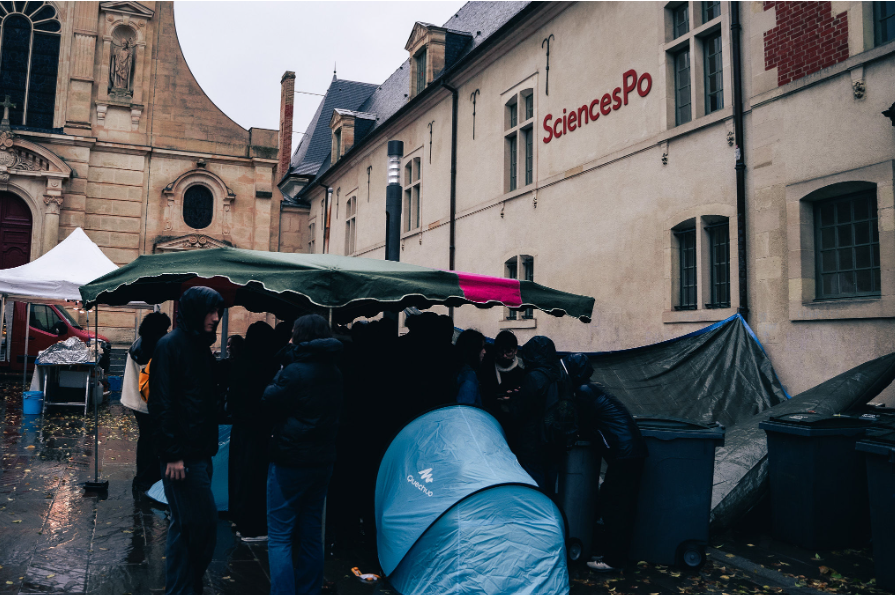
Protesters on Place Museux, which remained undisturbed throughout the day. Jurgis Dapkevičius/Sundial Press 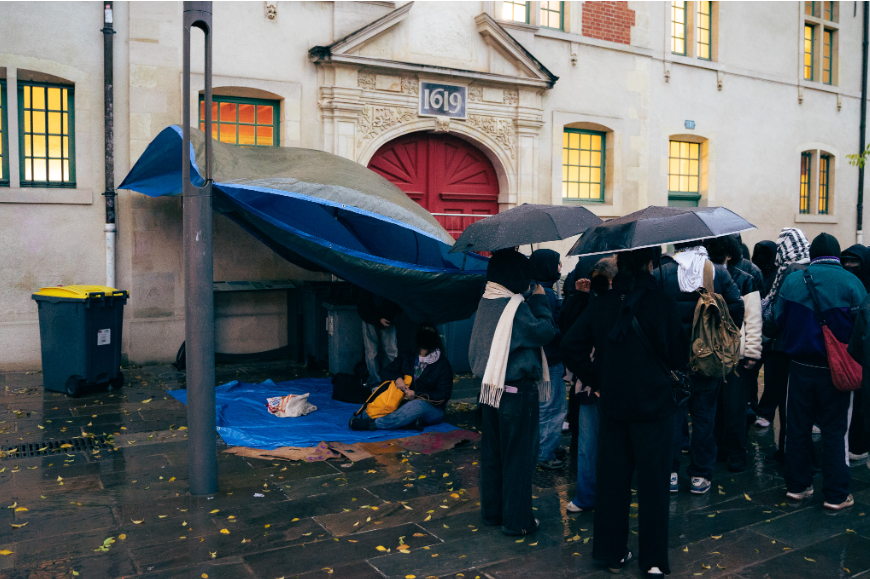
Protesters on Place Museux. Jurgis Dapkevičius/Sundial Press 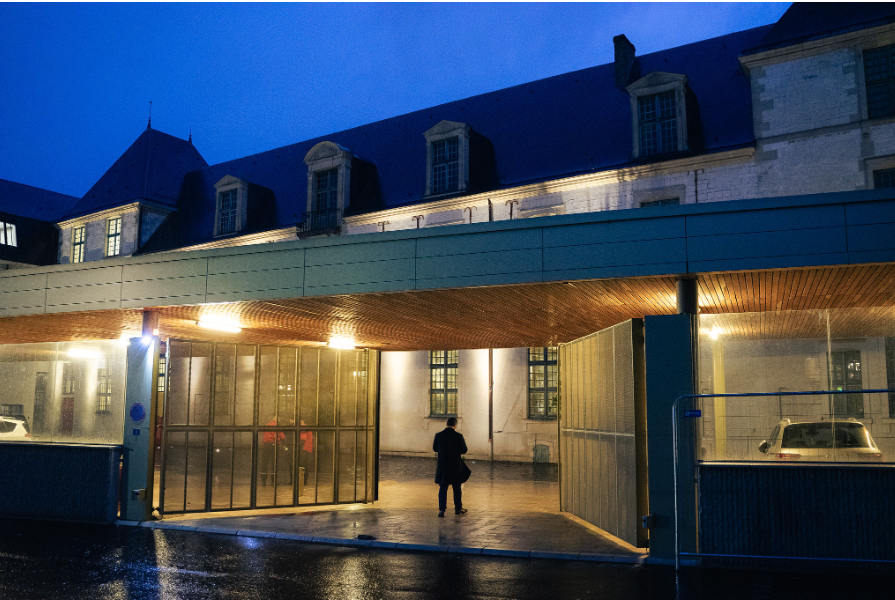
Vehicle entrance to campus on Rue Wiet. Jurgis Dapkevičius/Sundial Press
Cover Photo Credit: Jurgis Dapkevičius
Other posts that may interest you:
- General Assembly between Administration and Students Fails to Lower Tensions Between the Two Sides
- Postponement of 1A Exam Leads to Day of Chaos on Campus
- Reims Campus Blockaded Amid Nationwide Student Mobilization
- Sciences Po Votes: What does each list stand for in the council elections?
Discover more from The Sundial Press
Subscribe to get the latest posts sent to your email.